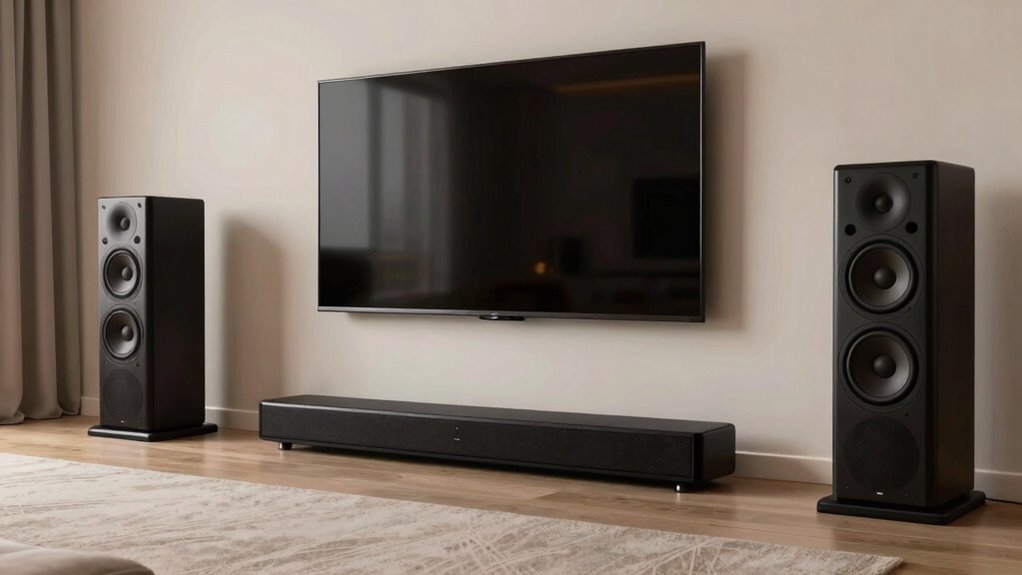

The main difference between soundbars and surround systems is the level of immersion they provide. Soundbars are sleek, simple, and easy to set up, offering a broad soundstage for clearer dialogue and enhanced TV audio. Surround sound systems, on the other hand, involve more complex installation with multiple speakers around the room, delivering a richer, theater-like experience. If you’re curious about which option fits your space and needs, there’s more to explore ahead.

Get the latest gadgets delivered free with Prime
- Fast, free delivery on millions of items
- Prime Video, Amazon Music and more included
- Member-only deals all year
Key Takeaways
- Soundbars are sleek, easy-to-setup audio devices that improve dialogue clarity, while surround systems offer immersive, multi-directional sound.
- Soundbars typically connect wirelessly via Bluetooth or HDMI, unlike surround systems requiring complex wiring and precise speaker placement.
- Surround sound systems deliver more spatial, cinematic audio but involve longer installation and calibration processes.
- Soundbars are ideal for quick upgrades with minimal clutter, whereas surround systems suit those seeking a true home theater experience.
- The main trade-off is convenience and simplicity of soundbars versus the immersive, high-quality audio of surround sound systems.
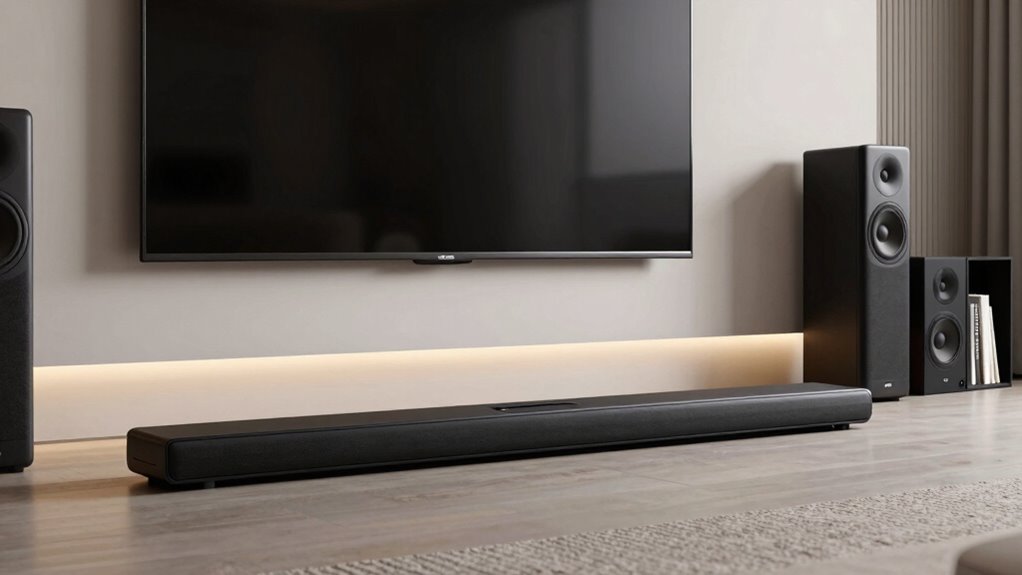
Are soundbars truly better than surround sound systems for your home theater setup? The answer depends on what you prioritize. Soundbars are designed to deliver a simple, sleek audio solution, and they excel in convenience. With wireless connectivity options, many soundbars let you connect seamlessly to your TV, streaming devices, or smartphones without cluttering your space with wires. This wireless setup makes it easy to control and upgrade, especially if you prefer a minimalist look. On the other hand, surround sound systems tend to involve a more complex installation process. They usually require multiple speakers placed around your room, along with wiring and calibration to create an immersive experience. While this might seem daunting, it’s also what allows surround systems to produce richer, more enveloping sound. Proper speaker placement is essential for achieving optimal sound quality with surround systems. Additionally, understanding the audio calibration process can significantly enhance your listening experience. Proper calibration ensures that all speakers work together harmoniously, creating a cohesive sound environment. Moreover, many surround systems now feature automatic setup options, which can simplify the calibration process further for beginners. A well-executed setup can also help prevent sound distortions and improve overall clarity.
When it comes to installation complexity, soundbars hold a clear advantage. Most are designed for quick setup—just connect to your TV with an HDMI cable or via Bluetooth, and you’re good to go. Some even come with mounting brackets, making it easy to attach them under your TV or on the wall without professional help. Surround sound systems, however, demand more time and effort. You need to position speakers strategically around the room—front, rear, and sometimes ceiling-mounted—and run multiple wires to connect everything properly. This setup process can be intimidating if you’re not familiar with audio equipment or DIY installations. Once installed, though, surround systems can deliver a more dynamic and spatial sound experience that can truly transform your home theater. Many modern systems also include automatic setup features to simplify calibration and placement, which can be helpful for beginners. Proper planning and room acoustics can further enhance the performance of your surround sound system, making the investment even more worthwhile.
While soundbars are great for straightforward upgrades to your TV’s audio, they may fall short in recreating the full depth and precision of a surround system. They tend to focus on improving dialogue clarity and broadening soundstage, but they often lack the nuanced directional effects that multiple speakers provide. If you’re someone who values a true cinematic experience and doesn’t mind the effort of setup, a surround sound system might be worth the investment. Conversely, if you prefer simplicity, minimal clutter, and easy wireless connectivity, a quality soundbar can give you excellent sound without the hassle.
Ultimately, your choice hinges on how much effort you want to put into setup versus the level of sound immersion you desire. Both options have their strengths, but understanding the trade-offs helps you pick the right system for your home theater.
Products Worth Considering

Bose QuietComfort True Wireless Earbuds with Active Noise Cancellation, Black

Sony WH-1000XM6 Wireless Noise-Canceling Over-Ear Headphones, Blue, Bundle

Sony WH-1000XM4C Wireless Noise-Cancelling Headphones, Black
As an affiliate, we earn on qualifying purchases.
Frequently Asked Questions
Do Soundbars Require a Separate Subwoofer?
Soundbars often do require a separate subwoofer, but some models come with built-in bass. If your soundbar has wireless connectivity, you can place the subwoofer anywhere for ideal subwoofer placement, avoiding clutter. The wireless connection makes setup easier and allows flexible placement. If you prefer a cleaner look and simpler setup, choose a soundbar with an integrated subwoofer. Otherwise, a separate subwoofer enhances bass for richer, more immersive sound.
How Much Does Installation Typically Cost?
You’ll likely spend around $100 to $300 for professional installation, but don’t be surprised if your tech-savvy friend claims they can do it for free—until they realize their DIY effort turns into a cable spaghetti nightmare. When comparing brands with wireless connectivity, installation costs can vary, especially if you want a seamless setup. Always factor in these costs, and remember, sometimes paying a pro beats a lifetime of troubleshooting.
Can Soundbars Replace Home Theater Systems Entirely?
Yes, soundbars can sometimes replace home theater systems, especially in smaller rooms where room acoustics and speaker placement are less critical. They’re easy to set up and improve audio quality without the complexity of multiple speakers. However, for larger spaces or those seeking immersive surround sound, a full surround system might still be better. Consider your room’s acoustics and speaker placement needs before making the switch.
Are Surround Systems Compatible With All TVS?
Surround systems aren’t compatible with all TVs, especially older models lacking the right audio outputs. While wireless connectivity options improve ease of setup, compatibility issues can still arise due to different ports or audio formats. Before buying, check your TV’s connection options and the surround system’s requirements. If you have modern smart TVs, chances are higher that a surround sound system will work seamlessly, but double-checking guarantees you won’t face surprises.
Which Offers Better Sound Quality for Music?
For music, surround systems generally offer better sound quality, providing superior audio richness and immersive soundstage. They deliver enhanced music clarity with multiple speakers that create a more dynamic listening experience. Soundbars, while convenient and space-saving, tend to have less detailed sound and narrower sound staging. If you prioritize rich, full sound and clearer music details, a surround system is the better choice to enjoy music at its best.
Conclusion
Ultimately, choosing between a soundbar and a surround system depends on your needs and space. Don’t be fooled into thinking a soundbar is a “magic box” that beats a full surround setup—think of it like a trusty steed versus a chariot. If you want simple, sleek sound, a soundbar’s your best bet. But if you crave that immersive experience, a surround system is your ticket to audio Nirvana. The choice is yours, brave traveler!