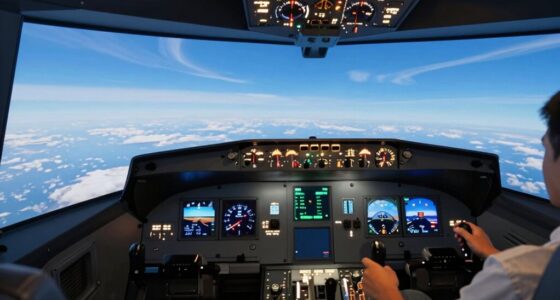
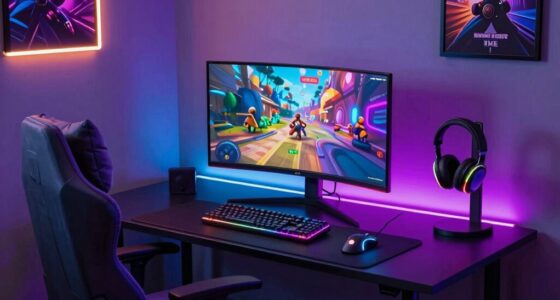
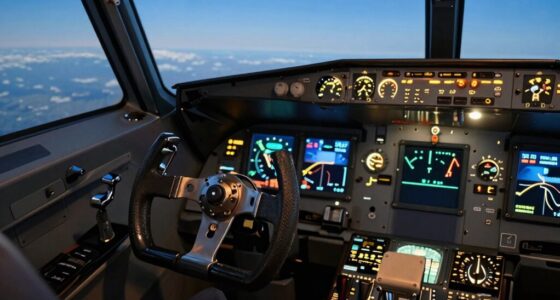
Flight sim and racing setups get expensive quickly because they use advanced technology and specialized equipment to enhance realism. High-resolution VR headsets, motion platforms, and custom accessories drive costs up, especially as you upgrade for better performance. The need for precise tracking, physics simulation, and immersive audio adds to the price. If you keep exploring, you’ll discover how continuous innovations and personal preferences can keep your setup evolving and costs climbing.
Key Takeaways
- Advanced technology like high-resolution VR and precise tracking significantly increases equipment costs.
- Full-motion platforms and realistic controls require complex mechanics, raising overall expenses.
- Custom accessories and dedicated setups add continual costs for personalization and upgrades.
- Market demand for realism drives frequent upgrades, escalating total investment over time.
- Cutting-edge innovations and premium components maintain high prices despite technological cost reductions.
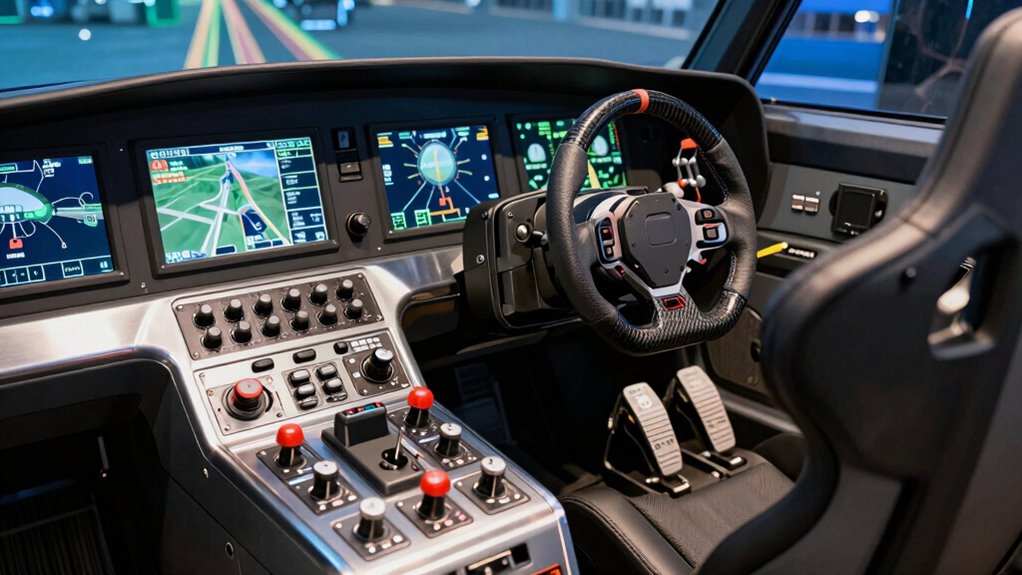
As the popularity of flight simulators and racing games continues to soar, enthusiasts are increasingly investing in high-end setups that can cost thousands of dollars. The allure of hyper-realistic experiences drives many to seek out the latest technology, which quickly adds up in price. One major factor behind these escalating costs is the desire for immersive realism, often achieved through advanced equipment like virtual reality headsets and motion platforms. Virtual reality, in particular, transforms gaming by placing you directly within the cockpit or driver’s seat, offering a 360-degree environment that standard screens simply can’t match. But top-tier VR gear, with high-resolution displays and precise tracking, doesn’t come cheap. The better the visual fidelity and tracking accuracy, the more your price tag climbs.
Alongside virtual reality, motion platforms substantially boost the realism of your setup. These devices simulate the physical sensations of acceleration, braking, and turns, making you feel as if you’re truly in the cockpit or race car. While basic setups might use simple vibration motors, serious enthusiasts opt for full-motion platforms that tilt, vibrate, and shift in sync with in-game actions. These platforms are costly, often running into thousands of dollars, because they incorporate complex mechanics and precise control systems designed to mimic real-world physics. The integration of virtual reality with high-quality motion platforms creates a compelling, immersive experience that can’t be easily replicated on traditional monitors or speakers. Advancements in technology continue to drive costs upward, making it a costly passion, but for those who crave realism, it’s an investment worth making. Additionally, the cost of customization tends to grow as enthusiasts seek to tailor their setups to their specific preferences and comfort. As technology advances, the cost of high-end equipment also tends to decrease over time, but premium products still maintain a hefty price tag due to their specialized nature. Moreover, the popularity of these setups fuels ongoing innovation, which often results in higher prices for cutting-edge gear.
Beyond the core tech, the costs also escalate with accessories and customization. High-end steering wheels, pedals, flight sticks, and specialized seats all contribute to the price, especially when they’re designed for durability and realism. You might also find yourself investing in sound systems, custom dashboards, or even dedicated room setups to optimize your experience. Each addition enhances immersion but adds to the overall expense. The desire for perfection drives many enthusiasts to continually upgrade, making the initial investment seem small compared to ongoing improvements. As these specialized components become more advanced, their prices tend to increase, further amplifying the overall cost of a premium setup.
high resolution VR headset for flight sim
As an affiliate, we earn on qualifying purchases.
As an affiliate, we earn on qualifying purchases.
Frequently Asked Questions
How Do I Choose the Right Flight or Racing Setup for My Budget?
To choose the right flight or racing setup for your budget, start by setting a clear spending limit. Prioritize essential gaming accessories like a quality joystick or steering wheel, ensuring they’re compatible with your software. Look for options that balance affordability and durability, and read reviews to confirm compatibility. Focus on setups that offer the best experience within your budget, avoiding unnecessary upgrades until you’re ready to expand.
Are Secondhand Components a Good Way to Save Money?
Yes, secondhand components can be a great way to save money. Vintage controllers and collectible accessories often come at a lower price, but make certain they’re compatible with your setup. Check their condition carefully, and research their value to avoid overpaying. Buying used can also let you access higher-quality or rare items that might be out of your budget new, enhancing your experience without breaking the bank.
What Are the Most Cost-Effective Upgrades for These Setups?
They say “a penny saved is a penny earned,” so start with budget-friendly upgrades. Focus on VR compatibility first, as it dramatically enhances immersion without major cost. Then, consider adding a motion platform gradually for realism. These upgrades offer significant experience boosts without breaking the bank, making your setup more engaging and cost-effective over time. Prioritize what will give you the biggest impact for your investment.
How Often Do These Setups Typically Need Upgrades or Replacements?
You’ll typically need to upgrade your flight sim or racing setup every 1-2 years to keep pace with hardware compatibility and software updates. As new hardware and software versions release, older components may struggle to run the latest features smoothly. Regular upgrades guarantee you stay compatible with updates, maintain performance, and enjoy the most realistic experience. Prioritize monitoring hardware compatibility and software updates to plan your upgrades effectively.
Can DIY Solutions Reduce Overall Setup Costs Effectively?
DIY solutions definitely can dampen your dollars and deliver a dynamic, customized cockpit. By embracing DIY customization, you cut costs and craft a cockpit that fits your needs perfectly. This strategy boosts budget optimization, saving you money on pricey pre-made setups. Plus, you gain the satisfaction of building something tailored, which can extend your gear’s lifespan and delay costly upgrades. So, yes, DIY solutions can considerably reduce overall setup costs effectively.
full motion racing simulator platform
As an affiliate, we earn on qualifying purchases.
As an affiliate, we earn on qualifying purchases.
Conclusion
So, it’s funny how quickly your flight sim or racing setup can add up, almost like you’re chasing a mirage. You start with a simple wheel or joystick, and suddenly, every new gadget promises a more immersive experience. Before you know it, your space resembles a cockpit or race car cockpit. But isn’t it oddly satisfying how those little upgrades make each session feel like a real adventure? Sometimes, the best part is just the journey.
professional racing wheel and pedal set
As an affiliate, we earn on qualifying purchases.
As an affiliate, we earn on qualifying purchases.
flight simulator cockpit accessories
As an affiliate, we earn on qualifying purchases.
As an affiliate, we earn on qualifying purchases.