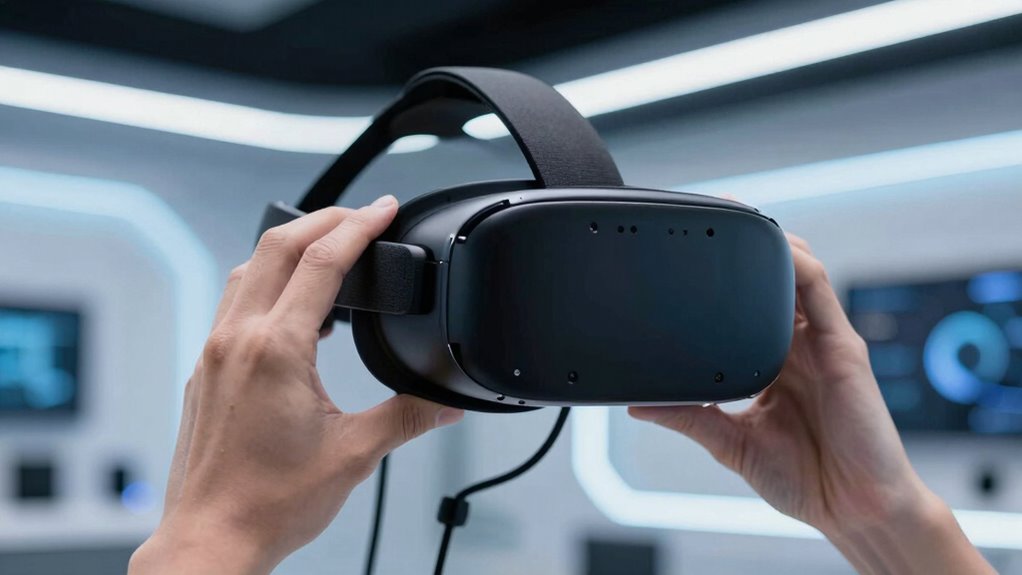

VR headsets push tech forward by constantly demanding innovations in hardware, interfaces, and immersive experiences. They drive improvements like higher resolution, better tracking, and more realistic haptic feedback. As user demand grows, companies develop faster processors, smarter sensors, and refined visuals, which sparks advancements across other tech areas like AI and AR. This continuous push for better performance shapes the future of technology, and if you stay tuned, you’ll learn how these innovations keep evolving.
Key Takeaways
- Continuous innovation in hardware, such as higher resolution displays and precise sensors, drives overall technological progress.
- Advances in user interfaces like natural gestures and voice control enhance immersion, pushing tech development further.
- The demand for realistic haptic feedback and fast response times spurs improvements in materials and processing tech.
- VR advancements accelerate progress in related fields like AI, computer vision, and wireless connectivity.
- Industry-driven features for immersive experiences promote broader technological innovations and integration into daily life.
Virtual reality headsets have rapidly evolved from niche gadgets to essential tools across gaming, education, and industry. This swift progress pushes technology forward because these devices demand constant innovation to improve immersion and user experience. One of the biggest drivers is how VR headsets integrate features like haptic feedback, which allows you to physically feel virtual objects, providing a tactile layer that makes interactions feel more real. When you pick up a virtual object or feel a simulated recoil, that sensation isn’t just a gimmick; it’s a critical leap toward creating a convincing environment. As developers realize the importance of these tactile cues, they invest in refining haptic feedback, which, in turn, influences broader tech advancements in sensors, materials, and miniaturization. Additionally, the development of high refresh rates in displays ensures smoother visuals, which is vital for reducing motion sickness and enhancing realism in VR experiences. The ongoing pursuit of real-time processing capabilities is essential for maintaining these high frame rates without lag.
At the core of these advancements is the user interface. VR headsets push developers to think beyond traditional screens and menus. Instead, they craft intuitive, seamless interfaces that respond to natural gestures, voice commands, or even eye movements. This challenge compels technology companies to innovate faster, creating more responsive controllers and smarter algorithms that interpret your inputs with greater accuracy. As a result, the entire ecosystem becomes more sophisticated, influencing consumer electronics and software design beyond VR. Improving tracking technology is crucial for achieving more precise and natural interactions, further accelerating innovation. The need for an effortless, immersive user interface means companies must develop better tracking systems, faster processors, and more refined display technologies. These improvements ripple outward, benefiting other areas like augmented reality and mobile devices. Moreover, advancements in sensor technology are enabling more detailed movement detection, which is essential for creating truly immersive experiences. Furthermore, the integration of sensor data into machine learning models is enhancing the responsiveness and adaptability of VR systems.
Your experience with VR headsets also drives hardware improvements. As you demand higher resolution visuals and smoother frame rates, tech companies are pushed to develop better displays and more powerful GPUs. The integration of haptic feedback into controllers becomes more precise, offering nuanced sensations that elevate realism. Meanwhile, advancements in sensors enable your movements to be tracked more accurately, making interactions feel natural and immediate. The constant cycle of user feedback and technological innovation means VR headsets are not just evolving—they’re influencing the entire tech landscape, encouraging more rapid progress in related fields like AI, computer vision, and wireless connectivity.
Ultimately, your desire for more immersive, intuitive experiences keeps VR headsets pushing the boundaries. The push for better haptic feedback and smarter user interfaces isn’t just about making gaming more exciting; it’s about transforming how we learn, work, and connect. Every new feature or hardware leap you see in VR reflects a broader trend of technological progress, driven by your experiences and expectations. As VR continues to evolve, it’ll keep fueling advancements across the tech industry, making devices smarter, more responsive, and more integrated into our daily lives.
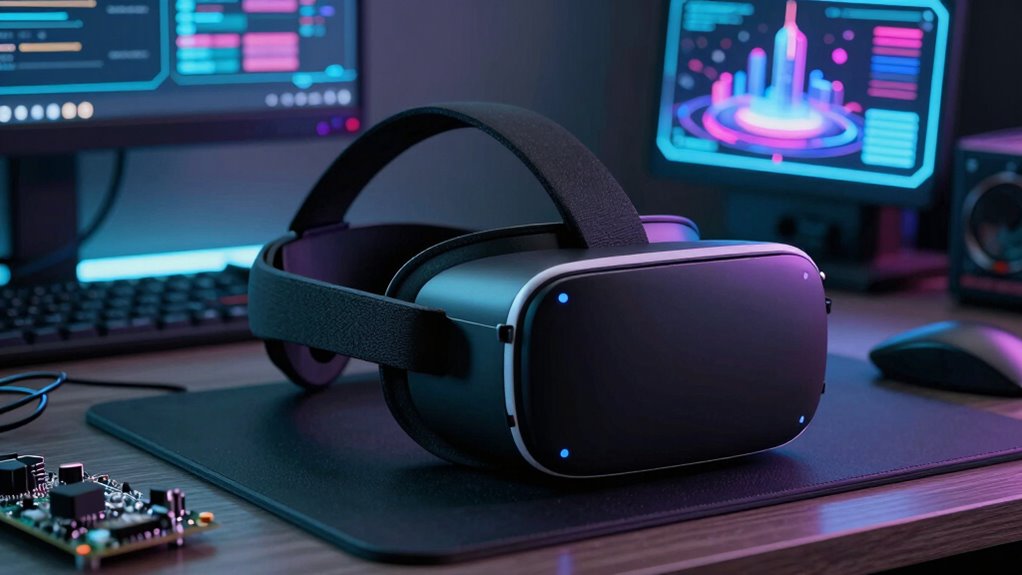
VR headset with high resolution display
As an affiliate, we earn on qualifying purchases.
As an affiliate, we earn on qualifying purchases.
Frequently Asked Questions
How Do VR Headsets Improve User Comfort During Extended Use?
You can enjoy extended VR sessions comfortably because manufacturers focus on ergonomic design and weight distribution. They craft headsets with adjustable straps and cushioned padding to reduce pressure points. Proper weight balance prevents fatigue, making it easier to wear the headset longer without discomfort. These improvements help you stay immersed in virtual worlds, enhancing your overall experience while minimizing strain on your neck and face during prolonged use.
What Are the Environmental Impacts of VR Headset Production?
You should know that VR headset production impacts the environment through manufacturing emissions and the use of non-sustainable materials. Manufacturers are working to reduce these impacts by incorporating sustainable materials and improving energy efficiency. However, the production process still releases greenhouse gases and generates waste. As a user, supporting brands committed to eco-friendly practices can help minimize your environmental footprint and encourage the industry to prioritize sustainability.
How Do VR Headsets Influence Social Interaction Trends?
Like the myth of Icarus soaring higher, VR headsets push social interaction into new heights. You find yourself engaging in virtual socialization, connecting with others worldwide as if they’re right beside you. Avatar personalization allows you to craft your digital identity, making interactions more authentic. These trends reshape how you build relationships, fostering a sense of presence and community that transcends physical boundaries, fundamentally transforming social dynamics.
Are There Health Risks Associated With Prolonged VR Use?
Prolonged VR use can pose health risks like eye strain and motion sickness. You might experience discomfort from staring at screens too long or from mismatched visual cues causing motion sickness. To reduce these risks, take regular breaks, adjust the headset properly, and limit your VR sessions. Staying mindful of these issues helps you enjoy immersive experiences without compromising your eye health or well-being.
What Future Innovations Are Expected in VR Headset Technology?
You can expect future VR headsets to feature advanced haptic feedback, making virtual interactions more immersive and realistic. Augmented reality integration will enhance blending digital and real-world environments seamlessly. Innovations will likely include lighter designs, higher resolution displays, and better battery life, allowing longer use without discomfort. These advancements will transform gaming, training, and social experiences, making virtual worlds feel even more authentic and engaging for you.
VR controllers with natural gesture tracking
As an affiliate, we earn on qualifying purchases.
As an affiliate, we earn on qualifying purchases.
Conclusion
You see, VR headsets constantly push tech forward because they’re like a rising tide lifting all boats. As you embrace their evolution, you’re part of a wave driving innovation, from better displays to immersive experiences. Just like the saying goes, “A rising tide lifts all ships,” your support fuels progress. So, keep exploring and advocating—your curiosity and demand help shape the future of technology, making what’s next even more extraordinary.
As an affiliate, we earn on qualifying purchases.
As an affiliate, we earn on qualifying purchases.