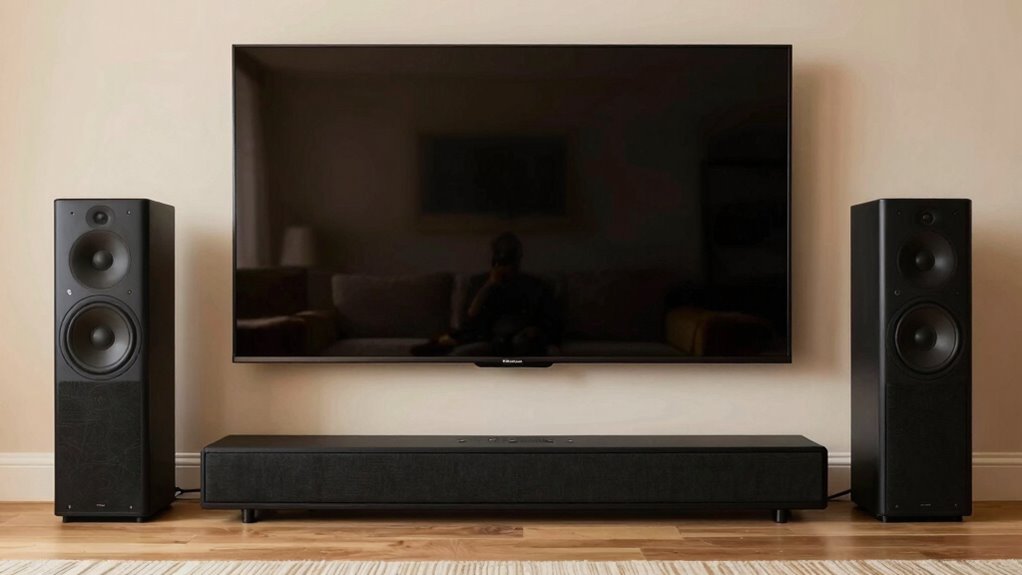

The main difference between soundbars and full surround systems is their setup and immersive experience. Soundbars are compact, simple to install, and connect wirelessly or with minimal cables, providing a quick upgrade for better TV sound. Full surround systems involve multiple speakers, more wiring, and a complex setup but deliver a cinema-like, immersive experience. If you want to explore how each option suits your space and preferences, you’ll find plenty more to discover below.

Get the latest gadgets delivered free with Prime
- Fast, free delivery on millions of items
- Prime Video, Amazon Music and more included
- Member-only deals all year
Key Takeaways
- Soundbars are compact, easy-to-install devices offering a quick audio upgrade, while surround systems involve multiple speakers for immersive sound.
- Connectivity for soundbars is mainly via HDMI, optical, or wireless, whereas surround systems often rely on wired connections for optimal quality.
- Soundbars require minimal setup effort, whereas surround systems need speaker placement, wiring, and calibration, often needing professional installation.
- Full surround systems deliver a more immersive, cinematic sound experience with dynamic audio movement, unlike the simpler soundbar setup.
- Aesthetically, soundbars provide a clean look with fewer cables, while surround systems can be more visually intrusive due to multiple speakers.

When it comes to upgrading your home theater experience, choosing between a soundbar and a full surround sound system can feel overwhelming. Both options aim to elevate your audio, but they do so in very different ways. A soundbar is a compact, single-unit device that’s easy to set up and ideal for those who want an immediate improvement without much fuss. Full surround sound systems, on the other hand, involve multiple speakers placed around the room, creating a more immersive experience. The key differences often come down to wireless connectivity and installation complexity.
Soundbars are designed for simplicity. They typically connect to your TV via an HDMI ARC or optical cable, and many models now feature wireless connectivity options like Bluetooth or Wi-Fi, making it even easier to stream audio from your devices. This wireless feature means you can place your soundbar anywhere within range, reducing clutter and giving you flexibility. Installation is straightforward—just a few minutes to connect and configure. You don’t need to worry about running wires across the room or mounting multiple speakers. For most users, a soundbar offers a quick upgrade with minimal effort. Additionally, wireless connectivity has made it easier to integrate soundbars with other smart home devices and streaming platforms. Advances in wireless audio technology continue to improve the stability and quality of these connections, enhancing the overall user experience.
Soundbars connect easily via HDMI or optical, with wireless options like Bluetooth and Wi-Fi for quick, clutter-free setup.
Full surround sound systems, however, require a more involved setup process. You need to position multiple speakers—front, rear, and sometimes ceiling-mounted—around your room. This arrangement ensures that sound can move dynamically with what’s happening on-screen, creating a cinematic feel. While some modern surround systems offer wireless speakers, many still depend on wired connections to ensure optimal sound quality and synchronization. The installation complexity can be significant, involving speaker placement, wiring, calibration, and sometimes even professional help. It’s an investment in both time and effort, but the payoff is a more enveloping audio landscape that can make you feel like you’re right in the middle of the action. Additionally, advances in wireless audio technology have started to make full surround setups more flexible and easier to maintain.
If you prefer a clean, clutter-free look with minimal setup, a soundbar might be your best choice. Its wireless connectivity options also mean fewer cables and easier integration with your existing smart home devices. But if you’re passionate about audio quality and want a true home-theater experience, investing in a full surround sound system is worth considering, despite the installation challenge. Ultimately, your decision depends on how much effort you’re willing to put into setup and what kind of audio experience you’re aiming for.
Frequently Asked Questions
Can Soundbars Replace Full Home Theater Systems Entirely?
Soundbars can’t fully replace full home theater systems because they lack multiple speakers for precise speaker placement and immersive audio. While they offer a simple setup and decent sound, you’ll miss out on detailed surround sound effects. Proper audio calibration and strategic speaker placement in a full system enhance your experience, which a soundbar alone can’t replicate. For true cinematic audio, a full surround system is still the better choice.
How Do Soundbars Handle Multi-Room Audio Setups?
You might picture a single soundbar in your living room, but handling multi-room audio setups is more complex. While some soundbars offer multi-room compatibility and wireless audio streaming, they often can’t match the seamless, multi-zone experience of full surround systems. Wireless streaming allows you to sync audio across rooms, but for true multi-room flexibility, dedicated systems or smart home integrations usually deliver better coverage and sound quality.
Are There Wireless Surround Sound Options Available?
Yes, wireless surround sound options are available. These systems use wireless connectivity to transmit audio signals, eliminating the need for extensive speaker cables. You can place the speakers strategically around your room for ideal sound, thanks to their wireless setup. This flexibility allows you to customize your speaker placement easily, creating a more immersive experience without cluttering your space with wires.
What Is the Maintenance Difference Between Soundbars and Full Systems?
You’ll find that maintaining a soundbar is simpler since it requires minimal speaker calibration and no complex cable management. You just need to keep it clean and guarantee connections stay secure. Full surround systems, however, demand more effort—regular speaker calibration for ideal sound and meticulous cable management to keep everything organized and prevent tangling. This makes soundbars more convenient if you prefer low-maintenance audio setups.
Do Soundbars Support Dolby Atmos or DTS:X?
Yes, many soundbars support Dolby Atmos and DTS:X, enhancing your audio experience with immersive, three-dimensional sound. Look for models labeled with these formats, as they include upward-firing speakers or height channels to deliver spatial effects. Not all soundbars have this feature, so check the specifications before purchasing. If you want cinematic sound quality without a full surround system, a Dolby Atmos or DTS:X-enabled soundbar is a great choice.
Conclusion
In the end, choosing between a soundbar and a full surround system isn’t just about tech specs; it’s about how you want to feel immersed in your favorite movies and music. Some say surround sound is the true experience, but a quality soundbar can surprise you with its clarity and convenience. Trust your instincts—sometimes, the simplest setup can deliver the most powerful emotional connection. After all, it’s your space, your sound.
Halloween Picks
halloween
As an affiliate, we earn on qualifying purchases.