
Proper speaker placement transforms your room into a clear, balanced listening space by reducing echoes, controlling reflections, and improving sound imaging. When you position speakers correctly, you’ll notice less muddiness and more precise audio, with better stereo imaging and depth. It also helps avoid boomy bass and harsh echoes. Fine-tuning placement makes a big difference in sound quality, and if you keep exploring, you’ll discover more tips to perfect your setup.

Get the latest gadgets delivered free — and shop member deals
- Fast, free delivery on millions of items
- Access to Prime Big Deal Days deals on October 6–7
- Prime Video, Amazon Music and more included
Key Takeaways
- Proper placement reduces echoes and phase issues, improving overall sound clarity.
- It prevents exaggerated bass and muddiness caused by placing speakers too close to walls or corners.
- Correct positioning enhances stereo imaging and spatial accuracy for a balanced soundstage.
- It minimizes unwanted reflections, leading to a clearer, more natural listening experience.
- Proper placement, combined with calibration and room treatment, creates a more immersive and accurate sound environment.
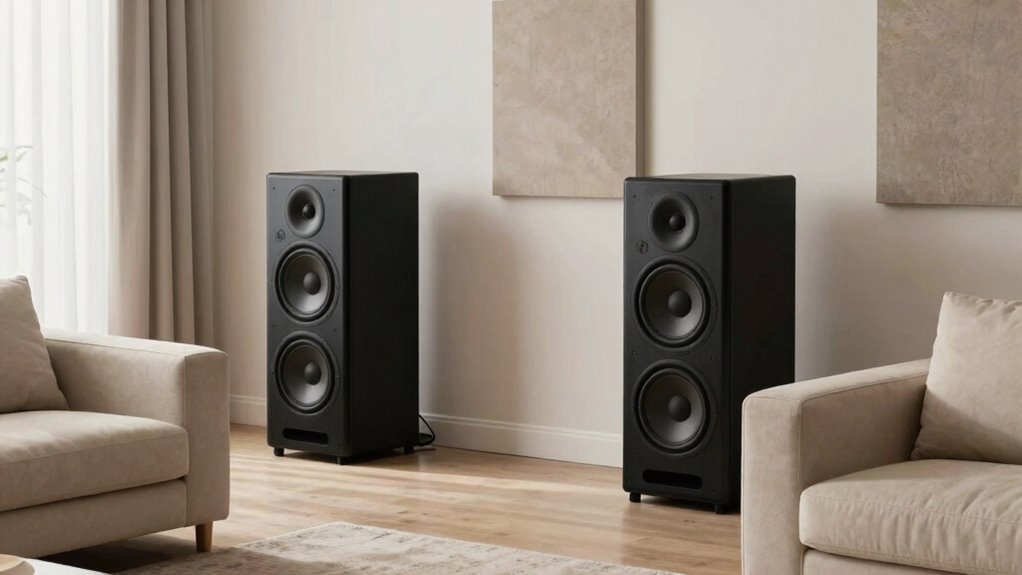
Have you ever wondered why your speakers don’t sound quite right even after adjusting the volume? The answer often lies in how your speakers are positioned within the room. Proper speaker placement can dramatically improve sound quality by reducing unwanted echoes, minimizing phase issues, and creating a balanced, immersive listening experience. When you start thinking about acoustic treatment, you’re taking a step toward controlling how sound waves interact within your space. Acoustic panels and bass traps absorb or diffuse sound reflections, helping to eliminate muddiness and harshness. This treatment, combined with thoughtful speaker positioning, ensures your sound isn’t just loud but clear and well-defined.
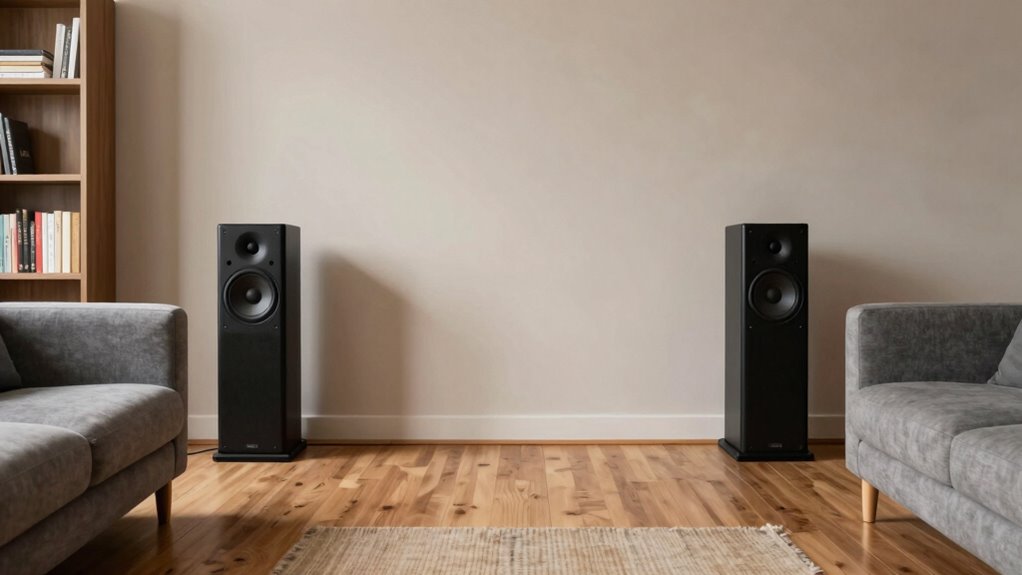
Positioning your speakers correctly is crucial for accurate sound reproduction. If they’re placed too close to walls or corners, you’ll likely notice exaggerated bass and boomy sounds. Moving the speakers away from reflective surfaces allows sound waves to travel freely, preventing certain frequencies from becoming overly prominent. It’s not just about distance; the height and angle of your speakers matter, too. For maximum stereo imaging, your speakers should be at ear level when you’re seated, and their tweeters should be aimed toward your listening position. This setup guarantees that you receive a balanced mix of high, mid, and low frequencies, making the music or dialogue sound natural and detailed. Proper speaker placement and calibration work together to optimize your listening environment. Additionally, understanding room acoustics can help you make more informed decisions about speaker positioning and treatment options. Recognizing acoustic treatment options can further enhance your sound quality by managing sound reflections effectively. Considering room size and shape can also influence how sound behaves, so tailoring your setup to your specific space is essential.
Speaker calibration plays an essential role in fine-tuning your system after placement. Once your speakers are positioned properly, you can use calibration tools or software to adjust their output levels, ensuring they match and create a cohesive soundstage. Calibration helps compensate for any room anomalies, like uneven bass response or frequency dips. When you combine correct placement with calibration, you’re effectively tailoring the sound to your specific room, which results in better clarity and spatial accuracy. Remember, a well-placed and calibrated speaker system doesn’t just sound better; it transforms your entire listening experience, making it feel more real and engaging.
As an affiliate, we earn on qualifying purchases.
Frequently Asked Questions
How Does Speaker Placement Affect Overall Room Acoustics?
Proper speaker placement greatly influences your room’s acoustics by minimizing sound reflection and improving sound clarity. When speakers are well-positioned, you reduce unwanted echoes and guarantee better speaker isolation, which prevents sound from leaking into other areas. This setup creates a more accurate and immersive listening experience, allowing you to hear every detail clearly. Proper placement is vital for achieving balanced sound and ideal room acoustics.
Can Improper Placement Damage My Speakers?
Improper speaker placement can potentially damage your speakers over time, especially if they’re placed too close to walls or exposed to vibrations that strain their components. Poor placement also affects placement aesthetics, making your setup look cluttered or unbalanced. To protect your speaker durability, keep them at an appropriate distance from surfaces and avoid placing heavy objects nearby. Proper positioning not only enhances sound but also preserves your speakers’ longevity.
What Tools Can Help Optimize Speaker Positioning?
Imagine you’re setting up your speakers, and you want perfect sound. Calibration tools like a sound level meter and placement guides help you find the ideal spot. These tools measure sound balance and suggest best positions, ensuring clarity and imaging. For example, a home theater enthusiast used a calibration mic to fine-tune speaker angles, drastically improving audio quality. Using these tools makes accurate placement easier and guarantees a richer listening experience.
How Does Speaker Height Influence Sound Quality?
Speaker height considerably impacts sound clarity, ensuring you hear the full range of frequencies clearly. When speakers are positioned at ear level, you optimize direct sound, reducing distortion and echo. Adjusting speaker height helps create a balanced soundstage, making music and dialogue more natural. You should experiment with height to find the spot that delivers the best sound clarity, enhancing your overall listening experience.
Is Room Size a Significant Factor in Speaker Placement?
Yes, room size is a significant factor in speaker placement because it affects wall reflections and furniture interference. In smaller rooms, you need to position speakers to mitigate bouncing sound off walls, which can cause muddiness. Larger rooms allow more flexibility, but you still need to avoid placing speakers too close to furniture that can block or distort sound. Proper placement ensures clearer audio and reduces unwanted echo or resonance.
acoustic panels for room treatment
As an affiliate, we earn on qualifying purchases.
As an affiliate, we earn on qualifying purchases.
Conclusion
When you place your speakers thoughtfully, it’s like tuning a delicate instrument—you’ll notice a richer, more immersive sound that fills your room. Proper placement guarantees clarity and balance, transforming your space into a personal concert hall. Take the time to experiment with positioning, and you’ll be amazed at how much better your audio experience becomes. Just like a skilled chef perfects each ingredient, adjusting your speakers brings harmony and depth to your listening environment.
As an affiliate, we earn on qualifying purchases.
As an affiliate, we earn on qualifying purchases.
Fall Picks
fall essentials
As an affiliate, we earn on qualifying purchases.