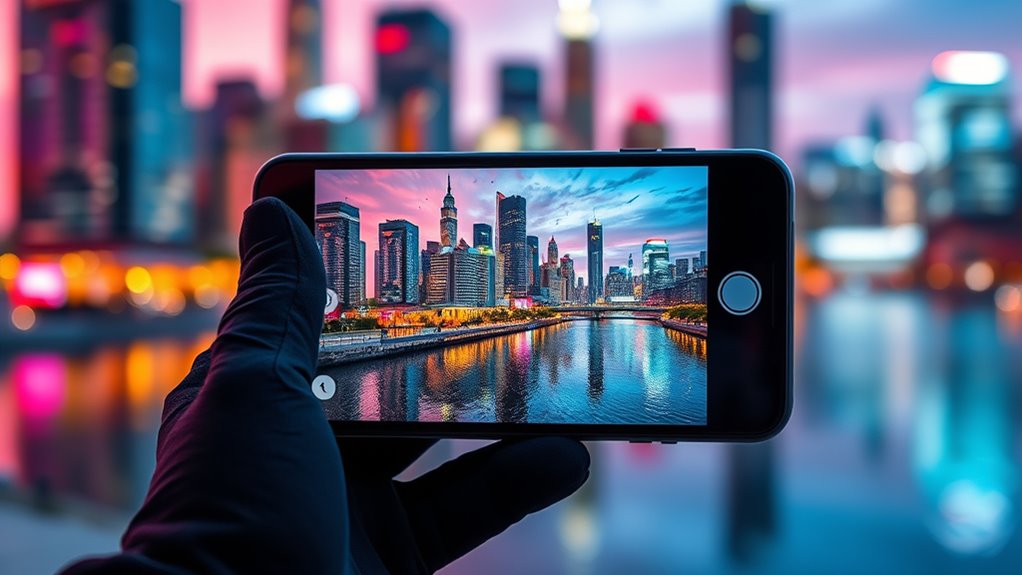

Smartphones are transforming photography by dominating the market, with over 92.5% of all photos taken on them. Advanced AI features, improved sensors, and computational photography make it easier than ever to capture professional-quality images with just your device. Content creation, especially selfies, plays a huge role, and the accessory market is booming. As technology evolves—like faster sharing via 5G and eco-friendly options—you’ll discover even more ways smartphones are redefining how you capture moments.

Get the latest gadgets delivered free with Prime
- Fast, free delivery on millions of items
- Prime Video, Amazon Music and more included
- Member-only deals all year
Key Takeaways
- AI-driven computational photography enhances image quality while reducing hardware complexity and enabling professional-grade photos on smartphones.
- Consumer demand for high-quality cameras influences smartphone design, focusing on sensors, lenses, and advanced editing features.
- Content creation trends emphasize selfies, vertical formats, and hybrid workflows combining mobile and traditional cameras.
- The growing accessory market, including clip-on lenses and vlogging kits, boosts mobile photography versatility and quality.
- Innovations like 5G, AR, and eco-friendly materials are shaping smartphones into more capable, sustainable photography tools.
The Dominance of Smartphone Photography in the Global Market
Have you noticed how smartphones have overtaken traditional cameras in photography? Today, they capture over 92.5% of all pictures worldwide, leaving conventional cameras with just 7.5%. By 2025, billions of people are expected to snap over 2 trillion photos annually, highlighting smartphones’ dominance. Nearly 86% of Americans prioritize camera quality when choosing a new device, fueling innovation in mobile imaging. As more users embrace mobile photography, the trend has accelerated, with 94% of photos taken on smartphones in 2024. This shift isn’t just about casual shots; even professional photographers are increasingly integrating smartphones into their workflows. The convenience, affordability, and continuous technological improvements make smartphones the primary tool for everyday and content creation, solidifying their leadership in the global photography market. Smartphone dominance is supported by ongoing advancements in mobile camera technology that continue to improve image quality and versatility. Additionally, the rapid development of mobile imaging technology has played a crucial role in enhancing smartphone photography capabilities. Furthermore, the integration of advanced computational photography techniques has significantly expanded the creative potential of smartphone cameras. The evolution of sensor technology has also contributed to better low-light performance and higher dynamic range in mobile images. Moreover, the increasing integration of net+ certification benefits in related fields underscores the importance of staying current with technological innovations to maximize these advancements.
The Rise of AI-Driven Imaging and Its Impact on Camera Hardware

AI-driven imaging is revolutionizing smartphone photography by reducing the need for multiple physical lenses and traditional camera hardware. Instead of stacking numerous lenses, AI algorithms enhance image quality through computational photography, allowing you to capture stunning photos with fewer sensors. This shift enables manufacturers to free up space inside devices, making room for larger batteries or other features, without sacrificing image performance. AI tools like scene recognition, noise reduction, and intelligent HDR work behind the scenes, delivering professional-grade results effortlessly. As a result, smartphone cameras are becoming more streamlined, affordable, and versatile. You benefit from improved photo quality, faster processing, and innovative features, all while maintaining compact, sleek designs. This technological evolution fundamentally changes how camera hardware is designed and integrated into your device.
Content Creation Trends and the Growing Role of Selfies

Content creation on mobile devices is increasingly centered around selfies and vertical formats, reflecting how you prefer to share your life visually. Smartphones are designed for easy, quick captures, making selfies a dominant form of self-expression. Daily, around 92 million selfies are taken worldwide, with nearly 94% of photos captured on smartphones in 2024. Younger generations, especially 18-24-year-olds, rely heavily on selfies, which now account for about a third of all images they capture. Vertical videos like Instagram Reels and TikTok have also become popular, optimized for mobile viewing. Social platforms prioritize this content, encouraging spontaneous and authentic sharing. As device cameras improve and editing tools become more accessible, your ability to create engaging, high-quality selfies and vertical content continues to grow. Additionally, the net worth of content creators influences their ability to produce professional-grade content, further elevating mobile photography standards. Incorporating creative inspiration from various sources can help users overcome creative blocks and enhance their visual storytelling skills. Moreover, advancements in at-home photography technology are enabling even more sophisticated mobile content creation. In particular, improved lighting equipment and editing apps help users achieve studio-quality results right from their smartphones.
The Shift Toward Professional and Hybrid Photography Workflows
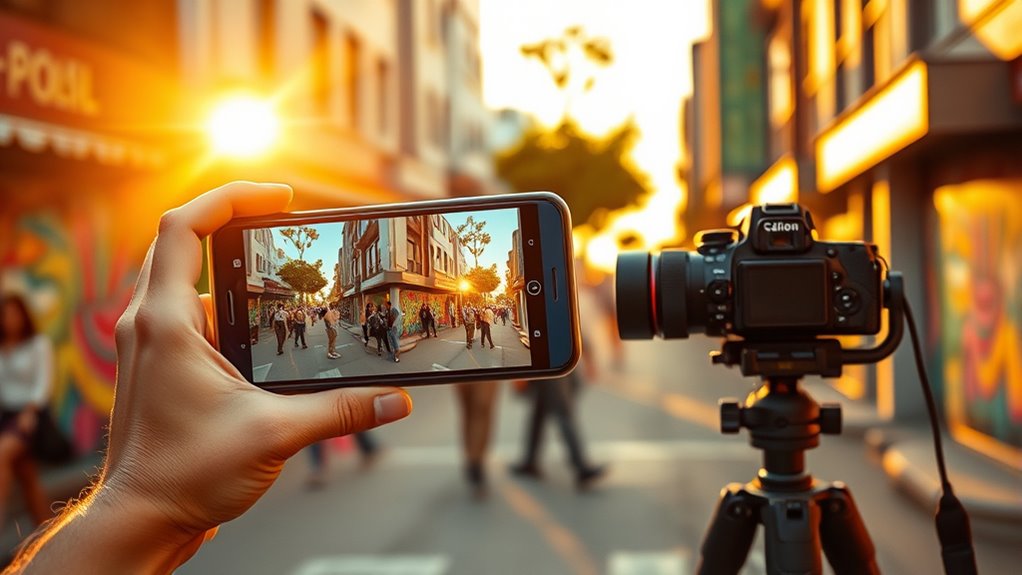
You’re seeing more professionals blend smartphones with traditional gear, creating hybrid workflows that boost flexibility and efficiency. As the use of conventional cameras declines, many turn to smartphones, drones, and accessories to meet their needs. This shift is reshaping how high-quality content is produced in today’s fast-paced, mobile-driven industry. Additionally, innovations in modern kitchen technology demonstrate how automation and connected devices are transforming traditional practices across various fields. These technological advancements exemplify how upgrades and maintenance strategies are essential for staying current and maximizing the capabilities of new devices. Incorporating AI-driven content creation tools further enhances the quality and speed of producing professional-grade visuals. Staying informed about connectivity standards can also help photographers optimize their workflows with the latest wireless and data transfer technologies. Embracing technological integration is crucial for staying competitive in a rapidly evolving digital landscape.
Growing Hybrid Equipment Use
As smartphone technology advances, more professionals are embracing hybrid workflows that combine traditional cameras with mobile devices. You’re likely integrating smartphones into your process for quick captures, editing, or social sharing, while relying on high-quality cameras for critical shots. This hybrid approach offers flexibility, allowing you to switch seamlessly between devices based on the situation. You may use smartphones for behind-the-scenes content or rapid edits, then switch to mirrorless or DSLR cameras for professional-grade images. AI-powered apps help enhance photos on the fly, supporting this workflow. As a result, your equipment choices become more diversified, combining the strengths of mobile convenience with traditional quality. This shift helps you stay agile, efficient, and competitive in today’s fast-paced visual content landscape.
Decline of Traditional Cameras
The decline of traditional cameras is reshaping professional photography workflows, as more practitioners integrate smartphones and AI tools into their routines. You’re likely to see fewer photographers relying solely on DSLRs or mirrorless cameras. Instead, they’re adopting hybrid workflows that combine high-quality mobile images with traditional equipment. Drones, smartphones, and AI-powered editing apps now complement professional gear, offering faster, more flexible options. This shift allows you to capture, edit, and share content more efficiently, often in real-time. As a result, the need for bulky gear diminishes, and portability becomes a priority. While traditional cameras still hold value, especially for specialized or high-end work, their dominance is waning in favor of versatile, AI-enhanced mobile solutions.
Smartphone-Driven Professional Shift
The rise of AI-enabled tools and powerful mobile devices has fundamentally altered professional photography workflows. You now blend smartphones with traditional equipment, creating efficient hybrid setups. Nearly 15% of professionals combine smartphones with DSLRs or mirrorless cameras, streamlining edits and uploads. AI-powered apps like Lightroom, PhotoRoom, and Facetune enable rapid enhancements without extensive post-processing. Drones and smartphone cameras are also increasingly integrated into workflows, with over 17% of photographers adopting drone photography. This shift reduces reliance on bulky gear, allowing faster project turnaround and more spontaneous shooting. Leading smartphone brands like iPhone, Samsung, and Google Pixel are key tools for professionals, offering top-tier image quality. As a result, mobile photography isn’t just personal anymore—it’s a crucial part of professional and hybrid creative workflows.
Expansion of Smartphone Camera Accessories and Market Opportunities
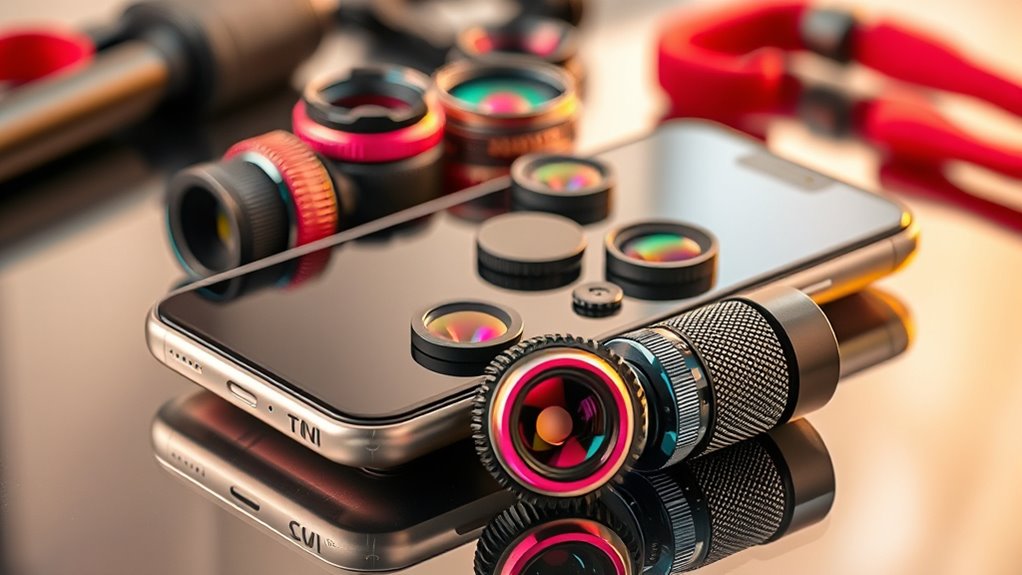
Smartphone camera accessories are experiencing rapid growth, driven by increasing demand for higher-quality images and more versatile content creation tools. You can now find a wide range of lenses, tripods, and lighting options designed to boost your mobile photography. The global market for phone camera lenses alone reached around $5.42 billion in 2025 and is expected to grow to over $8 billion by 2030. The attachment market, including clip-on lenses and vlogging kits, is expanding at a 15% CAGR through 2033. Search interest for accessories like selfie sticks and vlogging equipment surged by double digits, reflecting a rising desire for professional-looking content. These accessories enable you to elevate your mobile photography, making it easier to capture stunning images and engaging videos anytime, anywhere. Understanding passive voice detection can help writers improve clarity and engagement in their content. Additionally, recognizing AI-driven trends in technology can inspire innovative ways to enhance your photography skills and stay ahead in the evolving market. Moreover, the integration of smart technology into accessories is streamlining the user experience by offering features like app control and customizable settings. Furthermore, the availability of best-rated vacuum cleaners demonstrates the importance of choosing quality tools for efficient cleaning routines, which parallels selecting the right accessories for optimal mobile photography. As the market continues to grow, manufacturers are also incorporating innovative features into their products to meet consumer demands and stand out in a competitive landscape.
Sustainability Practices in Mobile Photography Equipment
As mobile photography becomes more popular, manufacturers are increasingly adopting sustainable practices to meet consumer demand for eco-friendly gear. You’ll notice brands are using recycled materials for phone cases, camera lenses, and accessories, reducing waste and conserving resources. Solar-powered charging solutions are becoming more common, helping you charge devices sustainably. Companies are also designing products with longer lifespans, making repair and upgrades easier to extend their usefulness. Digital workflows, including cloud storage and app-based editing, minimize physical waste. Some brands prioritize environmentally friendly packaging and reduce plastic use. These efforts reflect a shift toward responsible manufacturing, enabling you to enjoy high-quality mobile photography while reducing your ecological footprint. Total‑cost clarity in product choices and maintenance is also an important aspect of sustainable practices. For example, embracing sustainable manufacturing methods helps reduce environmental impact across the industry. Additionally, focusing on product durability encourages consumers to choose equipment that lasts longer, decreasing the frequency of replacements and waste. Incorporating eco-conscious design principles ensures that mobile photography gear aligns with environmental values. Moreover, the use of recycled materials in manufacturing processes further supports waste reduction and resource conservation. Sustainability in equipment aligns with growing consumer values, encouraging eco-conscious choices in your mobile photography journey.
Consumer Preferences and the Drive Toward Camera Quality Innovation

Consumer preferences heavily influence innovations in mobile camera technology, with nearly 89% of users ranking camera quality as a top factor when buying new smartphones. You want a device that captures sharp, vibrant images effortlessly, so manufacturers prioritize sensor improvements, larger apertures, and advanced computational photography. This demand pushes OEMs to develop features like AI-enhanced editing, better low-light performance, and versatile multi-lens setups. As a result, you see rapid advancements, such as larger sensors and smarter image processing, to meet your expectations. Your desire for high-quality photos drives companies to innovate continuously, blending hardware and software to deliver professional-level results in a handheld device. Additionally, consumer feedback often influences the design priorities that guide the development of new camera features. Ultimately, your preferences shape the industry’s focus, making camera excellence a central aspect of smartphone development.
Future Outlook: How Mobile Photography Continues to Evolve

Advancements in mobile photography are set to accelerate as technology continues to push the boundaries of what’s possible in a handheld device. You can expect smarter AI integration that enhances image quality with minimal effort, making professional-looking photos accessible to everyone. Computational photography will become even more sophisticated, reducing the need for multiple lenses and bulky hardware. As 5G networks expand, sharing high-resolution images and live streaming will become faster and more seamless. Future smartphones will likely feature enhanced sensor technology, offering better low-light performance and higher dynamic range. Additionally, augmented reality will play a bigger role, enabling immersive photo and video experiences. Overall, mobile photography will become more intuitive, versatile, and integrated into your daily life, transforming how you capture and share moments.
Frequently Asked Questions
How Does AI Reduce the Need for Multiple Physical Camera Lenses?
AI reduces the need for multiple physical camera lenses by enhancing image quality through computational photography. Instead of relying on separate lenses for wide, telephoto, or macro shots, AI algorithms process data from just a few sensors to simulate these effects. This allows you to capture high-quality photos with fewer lenses, freeing up space for bigger batteries and making your smartphone thinner, while still delivering versatile and sharp images.
What Are the Environmental Benefits of Eco-Friendly Mobile Photography Practices?
You can substantially reduce your environmental impact by embracing eco-friendly mobile photography practices. Imagine cutting down the use of disposable batteries and plastic camera gear—nearly half of photographers prioritize sustainability, using solar-powered equipment and digital workflows. By choosing energy-efficient devices, recycling old accessories, and supporting brands committed to eco-conscious materials, you help lower e-waste and conserve resources, making your passion for photography more sustainable for the planet.
How Do Professional Photographers Incorporate Smartphones Into Their Workflows?
You incorporate smartphones into your workflow by blending traditional cameras with mobile devices, allowing for quick captures and edits on the go. Many professionals use AI tools, drones, and mobile apps to enhance images rapidly. You also leverage smartphones for social media content, selfies, and vertical videos. This hybrid approach boosts flexibility, speeds up production, and helps you stay connected with audiences, making smartphones essential tools in modern professional photography.
What Are the Latest Innovations in Smartphone Camera Sensor Technology?
Think of your smartphone camera sensor as the beating heart of your device’s photography. The latest innovations include larger sensors that let in more light, improving clarity and detail even in low-light conditions. Computational photography uses AI to enhance images, while stacked sensor designs boost speed and dynamic range. These advances are like upgrading your camera’s soul, giving you stunning, professional-quality photos right from your pocket.
How Will Augmented Reality Impact Future Mobile Photography Experiences?
Augmented reality will transform your mobile photography by blending digital elements with real-world scenes, creating immersive and interactive images. You’ll be able to add virtual objects, effects, and filters seamlessly, enhancing creativity and storytelling. AR technology will also improve scene analysis, helping you capture better shots with real-time suggestions. As AR becomes more integrated, expect more dynamic, engaging photos that go beyond traditional visuals, making your mobile photography experiences richer and more innovative.
Conclusion
As you marvel at how smartphones now rival professional cameras, it’s amusing to think that the tiny device in your pocket has turned photography into an everyday art form. With AI, accessories, and eco-friendly shifts, you’re part of a revolution that’s both groundbreaking and, ironically, more accessible than ever—proving that in mobile photography, the biggest innovation might just be how ordinary things become extraordinary. Who knew simplicity could be so sophisticated?
Fall Picks
fall essentials
As an affiliate, we earn on qualifying purchases.