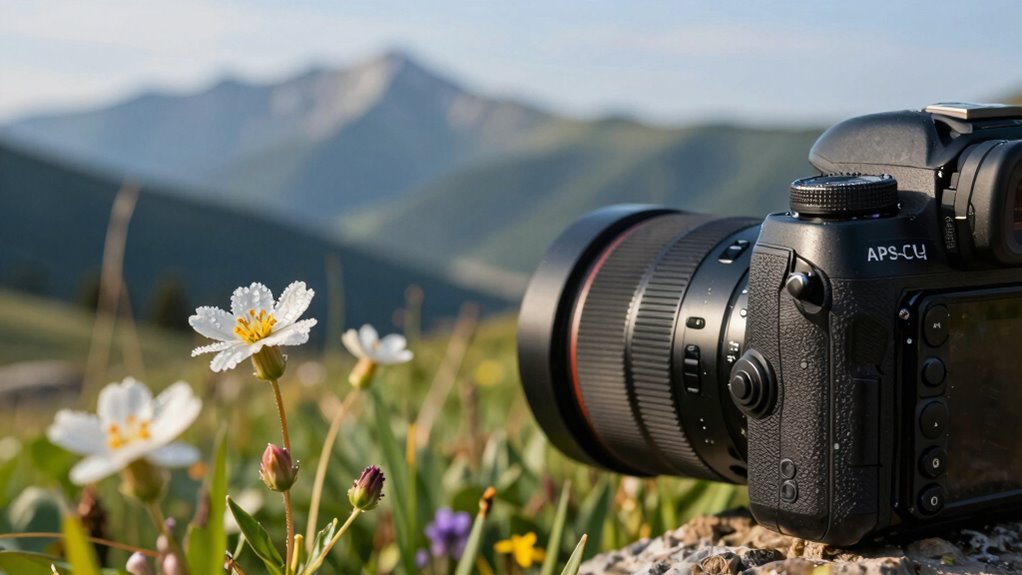

When choosing between APS-C and full-frame cameras, you’ll notice differences in image quality, especially in low light, with full-frame producing cleaner photos. Depth of field is more pronounced on full-frame, helping you isolate subjects better. You’ll also need different lenses because of the crop factor on APS-C, which can limit your framing. Larger sensors give you more flexibility overall. To discover how these factors truly impact your shots, keep exploring the details.
Get ready for Prime Big Deal Days — try Prime free
Exclusive member deals on October 6–7, plus fast free delivery. Cancel anytime.
As an affiliate, we earn on qualifying purchases.
Key Takeaways
- Full-frame sensors produce a shallower depth of field and more background blur compared to APS-C sensors.
- APS-C cameras require wider lenses or closer distances for similar framing and subject isolation.
- Full-frame cameras excel in low-light conditions, offering cleaner images with less noise.
- The larger sensor size allows for more creative flexibility in composition and achieving professional-looking results.
- APS-C cameras are more compact and lightweight but may have limitations in achieving certain cinematic effects.

Have you ever wondered what sets APS-C sensors apart from full-frame ones? It all comes down to sensor size. APS-C sensors are smaller, typically measuring around 22mm x 15mm, whereas full-frame sensors are larger, about 36mm x 24mm. This difference impacts how your camera captures images, especially in regards to depth of field. With a larger sensor, like a full-frame, you can achieve a shallower depth of field more easily. That means your background can blur out beautifully, isolating your subject and creating that professional, cinematic look. On an APS-C sensor, achieving the same background blur requires using wider apertures or getting closer to your subject, because the smaller sensor inherently produces a deeper depth of field at comparable settings.
In real life, this difference influences how you approach your photography. If you’re shooting portraits and want a soft, blurred background, a full-frame camera gives you a natural advantage. You can use a wider aperture without worrying about everything behind your subject coming into focus. Conversely, on an APS-C camera, you might need to open even wider or get closer to your subject to achieve similar separation. This can sometimes be limiting in tight spaces or when you’re trying to keep some contextual background in the shot. The smaller sensor also means your field of view for a given lens is narrower, so capturing expansive landscapes or architecture may require a wider lens or cropping. Additionally, sensor size influences image quality, especially in low-light conditions, where full-frame sensors excel at capturing more light for cleaner images. Understanding sensor size differences helps photographers choose the right gear for their specific needs.
As an affiliate, we earn on qualifying purchases.
Frequently Asked Questions
How Does Sensor Size Affect Camera Weight and Portability?
Sensor size directly impacts camera weight and portability trade-offs. Larger sensors, like full frames, tend to make cameras heavier and bulkier, reducing portability. Smaller sensors, such as APS-C, keep cameras lighter and more compact, making them easier to carry around. So, if you prioritize traveling light, a camera with a smaller sensor offers better portability, but you might sacrifice some image quality and low-light performance.
What Are the Cost Differences Between APS-C and Full-Frame Cameras?
You’ll find that full-frame cameras generally cost more than APS-C models. This price difference mainly comes from higher sensor costs and increased production expenses associated with larger sensors. Full-frame sensors require more materials and complex manufacturing processes, which drive up the price. While APS-C cameras are more budget-friendly, investing in a full-frame offers better image quality, but you should be prepared for the higher initial investment due to these production and sensor costs.
How Do Autofocus Systems Vary Between APS-C and Full-Frame Models?
You’ll notice autofocus systems in APS-C and full-frame cameras differ mainly in autofocus speed and accuracy. Full-frame models often feature faster autofocus due to more advanced sensors and processing power, helping you capture moving subjects sharply. Meanwhile, APS-C cameras can still deliver good accuracy, especially in good lighting, but might lag slightly behind in speed during high-speed shooting. Your choice depends on your need for rapid, precise autofocus in different scenarios.
Is Low-Light Performance Significantly Better on Full-Frame Cameras?
Yes, low-light performance is markedly better on full-frame cameras. You’ll notice less sensor noise in darker settings, resulting in cleaner images. Plus, full-frame sensors offer greater exposure flexibility, so you can shoot at higher ISO levels without sacrificing image quality. This means you can capture brighter, clearer shots in challenging lighting conditions, making full-frame cameras ideal for night photography or dimly lit environments.
How Does Image Stabilization Differ Between the Two Sensor Sizes?
You’ll find that image stabilization differs because full-frame sensors often have more advanced in-body stabilization, which helps counteract camera shake better. APS-C cameras, with their smaller sensors, may rely more on lens stabilization. The sensor crop impacts ISO performance, meaning full-frame cameras usually perform better in low light, but stabilization quality is more about the camera or lens features. Overall, full-frame offers an advantage in stabilizing images, especially in challenging conditions.
As an affiliate, we earn on qualifying purchases.
Conclusion
Choosing between APS-C and full frame is like picking between a nimble sports car and a luxurious limousine; each offers unique advantages. APS-C cameras are perfect if you want a lightweight, budget-friendly option that still delivers great images. Full frame cameras, on the other hand, excel in low-light and detailed shots, providing a richer, more immersive experience. Ultimately, your choice depends on your needs, but remember—it’s the photographer’s eye, not just the gear, that makes the magic happen.
professional portrait lens for full frame
As an affiliate, we earn on qualifying purchases.
As an affiliate, we earn on qualifying purchases.
As an affiliate, we earn on qualifying purchases.
Fall Picks
fall essentials
As an affiliate, we earn on qualifying purchases.