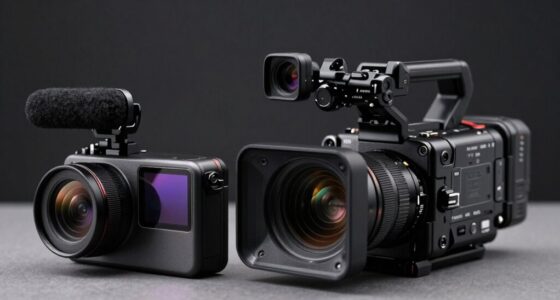

Camera lenses can cost more than the camera body because they involve complex optics, precise engineering, and advanced technology to deliver sharp, high-quality images across larger sensors. Brand reputation, innovative features, and rigorous manufacturing add to their expense. Higher-quality glass and intricate designs need careful craftsmanship, which raises costs. If you want to understand how these factors work together to make lenses pricier, there’s more to explore.
Key Takeaways
- Larger sensors require complex, high-quality optics, increasing lens manufacturing costs significantly.
- Advanced optical designs and features like image stabilization raise production expenses.
- Leading brands invest heavily in research, innovation, and quality control, boosting lens prices.
- Precision engineering and meticulous manufacturing processes add to the overall cost of lenses.
- Higher-end lenses offer better durability, performance, and resale value, justifying their premium price.

You might be surprised to learn that some camera lenses cost more than the camera bodies they attach to, and there’s a good reason for that. High-end lenses are crafted with precision, using advanced technology and top-quality materials to deliver superior image quality. One key factor influencing their cost is sensor size compatibility. Larger sensors, like full-frame sensors, require lenses designed to cover a broader area, which demands more complex optics and meticulous engineering. These lenses guarantee sharpness across the entire frame, minimize distortions, and handle challenging lighting conditions better. Smaller sensors, such as those in compact cameras or smartphones, don’t need such extensive optics, making their lenses generally more affordable. So, when you’re investing in a lens, understanding its compatibility with your sensor size helps explain the price difference, as larger sensors demand higher-quality glass and sophisticated design. Additionally, the level of optical complexity involved in producing these lenses significantly impacts their cost, as more intricate designs require precise manufacturing and quality control. Brand reputation also plays a significant role in lens pricing. Leading brands like Canon, Nikon, or Sony have established themselves over decades, earning consumer trust through consistent quality and innovation. Their reputation allows them to charge premium prices because users associate these brands with reliability, durability, and top-tier performance. These companies invest heavily in research and development to produce lenses with cutting-edge features—such as superior autofocus, image stabilization, and coatings that reduce flare and ghosting. The prestige of a brand can also mean better resale value and compatibility across a range of camera models, making the initial investment worthwhile for many photographers. Moreover, the manufacturing process for premium lenses often involves rigorous quality control procedures that add to their overall cost, ensuring each lens meets strict standards. In addition, technological advancements continue to push the boundaries of what lenses can achieve, further elevating their value and price point. In some cases, the Brand reputation itself adds a premium element, as consumers are often willing to pay more for a trusted name. Conversely, lesser-known or generic brands might offer cheaper alternatives but often lack the optical excellence, build quality, or technological advancements that come with the big names.

Xenvo Pro Lens Kit for iPhone and Android, Macro and Wide Angle Lens with LED Light and Travel Case Black
✔ COMPATIBLE WITH ALL SMARTPHONES, TABLETS, and LAPTOPS including ALL iPhone models, Samsung Galaxy and Note, Google Pixel,…
As an affiliate, we earn on qualifying purchases.
As an affiliate, we earn on qualifying purchases.
Frequently Asked Questions
How Do Lens Materials Affect Manufacturing Costs?
Lens materials substantially impact manufacturing costs because high-quality glass offers better optical clarity, which photographers need. Using advanced production techniques to shape and polish these materials also raises expenses. When you choose lenses with superior materials, you’re paying for the precision and craftsmanship involved. These high-grade components ensure sharp images and durability, making the lens more expensive than the camera body itself.
Why Are Some Lenses More Durable Than Others?
Some lenses are more durable because they use high-quality optical coatings and lens coatings that safeguard against scratches, dust, and moisture. These coatings strengthen the lens surface, preventing damage and maintaining image quality over time. Manufacturers invest in advanced coatings, making lenses more resilient. If you handle them properly, these durable features guarantee your lens lasts longer, even in challenging conditions, giving you reliable performance for years.
How Does Lens Complexity Influence Price?
Lens complexity considerably influences its price because intricate designs require higher optical precision and tighter manufacturing tolerances. When a lens has more elements or advanced features, it demands precise assembly and quality control, increasing production costs. You’ll find that complex lenses deliver superior image quality and specialized functions, justifying their higher prices. So, the more complex the lens, the more you’re investing in optical precision and meticulous manufacturing processes.
Do Brand Names Significantly Impact Lens Pricing?
Like a master painter’s signature, brand names profoundly impact lens pricing. You’re often paying for brand prestige and consumer perception, which can elevate a lens’s value beyond its technical specs. Well-known brands like Canon or Nikon carry a reputation for quality, making their lenses more desirable—and costly—regardless of the actual manufacturing costs. Your choice reflects trust in their legacy, influencing how much you’re willing to invest in your photography gear.
What Role Does Market Demand Play in Lens Pricing?
Market demand heavily influences lens pricing because it reflects current market trends and consumer preferences. When a lens is popular or offers unique features, manufacturers can charge higher prices, knowing photographers want it. Conversely, if demand drops, prices often fall. Your buying decisions are shaped by these trends and preferences, which drive manufacturers to adjust prices accordingly, ensuring they meet consumer needs while maximizing profits.

Canon EOS R6 Mark II Mirrorless Camera RF24-105mm F4-7.1 is STM Lens Kit, Full-Frame Hybrid Camera, 24.2 Megapixel CMOS Sensor, Photo and Video Capabilities, Black
High image quality featuring a new 24.2 megapixel full-frame CMOS sensor
As an affiliate, we earn on qualifying purchases.
As an affiliate, we earn on qualifying purchases.
Conclusion
So, next time you’re tempted by that high-priced lens, remember—it’s more than just glass and metal. It’s precision, innovation, and a promise of stunning images. But the real question is, what incredible shots could you access with it? Will it transform your photography or just sit unused? The choice is yours. The lens may be expensive, but it might just be the game-changer you’ve been waiting for—if you dare to take the leap.

Nikon AF-S DX NIKKOR 55-300mm f/4.5-5.6G ED Vibration Reduction Zoom Lens with Auto Focus for Nikon DSLR Cameras
This Certified Refurbished product is manufacturer refurbished it shows limited or no wear
As an affiliate, we earn on qualifying purchases.
As an affiliate, we earn on qualifying purchases.

Canon EF 75-300mm f/4-5.6 III Telephoto Zoom Lens (Black)
Focal Length & Maximum Aperture : 75-300mm 1:4-5.6
As an affiliate, we earn on qualifying purchases.
As an affiliate, we earn on qualifying purchases.