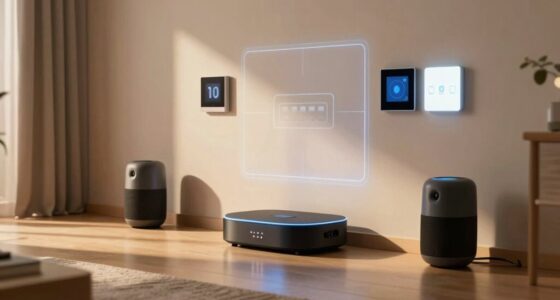
To cut your power bills, smart plugs and sensors let you monitor energy use in real time, identify wasteful devices, and automate control of appliances. By understanding your consumption patterns, you can optimize your system, prioritize renewable energy, and reduce standby power. Proper placement and integration with your existing setup enhance efficiency. If you want to learn how to turn this smart approach into big savings, there’s more to discover below.

Get the latest gadgets delivered free — and shop member deals
- Fast, free delivery on millions of items
- Access to Prime Big Deal Days deals on October 6–7
- Prime Video, Amazon Music and more included
Key Takeaways
- Smart plugs and sensors provide real-time energy consumption data to identify wasteful appliances and habits.
- Automate device controls to reduce standby power and optimize usage based on schedules and occupancy.
- Proper placement and integration of devices ensure accurate monitoring and enhance overall energy efficiency.
- Analyzing energy data helps pinpoint high-consumption devices and optimize peak usage times.
- Combining renewable resources like solar panels with smart energy devices can significantly lower power bills.
Understanding the Benefits of Smart Energy Devices

Smart energy devices offer significant advantages by giving you real-time insights into your energy consumption, helping you identify waste and optimize usage. With these devices, you can see exactly which appliances or systems use the most power, enabling you to make smarter decisions. For example, energy dashboards display appliance-level data, revealing phantom loads and inefficient habits. Automated controls, like smart thermostats and sensors, adjust energy use without manual effort, saving you money and reducing environmental impact. Additionally, integration with solar panels and batteries maximizes renewable energy use. These devices also support predictive analytics, alerting you to potential issues before costly failures occur. Incorporating power management techniques can further help you optimize energy efficiency and reduce overall consumption. Overall, smart energy devices empower you to take control of your consumption, lower bills, and contribute to sustainability efforts. When used alongside home theatre projectors, they can optimize power consumption for entertainment setups, ensuring a more energy-efficient home environment. Incorporating energy management systems can further enhance your ability to monitor and control your entire home’s energy profile seamlessly. Utilizing smart sensors throughout your home can provide detailed data to fine-tune your energy use even further.
How Smart Plugs and Sensors Work to Save Power

Using smart plugs and sensors, you can easily monitor and control your household devices to cut down on unnecessary power use. These devices connect to your Wi-Fi or other wireless protocols, allowing you to track energy consumption in real time through an app or dashboard. Smart plugs turn appliances on or off remotely, preventing standby power drain or accidental overuse. Sensors detect how much energy each device consumes, providing detailed data that helps you identify wasteful habits. Many systems incorporate AI or automation features, enabling devices to turn off when not in use or adjust settings based on your schedule. By actively managing your devices, you optimize energy use, reduce bills, and contribute to a more sustainable home. Additionally, local automation features can coordinate multiple devices to work together efficiently, further enhancing energy savings. Integrating these technologies with energy management systems can provide comprehensive insights and control over your entire household’s power consumption. These systems also often include energy consumption analytics, which help you understand long-term patterns and identify opportunities for further savings. A key benefit of these systems is their ability to provide real-time energy data, which allows homeowners to make informed decisions about their energy habits and identify areas for improvement.
Key Features to Look for in Energy Monitoring Devices

When choosing an energy monitoring device, it’s vital to focus on features that enhance accuracy, connectivity, and user control. You want reliable data to identify waste and optimize your energy use effectively. Look for devices with:
- High measurement precision to track real-time consumption at the appliance level. This ensures you can accurately assess where energy is being used and make informed decisions.
- Multiple wireless protocols like Wi-Fi, Zigbee, or Z-Wave for seamless integration with your smart home ecosystem. Compatibility with various protocols allows for flexible setup and expansion.
- User-friendly dashboards and apps that allow you to easily monitor, analyze, and set automation rules. Intuitive interfaces help you quickly interpret data and implement energy-saving strategies.
- Consider dog-friendly designs or features that ensure your pets’ safety when installing these devices around your home. Incorporating safe installation practices can prevent accidents and protect your household.
- Additionally, look for devices with accurate data logging capabilities, which provide detailed historical insights to help analyze long-term consumption patterns and identify persistent inefficiencies.
These features guarantee you get accurate insights, reliable connectivity, and straightforward control, making it easier to cut your power bills and maximize energy efficiency. Prioritizing these aspects helps you create a smarter, more sustainable home.
Setting Up Your Smart Home for Maximum Efficiency

To get the most out of your smart home, focus on optimizing device placement for accurate energy monitoring and seamless connectivity. Make sure your new devices integrate smoothly with your existing systems to maximize automation and control. Proper setup not only enhances efficiency but also helps you identify energy-saving opportunities quickly. Incorporating practical, room-by-room solutions can make the process more manageable and effective. Paying attention to device placement ensures accurate readings and better system performance. Additionally, understanding energy monitoring tools can help you better interpret data and make informed decisions. Exploring system integration techniques can further improve your smart home’s overall efficiency and reliability. Considering trusted local service providers can assist with installation and troubleshooting to ensure optimal setup.
Optimize Device Placement
Optimizing device placement is essential for maximizing the efficiency of your smart home energy monitoring system. Proper placement guarantees accurate data collection and effective energy management. To do this, consider these tips:
- Place sensors near major appliances, like your HVAC or refrigerator, for precise consumption data.
- Avoid areas with interference, such as thick walls or metal objects, which can disrupt wireless signals.
- Keep smart plugs and sensors at eye level or in open spaces to improve connectivity and ease of access.
- Refer to device compatibility guidelines to ensure sensors work seamlessly with your existing smart home setup.
Integrate With Existing Systems
Integrating your smart energy monitoring devices with existing home systems is essential for achieving maximum efficiency. You want your smart plugs, sensors, and thermostats to communicate seamlessly with your hub, app, or voice assistants. Use compatible protocols like Wi-Fi, Zigbee, or Z-Wave to connect devices smoothly. Linking these systems allows for centralized control, automation, and real-time data sharing, making adjustments easier. For example, connect your smart thermostat with your energy monitor to optimize heating and cooling based on actual usage. Guarantee your devices are compatible with your existing ecosystem to avoid integration issues. Proper setup enables automation, reduces manual intervention, and maximizes energy savings—ultimately creating a smarter, more efficient home environment. Recognize quality by understanding the craftsmanship and design behind your devices, ensuring you choose reliable options for long-term efficiency. Additionally, selecting interoperable devices that support multiple protocols can help future-proof your smart home setup. Incorporating proper setup procedures and ensuring compatibility with your current infrastructure will lead to smoother integration and better overall performance. Furthermore, understanding device interoperability can simplify troubleshooting and expand your system’s capabilities over time.
A well-designed system also considers security protocols to protect your data and maintain privacy as your home automation network grows.
Analyzing Energy Usage Data to Reduce Bills

Analyzing energy usage data is essential for identifying areas where you can cut costs and improve efficiency. By reviewing your energy dashboard, you can spot patterns and pinpoint wasteful appliances or habits. For example, you might notice your HVAC consumes more energy during certain hours or that standby power adds up over time. To make the most of this data, consider:
Identifying energy patterns helps optimize usage and reduce costs effectively.
- Tracking appliance-specific consumption to see which devices are the biggest energy hogs.
- Monitoring peak usage times to adjust your schedule or automate device operation.
- Comparing monthly trends to evaluate the impact of behavioral changes or new devices.
- Ensuring your home’s electrical system is properly configured and protected with reliable backup power solutions, so unexpected outages don’t disrupt your energy management efforts. Using performance cookies can also help analyze the effectiveness of your adjustments over time.
This process helps you make informed decisions, optimize your energy use, and ultimately lower your bills. Regular analysis keeps you proactive in managing your home’s energy efficiency.
Integrating Solar and Battery Storage for Enhanced Savings

By integrating solar panels and battery storage, you can maximize your energy savings and reduce reliance on the grid. This combination allows you to store excess solar energy for later use, making your energy consumption more cost-effective. When you monitor your system closely, you’ll find ways to optimize your setup for even greater efficiency and savings.
Solar Integration Benefits
Have you considered how combining solar panels with battery storage can substantially boost your energy savings? When you pair these systems, you can use solar energy more effectively and reduce reliance on grid power, especially during peak rates. This integration allows you to store excess solar energy for later use, cutting down your electricity bills even further. Plus, it provides backup power during outages, ensuring your home stays powered.
- Maximize solar energy use by storing excess power for cloudy days
- Lower bills with optimized energy consumption during peak rate hours
- Enhance energy independence, reducing reliance on the grid and fossil fuels
Battery Storage Efficiency
Integrating battery storage with solar panels enhances your energy savings by maximizing the use of generated solar power. When your solar system produces excess energy, the battery stores it for later use, reducing reliance on grid power during peak rates or cloudy days. To optimize efficiency, guarantee your battery system is properly sized to match your energy consumption and solar output. Regularly monitor battery performance through your energy management system to identify potential issues early. High-quality batteries with advanced chemistry, like lithium-ion, offer better lifespan and efficiency. Proper installation and configuration help minimize energy loss during charging and discharging cycles. By optimizing your battery storage, you ensure more of your solar energy gets used on-site, lowering your bills and boosting overall system efficiency.
Cost-Effective Energy Use
Combining solar panels with battery storage allows you to maximize your energy savings and reduce dependence on the grid. By storing excess solar power, you can use it during peak hours or cloudy days, lowering your utility bills. To get the most out of this setup, consider these tips:
- Use smart energy monitors to track solar production and consumption patterns.
- Schedule high-energy tasks for sunny periods when solar energy is abundant.
- Automate your system to prioritize solar and stored energy before drawing from the grid.
This integration helps you cut costs, boost renewable energy use, and enhance energy independence. Plus, it prepares your home for future grid incentives and supports sustainability goals. Smart management makes these investments even more worthwhile.
Overcoming Challenges and Ensuring Privacy in Smart Energy Systems

Despite the rapid growth of smart energy systems, addressing interoperability and privacy concerns remains essential for widespread adoption. You need to guarantee your devices work seamlessly together across different protocols like Wi-Fi, Zigbee, and Z-Wave, which can be tricky without proper standards. Privacy is equally critical; your energy data reveals your habits and can be vulnerable to breaches. To protect yourself, prioritize devices with robust encryption and access controls. Stay informed about data sharing policies and choose systems that give you control over your information. Regular updates and secure network practices help mitigate risks. By actively managing these challenges, you can confidently enjoy the benefits of smart energy systems while safeguarding your privacy and ensuring your devices function smoothly.
Frequently Asked Questions
How Long Do Smart Energy Devices Typically Last Before Needing Replacement?
Smart energy devices usually last between 3 to 7 years before needing replacement, depending on usage, quality, and maintenance. You should check the manufacturer’s guidelines and keep an eye on device performance, such as connectivity issues or faulty readings. Regular updates and proper care can extend their lifespan. When devices become outdated or stop functioning correctly, replacing them guarantees you continue to benefit from energy savings and smart features.
Can Smart Plugs Operate During Power Outages or Internet Disruptions?
Think of your smart plug as a dependable lighthouse, guiding your devices safely even when storms hit. During power outages, most smart plugs lose power and can’t operate, just like a lighthouse dims without light. Similarly, internet disruptions cut off remote control, but some smart plugs with backup batteries can keep working temporarily. For reliable operation, choose models with battery backup to make certain your smart home stays connected and safe during blackouts.
Are Energy Monitoring Devices Compatible With All Major Smart Home Ecosystems?
Most energy monitoring devices are compatible with major smart home ecosystems like Amazon Alexa, Google Home, and Apple HomeKit, but not all models work seamlessly across every platform. You should check each device’s specifications and supported protocols, such as Wi-Fi, Zigbee, or Z-Wave, to verify compatibility. This way, you can integrate your system smoothly and enjoy centralized control, automation, and real-time energy insights without hassle.
What Are the Typical Costs Associated With Installing a Comprehensive Energy System?
Thinking about installing a extensive energy system? It typically costs between $1,000 and $4,000, depending on system complexity and home size. You’ll spend on smart meters, sensors, and installation fees, plus ongoing maintenance. Are you prepared for the initial investment? Remember, these costs often lead to savings of 10-15% on energy bills over time, making your home more efficient and eco-friendly in the long run.
How Do I Ensure My Energy Data Remains Private and Secure?
You can keep your energy data private and secure by using strong, unique passwords for your smart devices and Wi-Fi network. Enable two-factor authentication whenever available, keep your firmware updated, and select devices with robust encryption standards. Regularly review device permissions and disconnect any unused or suspicious gadgets. Using a secure VPN and setting up a separate network for your smart home can further protect your data from unauthorized access.
Conclusion
By embracing smart plugs and sensors, you can effortlessly enhance energy efficiency and eliminate excess expenses. Focus on fitting features, fine-tuning settings, and tracking trends to truly transform your home. With a little effort and smart strategies, you’ll see savings soar while supporting sustainable solutions. So, seize the smart, simple steps today, and start saving more, wasting less, and shining brighter in your energy-efficient journey!
Fall Picks
fall essentials
As an affiliate, we earn on qualifying purchases.