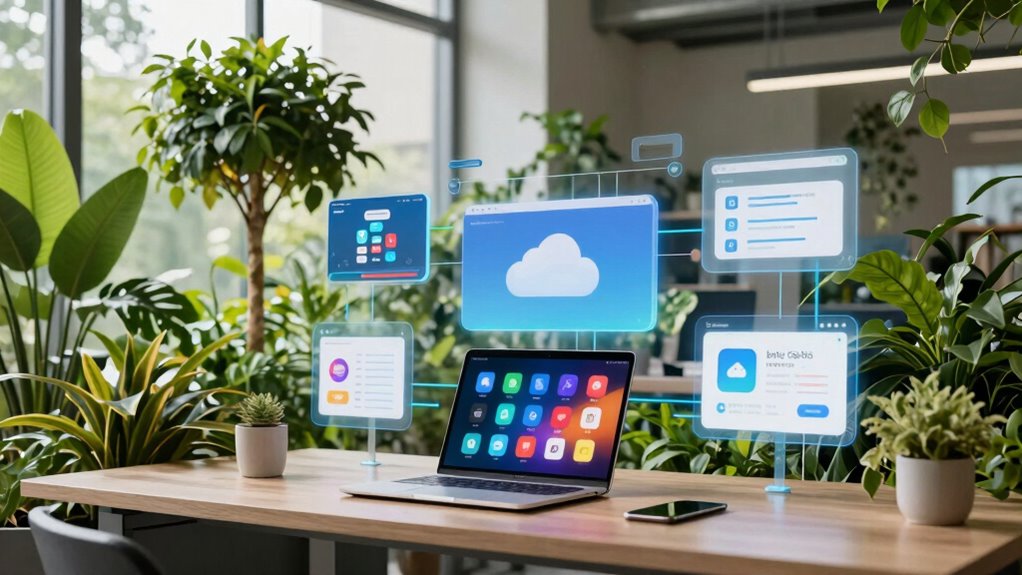

Apps are specific programs designed for tasks like social media or gaming, with user interfaces to make interaction easy. Platforms are the foundational systems like iOS or Android that support multiple apps through tools, APIs, and guidelines. Ecosystems are the broader environments connecting devices, apps, and services for a seamless experience. Understanding how these work together helps you navigate digital technology better—if you want to explore more, there’s plenty to discover.

Get the latest gadgets delivered free — and shop member deals
- Fast, free delivery on millions of items
- Access to Prime Big Deal Days deals on October 6–7
- Prime Video, Amazon Music and more included
Key Takeaways
- Apps are specific programs designed for particular functions, built using developer tools.
- Platforms provide the foundational technology, APIs, and services supporting multiple apps.
- Ecosystems encompass interconnected devices, apps, and services creating integrated digital environments.
- Developer tools assist in creating, testing, maintaining, and updating apps within platforms and ecosystems.
- The hierarchy: apps operate within platforms, which are part of larger ecosystems for seamless user experiences.

Understanding the differences between apps, platforms, and ecosystems can be confusing, but grasping these concepts is essential in today’s digital world. When you think about an app, you’re considering a specific program designed to perform a particular function. Whether it’s a social media tool, a productivity app, or a game, each app has a user interface that shapes how you interact with it. A well-designed user interface makes it easier for you to navigate, input data, and receive information. Developers focus heavily on crafting intuitive user interfaces because they directly influence your experience. Behind the scenes, they use developer tools—software that helps create, test, and refine these apps efficiently. These tools streamline coding, debugging, and deploying, ensuring apps are reliable and user-friendly.
Now, a platform is different from an app. Think of a platform as a foundation that supports multiple apps, providing the core technology and services they rely on. For example, operating systems like iOS or Android serve as platforms because they offer the underlying architecture, development kits, and user interface guidelines that developers use to build their apps. When you download an app from a platform, you’re tapping into a set of shared resources—like APIs and hardware access—that make the app functional. Platforms also provide developer tools—integrated development environments (IDEs), debugging tools, and SDKs—that help developers create better apps faster. These tools allow developers to optimize performance, ensure compatibility, and incorporate features like notifications or location services seamlessly. Additionally, understanding the role of developer tools is crucial in appreciating how apps are built and maintained within these systems. Developer tools also enable efficient updates and security patches, which are vital for maintaining a safe and reliable environment for users.
Ecosystems go even broader. They encompass the entire environment where apps, platforms, and services interact. Think of an ecosystem as the interconnected web of devices, apps, developers, and services that work together to serve your needs. For instance, Apple’s ecosystem includes iPhones, iPads, MacBooks, and services like iCloud and the App Store. It creates a seamless experience, allowing you to start a task on one device and finish on another without hassle. Developers leverage this ecosystem by designing apps that integrate with various services, using platform-specific developer tools to enhance functionality and user experience. This interconnectedness relies on consistent user interfaces and robust developer tools that ensure apps work harmoniously across devices. The ecosystem also fosters innovation by allowing developers to build upon existing technologies, creating new features that enhance user engagement.
In essence, understanding these distinctions helps you see how each element contributes to your digital experience. Apps are the specific programs you use daily, built with the help of developer tools and designed with user interfaces. Platforms provide the foundational technology that supports these apps, while ecosystems tie everything together into a cohesive environment, making your digital life more integrated and efficient. Recognizing the interplay between these components can help you better understand the evolution of digital services and how they shape modern technology.
As an affiliate, we earn on qualifying purchases.
Frequently Asked Questions
How Do Apps, Platforms, and Ecosystems Impact User Privacy?
Apps, platforms, and ecosystems profoundly impact your privacy by collecting user data through various features. When you use them, they may access personal information, so it’s essential to read privacy policies carefully. Platforms often share data across apps within an ecosystem, increasing exposure. Your privacy depends on how transparent these services are about data collection and your ability to control what they access, so stay informed and cautious.
What Are the Key Security Differences Among Apps, Platforms, and Ecosystems?
You face security differences that can feel like steering through an endless maze. Apps often expose you to third-party risks, risking data leaks if not carefully managed. Platforms hold more control but can still compromise data sovereignty if vulnerabilities emerge. Ecosystems, however, intertwine multiple apps and platforms, amplifying risks but offering robust security measures. Protect yourself by understanding these differences and staying vigilant against threats lurking within each environment.
Can an App Become a Platform or Ecosystem Over Time?
Yes, an app can evolve into a platform or ecosystem over time. As you grow, you’ll face scalability challenges, requiring you to expand features and support third-party integrations. To succeed, focus on user engagement strategies that foster community and loyalty. By continuously enhancing your app’s capabilities and encouraging third-party contributions, you create a broader ecosystem that attracts more users and partners, turning your app into a thriving platform.
How Do Monetization Strategies Differ Across Apps, Platforms, and Ecosystems?
You can tailor monetization strategies by focusing on revenue models that suit each level. Apps often rely on ads, in-app purchases, or subscriptions to boost user engagement and revenue. Platforms might generate income through developer fees or transaction commissions, while ecosystems leverage network effects, encouraging multiple revenue streams like licensing, partnerships, and integrated services. Adapting these strategies helps maximize user engagement and revenue across different digital environments.
Which Is More Sustainable: Developing Standalone Apps or Integrated Ecosystems?
You’ll find that integrated ecosystems tend to be more sustainable because they foster interoperability, making it easier for users to navigate seamlessly across services. While standalone apps may face interoperability challenges, ecosystems enable greater innovation potential by encouraging collaboration and expanding functionalities. This interconnectedness not only enhances user experience but also sustains growth over time, making ecosystems a smarter long-term investment compared to isolated standalone apps.
As an affiliate, we earn on qualifying purchases.
Conclusion
Understanding the difference between apps, platforms, and ecosystems helps you see the bigger picture of technology’s impact. Did you know that over 80% of smartphone users rely on multiple apps daily? This shows how interconnected and essential these digital tools are in your life. By recognizing their distinctions, you can make smarter choices in how you use technology to stay connected, productive, and ahead in today’s fast-paced world.
As an affiliate, we earn on qualifying purchases.
app testing and debugging software
As an affiliate, we earn on qualifying purchases.
As an affiliate, we earn on qualifying purchases.
Evergreen bestsellers Picks
bestsellers
As an affiliate, we earn on qualifying purchases.