

Choosing between cloud storage and an external hard drive depends on your needs. Cloud offers scalable, remote access and automatic backups, making it great for flexibility and growth. External drives provide faster data transfer, local access, and no ongoing fees, ideal for quick backups and large data sets. Consider your budget, security preferences, and how you want to access your files. Keep going, and you’ll discover which option suits your backup goals best.

Get the latest gadgets delivered free — and shop member deals
- Fast, free delivery on millions of items
- Access to Prime Big Deal Days deals on October 6–7
- Prime Video, Amazon Music and more included
Key Takeaways
- Cloud storage offers scalable, on-demand capacity, ideal for growing data needs, whereas external drives have fixed storage limits requiring physical upgrades.
- External hard drives typically provide faster, consistent backup and recovery speeds due to direct connections.
- Cloud solutions enable remote access and seamless sharing but depend on internet speed, while external drives require physical access.
- Long-term costs favor external drives for large, steady storage, but cloud plans are more cost-effective for fluctuating or expanding data.
- Cloud storage enhances accessibility and automation, but external drives offer better control and immediate data transfer performance.
As an affiliate, we earn on qualifying purchases.
Understanding the Basics of Cloud Storage and External Hard Drives
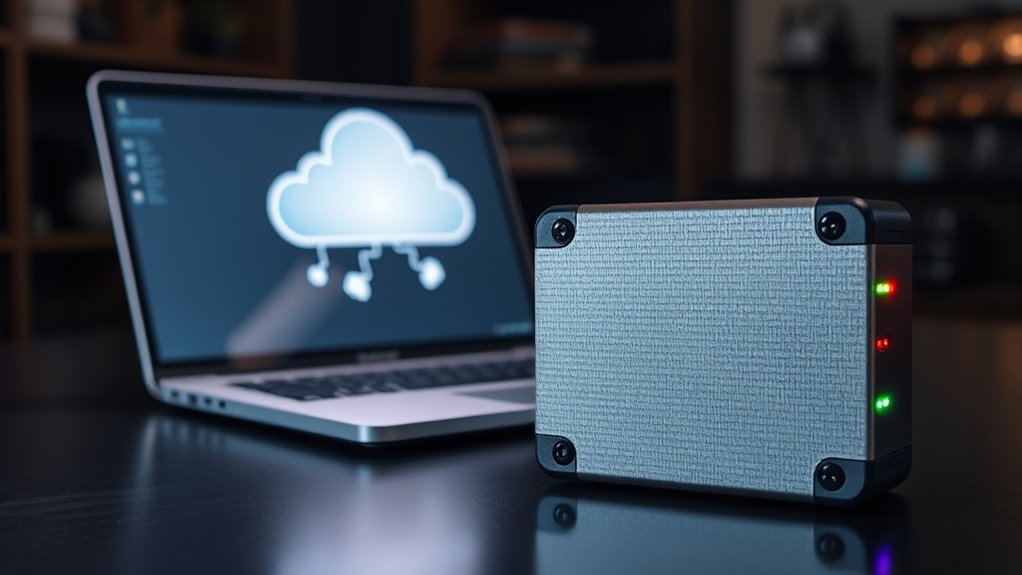
Cloud storage and external hard drives are two popular options for saving and backing up your data, each with its own advantages. Cloud storage involves uploading your files to remote servers accessible via the internet. This means you can access your data from any device with an internet connection, making it highly convenient. External hard drives, on the other hand, are physical devices you connect directly to your computer through USB or other ports. They offer large storage capacities and fast transfer speeds without relying on internet connectivity. Both options serve as reliable backup solutions, but they differ in setup, accessibility, and maintenance. Understanding how each works helps you decide which aligns best with your data management needs and lifestyle. Contrast ratio plays a role in how clear and detailed your visual data appears when backing up images or videos. Additionally, considering the hardware durability of external drives can impact long-term data safety, especially in environments prone to physical hazards. Moreover, cloud security features are essential to protect your data from unauthorized access in online storage solutions.
cloud storage subscription plans
As an affiliate, we earn on qualifying purchases.
As an affiliate, we earn on qualifying purchases.
Cost Analysis: Which Option Is More Budget-Friendly?
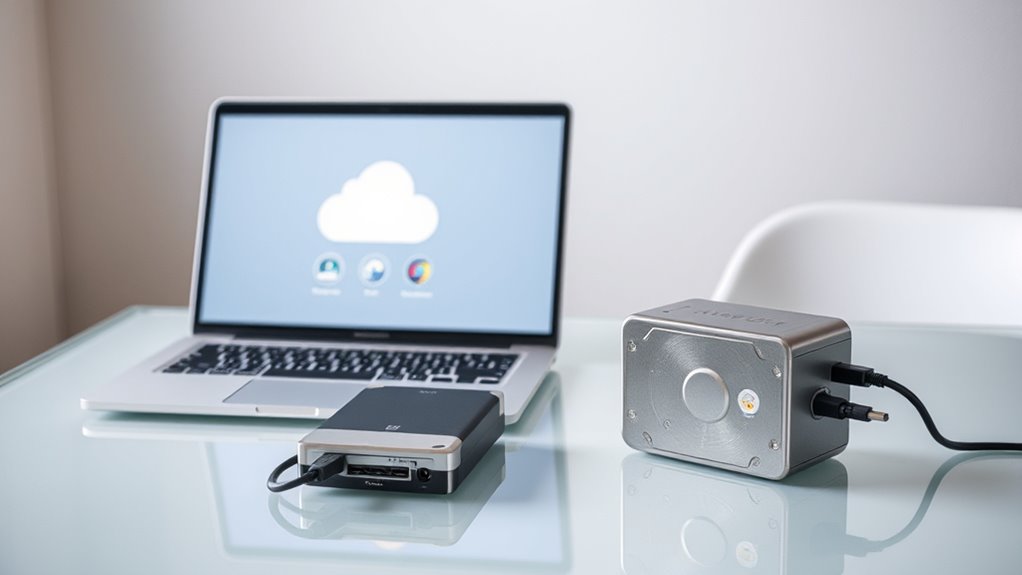
When comparing costs, cloud storage often seems more affordable upfront because you don’t need to buy hardware, but the long-term expenses can add up with monthly or yearly subscription fees. If you’re on a tight budget initially, cloud services might be appealing since they eliminate upfront hardware costs. However, over time, monthly fees for gigabytes or terabytes of storage can become costly, especially if your storage needs grow. External hard drives require a larger upfront investment but tend to be more economical in the long run since you pay once. Consider your budget, storage needs, and potential future growth. If you plan to store large amounts of data for years, an external drive might be more budget-friendly, whereas cloud storage offers flexibility but at a recurring cost.
As an affiliate, we earn on qualifying purchases.
Accessibility and Convenience of Data Retrieval

Accessing your data quickly and easily can substantially impact your overall experience. With cloud storage, you can retrieve files from anywhere with an internet connection, making it highly convenient when you’re on the go. You don’t need to carry physical devices or worry about compatibility issues; just log in to your account, and your data is there. External hard drives, on the other hand, require you to be physically near the device and connected to your computer. While this might be straightforward at home or office, it limits your mobility and can slow down retrieval if the drive is stored elsewhere. Regarding convenience, cloud storage offers immediate access regardless of location, whereas external drives provide quick access but only when physically available. Additionally, cloud storage solutions often incorporate evidence‑informed guidance, helping ensure your data management practices are reliable and current. The instant access provided by cloud services can be particularly beneficial in emergency situations or for collaborative work. Moreover, cloud services typically include easy data management features that streamline organization and sharing. Incorporating automated backup options ensures your data remains protected without manual intervention, providing peace of mind.
best external hard drives for data transfer
As an affiliate, we earn on qualifying purchases.
As an affiliate, we earn on qualifying purchases.
Data Security and Privacy Concerns
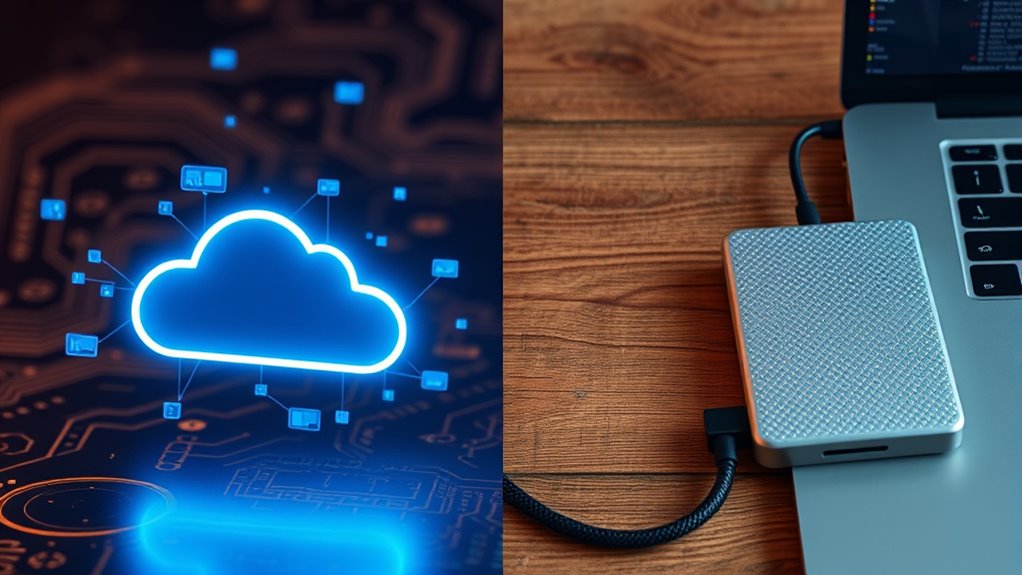
While cloud storage offers convenience, it also raises significant security and privacy concerns that you should consider. Your data stored online could be vulnerable to hacking, unauthorized access, or data breaches. Service providers implement security measures, but no system is entirely foolproof. Privacy policies may also limit your control over who accesses your data. To better understand these risks, consider the following:
| Security Aspect | Potential Risk |
|---|---|
| Encryption | Data may be intercepted or accessed without permission |
| Access Control | Unauthorized users might gain access |
| Data Breaches | Sensitive information could be exposed |
| Data Ownership | You may have limited control over your data |
| Data Transfer | Data in transit could be intercepted |
| Regular security audits | Ongoing checks help identify and fix vulnerabilities |
Storage Capacity and Scalability Options

When considering storage capacity and scalability, you need to evaluate your current limits and how easily you can expand. Cloud options often offer cost-effective ways to increase space without hardware upgrades, while external drives might require additional purchases. Long-term storage needs also influence whether scalable solutions make sense for your growing data demands. Additionally, understanding Rhythm Failure can help you choose storage solutions that accommodate high-quality audio files without compromising sound integrity. Recognizing storage management strategies can further optimize your backup system as your data needs evolve over time. Employing wealth protection strategies can ensure your digital assets are safeguarded as your storage requirements grow. Implementing effective backup scheduling ensures your data remains protected and accessible as your storage needs expand, and adopting scalable infrastructure can facilitate seamless data growth without interruptions.
Storage Limits and Expansion
Cloud storage services typically offer flexible storage limits that can grow with your needs, allowing you to easily increase capacity without hardware changes. This scalability means you won’t need to buy new equipment; instead, you can upgrade your plan as your data grows. External hard drives, on the other hand, have fixed capacities. Once you reach their limit, you need to purchase a new drive to expand storage. Here’s a quick comparison:
| Feature | Cloud Storage | External Hard Drive |
|---|---|---|
| Storage Limit | Adjustable with plans | Fixed, hardware-dependent |
| Expansion | Seamless, digital upgrades | Physical replacement needed |
| Cost Implication | Ongoing subscription | One-time purchase |
This flexibility makes cloud storage more adaptable for fluctuating data needs. Additionally, data security is a critical factor to consider when choosing between these options, as cloud providers often implement advanced encryption and security protocols.
Cost-Effective Scaling Options
Choosing the most cost-effective way to scale your storage depends on your specific needs and budget. Cloud storage often offers flexible plans, allowing you to pay only for what you use, making it ideal if your storage needs fluctuate. You can easily upgrade your plan as your data grows without upfront costs. External hard drives, on the other hand, require an initial investment, but adding capacity later involves purchasing additional drives. If your data growth is predictable and steady, external drives might be more economical long-term. However, cloud services often provide tiered options that help manage costs effectively, especially when scaling up. Storage capacity is a key factor to consider in your decision-making process. Additionally, understanding the market volatility of storage solutions can help you make informed choices about costs and investments. The self-sufficiency offered by external drives can be advantageous in situations where internet access is limited. Moreover, evaluating the cost-benefit of each option can further optimize your backup strategy. Ultimately, your choice hinges on balancing immediate expenses against ongoing costs and your capacity for managing hardware or subscriptions.
Long-term Storage Considerations
Long-term storage needs require careful planning to guarantee your chosen solution can grow with your data. Cloud storage offers impressive scalability, allowing you to increase capacity effortlessly as your data expands. You can add more storage without purchasing new hardware, making it ideal for ongoing growth. External hard drives, on the other hand, typically require manual upgrades; once you fill a drive, you need to buy another or upgrade your existing one. While external drives can be cost-effective initially, they might become limiting over time. Consider your future storage needs carefully. If you anticipate significant growth, cloud storage’s scalability makes it a better long-term option. However, if your storage demands stay steady, an external drive could still serve you well.
Speed and Performance in Backup and Recovery
When comparing cloud storage and external hard drives, speed and performance during backup and recovery are vital. You’ll notice differences in data transfer rates and how quickly you can restore files, depending on your setup. You might also want to consider navigation and mapping capabilities if you are integrating your backup system into a smart-home environment, as this can impact overall efficiency. Consider whether network speed or local access impacts your efficiency the most. For reliable backups, it’s also important to evaluate safety and security measures to protect your data during transfer and storage, especially given the increasing emphasis on privacy and consent in digital spaces. Additionally, understanding the hardware specifications of external drives can influence overall backup performance and reliability. Evaluating data transfer protocols can further optimize your backup and recovery process by ensuring compatibility and speed.
Data Transfer Rates
Data transfer rates play a crucial role in how quickly and efficiently you can back up or recover your data. With cloud storage, your transfer speeds depend on your internet connection, which can vary due to bandwidth, network traffic, or server load. If your connection is slow, backups and restores may take longer, and large files can be frustrating to upload or download. External hard drives typically offer faster, more consistent transfer speeds via USB or Thunderbolt connections, allowing you to move large amounts of data quickly. However, the actual speed can depend on the drive’s specifications and your computer’s ports. In general, external drives provide more predictable transfer rates, making them better suited for rapid backups and recoveries when speed is a priority.
Recovery Speed Efficiency
The speed at which you can recover or restore data substantially impacts your overall backup strategy. Faster recovery means less downtime and quicker access to critical files. External hard drives often deliver rapid data retrieval because they connect directly to your computer, minimizing delays. Cloud storage recovery times depend on your internet speed and server load, potentially causing delays during high traffic. To understand the differences, consider this table:
| Method | Speed of Recovery | Reliability | Setup Complexity |
|---|---|---|---|
| External Hard Drive | Usually quick, direct access | Very reliable, local | Simple, plug-and-play |
| Cloud Storage | Varies, depends on internet | High, but network dependent | Slightly complex |
| Hybrid Approach | Combines speed and flexibility | Best of both worlds | Moderate setup |
Network vs. Local Access
Network access can substantially influence backup and recovery speeds, especially when comparing it to local access. With local access, you benefit from faster data transfer rates, reducing backup times and speeding up recovery. External hard drives connected directly via USB or Thunderbolt offer consistent, high-speed performance, making large backups quicker. In contrast, network access depends on your internet speed and network stability. Cloud storage, accessed over Wi-Fi or Ethernet, can slow down backups if your connection is slow or congested. During recovery, local access generally delivers faster results because data travels directly between your device and the storage device, without network delays. If speed is critical, local access provides a clear advantage, but network access offers flexibility and remote accessibility that can justify slower speeds in some cases.
Maintenance, Durability, and Longevity Factors
When considering maintenance, durability, and longevity, external hard drives generally require more hands-on care than cloud storage. You need to regularly check for physical damage, keep the drive clean, and ensure proper handling to prevent drops or shocks. Over time, mechanical components can wear out or fail, reducing the drive’s lifespan. External drives are more vulnerable to environmental factors like heat, humidity, and dust, which can accelerate deterioration. In contrast, cloud storage relies on data centers with controlled environments, reducing your maintenance responsibilities. Cloud services typically offer ongoing data integrity checks and hardware replacements managed by providers. Overall, cloud storage offers greater durability and longer-term reliability with less effort, while external drives demand consistent care to maximize their lifespan.
Making the Right Choice for Your Backup Needs
Choosing the right backup solution depends on your specific needs, budget, and how you use your data. Think about what matters most to you—speed, security, accessibility, or cost. If you need quick access from multiple devices, cloud storage might be ideal. If you prefer offline backups or have large files, an external hard drive could be better. Consider how often you’ll back up, your technical skills, and your data sensitivity.
Here’s a quick overview to help you decide:
- Frequency of backups: Daily, weekly, or occasional
- Data size: Small files or massive media libraries
- Access needs: Multiple devices or single location
- Budget constraints: Subscription costs versus one-time hardware purchase
Frequently Asked Questions
How Do Cloud Storage and External Drives Compare in Disaster Recovery Scenarios?
In disaster recovery scenarios, cloud storage offers quick access and remote recovery, ensuring your data stays safe even if your physical location is compromised. External drives can be physically damaged or stolen, making recovery difficult if they’re not stored securely off-site. You should regularly back up to both to maximize protection—cloud for speed and convenience, external drives for physical security—so you’re prepared for any disaster.
What Are the Environmental Impacts of Using Cloud Storage Versus External Hard Drives?
Using cloud storage generally has a lower environmental impact because it consolidates data centers that optimize energy use and often rely on renewable sources. External hard drives, however, require manufacturing, transportation, and disposal, which contribute to pollution and resource depletion. While cloud services can be energy-efficient, they still consume electricity. You should weigh the overall lifecycle and energy sources behind each option to make an eco-friendly choice.
Can External Hard Drives Be Encrypted for Enhanced Security?
Yes, you can encrypt external hard drives for enhanced security. Most modern drives come with built-in encryption options or support third-party encryption software. You simply need to activate encryption before storing sensitive data. This ensures that if someone gains physical access to your drive, they can’t access your files without the password. Always use strong, unique passwords and keep backups of your encryption keys to prevent data loss.
How Do Backup Speeds Differ During Large Data Transfers?
During large data transfers, your backup speeds depend on the connection type and device performance. External hard drives connected via USB 3.0 or Thunderbolt offer faster transfer rates, often up to several hundred MB/s, while older USB versions are slower. Cloud backups can be slower due to internet bandwidth limitations, especially with huge files. Your transfer speed varies based on hardware, connection quality, and network speed, directly impacting how quickly your data backs up.
Are There Any Legal or Regulatory Compliance Issues With Cloud Storage Providers?
Sure, trusting a cloud storage provider to keep your data compliant sounds like a carefree choice. But in reality, you need to double-check their adherence to laws like GDPR or HIPAA. You might think it’s foolproof, yet legal and regulatory issues can arise if their security standards slip. So, while it seems simple, you’re responsible for ensuring your provider’s compliance, not just trusting their marketing claims.
Conclusion
Choosing between cloud storage and an external hard drive is like selecting the right vessel for your digital treasure chest. While cloud options are like a soaring eagle, offering vast reach and flexibility, external drives are sturdy anchors, providing tangible security. Consider your needs, budget, and priorities carefully. Whichever you pick, make certain it’s a reliable guardian for your data—because in the digital world, your information’s safety is the anchor that keeps your digital ship afloat.
Fall Picks
fall essentials
As an affiliate, we earn on qualifying purchases.