
TL;DR

Get the latest gadgets delivered free with Prime
- Fast, free delivery on millions of items
- Prime Video, Amazon Music and more included
- Member-only deals all year
FPV drones send live video from an onboard camera to goggles or screens, providing an immersive flying experience. They come in many types—racing, freestyle, cinematic—and require skill, safety, and awareness of regulations. mastering FPV opens a world of fast-paced action and creative potential.
Imagine soaring through a narrow canyon, feeling the wind rush past your face—or dodging trees at 80 km/h, all from the pilot’s seat. That’s the thrill of FPV drone flying, where you see what the drone sees, in real-time, through goggles or a monitor. But behind this immersive experience lies a complex blend of technology, skill, and safety.
Whether you’re eyeing racing competitions, capturing cinematic shots, or just chasing the adrenaline rush, understanding what makes an FPV drone tick is key. This guide will walk you through the essentials—types, systems, safety, and regulations—so you can fly smart and enjoy every second in the air.
FPV drones send live video to goggles or screens, creating an immersive flying experience that’s faster and more agile than traditional drones.
Choosing between analog and digital video systems depends on your budget and quality needs; analog is cheaper, digital offers sharper visuals.
Mastering flight modes—angle, horizon, acro—helps you progress from beginner to advanced flying styles safely and confidently.
Safety, regulation compliance, and responsible operation are critical; always respect local laws and fly in open, safe areas.
Start small with beginner-friendly kits or tiny whoops, practice in simulators, and build your skills gradually to avoid costly crashes.
What Exactly Is an FPV Drone—and Why It’s Different
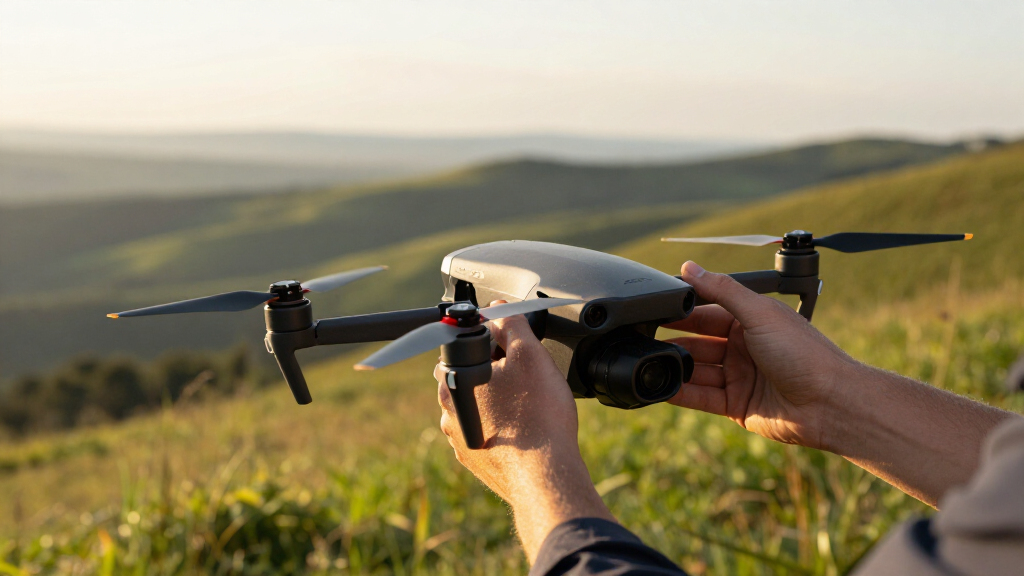
FPV stands for first-person view. It’s a style of flying where a camera mounted on the drone transmits live video directly to your goggles, monitor, or phone. You see what the drone sees, giving you a pilot’s eye view that feels incredibly immersive.
Unlike traditional camera drones built for stable, cinematic shots, FPV drones prioritize speed, agility, and manual control. They’re designed to zip through tight spaces, perform flips, or race at blistering speeds—sometimes exceeding 100 km/h. This focus on agility means that pilots must develop quick reflexes and precise control skills to navigate safely and effectively. The tradeoff is that FPV drones often require more active management and understanding of flight dynamics; they are less forgiving than stabilized camera drones, making proficiency essential for safe operation. Think of them as the sports cars of the drone world—fast, thrilling, but demanding skill and attention.
There are several main types, from ready-to-fly models with built-in stabilization to highly customized racing builds. Each serves a different purpose, but all share the core feature: a live video feed for a first-person flying experience. Understanding these differences helps pilots choose the right platform for their goals—whether racing, freestyle flying, or cinematic work—and highlights the importance of selecting equipment that matches your skill level and intended use.
Products Worth Considering

Samsung Galaxy Tab S10 Lite – 6 GB RAM, 128 GB storage, up to 2 TB microSD, 10.9‑inch LCD, Gray

Amazon Kindle Paperwhite (2024), 16 GB, 7-inch Display, Black

Amazon Kindle Paperwhite Signature Edition, 32GB (2024), Metallic Black
As an affiliate, we earn on qualifying purchases.
How FPV Systems Work — The Tech in Simple Terms
At its core, an FPV drone system is about sending live video and controlling the aircraft. The main components are:
- A flight controller that stabilizes the drone and processes your commands.
- Motors and electronic speed controllers (ESCs) that power the propellers.
- A radio transmitter and receiver for control input.
- A camera and video transmitter that beams live footage.
- Goggles, monitor, or phone to view the feed.
- A lithium-polymer (LiPo) battery to power everything.
When you move the sticks on your radio, the signals reach the flight controller, which adjusts motor speeds. The camera captures what’s in front, sending the video via a transmitter to your goggles. Low latency—meaning minimal delay—is vital, especially when flying fast or close to obstacles. This latency affects how responsive you feel the controls and how accurately you can react to the environment. Slight delays can cause misjudgments, crashes, or missed opportunities for precise maneuvers. Therefore, understanding the importance of component quality and setup is critical, as these factors directly influence your flying safety and enjoyment.
Imagine a race, where a delay of just 20 milliseconds could mean a crash. That’s why digital systems with high-speed protocols are becoming more popular, offering clearer images with less lag. These advancements are not just about image quality—they fundamentally change how pilots perceive and react during high-speed, close-quarters flying, making the experience safer and more predictable for both amateurs and professionals.
Analog vs Digital Video — Which FPV System Suits You?
| Feature | Analog FPV |
|---|---|
| Image quality | Lower resolution, more noise, grainy |
| Latency | Very low (around 20ms) |
| Price | Inexpensive, lightweight |
| Range | Limited, affected by interference |
| Ease of setup | Simple, plug-and-play |
| Digital FPV | |
| Image quality | High resolution, clear details |
| Latency | Still low, but slightly higher than analog |
| Price | More expensive, heavier gear |
| Range | Better signal penetration, longer distances |
| Setup complexity | More involved, ecosystem-dependent |
Choosing between analog and digital depends on your priorities. Analog systems are favored for their simplicity and affordability, making them ideal for indoor flying, beginner pilots, or those just exploring the hobby without a large budget. Digital systems, although more costly and heavier, provide sharper images and more reliable signals, which are crucial for racing at high speeds or capturing cinematic footage where clarity and responsiveness directly impact the quality of your flight and footage. Recognizing the tradeoffs—cost, weight, complexity, and image quality—helps pilots select the system that best aligns with their skill level and flying goals, ensuring a better experience and safer operation.
Conclusion
FPV drones open a world of speed, skill, and adrenaline that few hobbies can match. But they demand respect for safety, regulations, and your own limits. Start slow, practice often, and let the thrill of flying fuel your curiosity.
Imagine yourself weaving through a forest, feeling every twist and turn—this is the essence of FPV. The more you learn, the more you’ll realize that mastery comes from patience, practice, and a passion for flying. So, gear up, stay safe, and enjoy every second in the sky.