

AI assistants are rapidly evolving from simple query tools to complex, embodied agents capable of understanding and acting across digital and physical worlds. With advancements in natural conversation, robotics, and device integration, we’re getting closer to a Jarvis-like assistant that’s responsive, personalized, and autonomous. However, technical hurdles like nuanced understanding, long-term memory, and multi-agent collaboration still exist. Keep exploring; you’ll discover how these developments could reshape your future interactions.

Get the latest gadgets delivered free — and shop member deals
- Fast, free delivery on millions of items
- Access to Prime Big Deal Days deals on October 6–7
- Prime Video, Amazon Music and more included
Key Takeaways
- Advances in natural language processing and multi-modal understanding are making AI assistants more conversational and human-like.
- Embodied AI and robotics are bridging digital assistants with physical tasks, increasing real-world capabilities.
- Integration with wearables and sensors enhances AI responsiveness, context-awareness, and seamless daily assistance.
- Industry applications like healthcare, finance, and automation are pushing AI toward specialized, multi-tasking systems.
- Ethical, technical, and memory challenges remain, but ongoing research aims to develop versatile, autonomous, Jarvis-like assistants.
The Evolution of AI Assistants: From Simple Queries to Complex Tasks

Over the years, AI assistants have evolved from simple query-answering tools into sophisticated co-pilots capable of managing complex tasks. You no longer just ask for weather updates or quick facts; now, AI helps with scheduling, data analysis, and workflow automation. Personalization allows you to customize their personalities, conversational styles, and preferences for different contexts, making interactions feel natural and tailored. Wearables and smart glasses bring AI into your hands-free experience, offering real-time scene recognition and multilingual support. These assistants can interpret large datasets, automate routine processes, and integrate deeply into productivity tools. Additionally, the development of European cloud servers provides a secure and sustainable infrastructure that supports the growing capabilities of AI assistants. As a result, your AI companion enhances efficiency across work and daily life, handling tasks that once required human intervention. The integration of cloud computing infrastructure further accelerates these advancements by enabling faster data processing and improved connectivity. This evolution marks a significant step toward smarter, more capable virtual helpers.
Breakthroughs in Generative AI and Natural Conversation Abilities

Recent advances in generative AI have markedly enhanced the naturalness and complexity of conversations with virtual assistants. You now experience more fluid, human-like interactions that understand context, nuance, and subtle cues. Models like ChatGPT, Google Gemini, and Anthropic Claude have improved reasoning, enabling assistants to handle multi-turn dialogues, interpret ambiguous queries, and generate detailed, coherent responses. These systems leverage larger context windows, chain-of-thought reasoning, and function calling, making conversations feel less scripted and more intuitive. Multilingual support and real-time adaptability further enhance your experience across different languages and situations. As a result, AI assistants become better at engaging in meaningful dialogue, providing personalized advice, and assisting with complex tasks—bringing us closer to the seamless, natural conversations envisioned for future AI companions. Free Floating
Embodied AI and Robotics: Bringing Virtual Assistants Into the Physical World
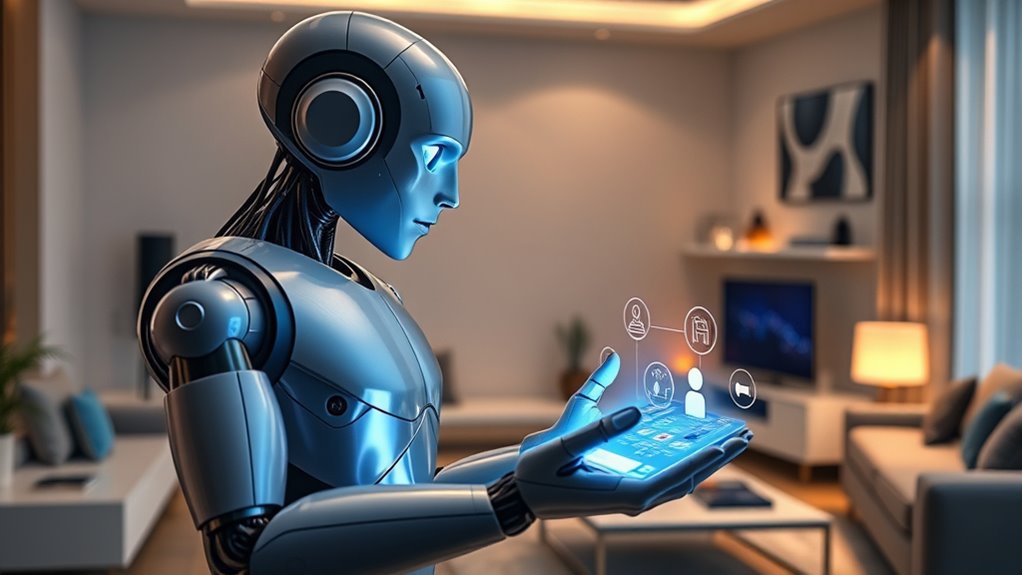
Embodied AI and robotics are transforming virtual assistants from purely digital entities into physical agents capable of interacting with the world around them. You now see robots like Tesla’s Optimus, which can manipulate objects, balance, and perform tasks in manufacturing or logistics. These robots learn from large datasets to identify and handle diverse products, extending AI’s reach beyond software. Wearable brain-computer interfaces combined with AI boost task performance by decoding neural signals in real time, offering safer alternatives to invasive methods. Advanced vision systems enable robots and virtual assistants to understand their environment and interact more human-like. This integration makes AI assistants more capable of physical interaction, automating tasks, and adapting to dynamic settings, bringing us closer to autonomous, physically present AI helpers. Physical interaction is becoming an increasingly vital aspect in the evolution of embodied AI. Additionally, innovations in robotic hardware are crucial to advancing these capabilities, making AI-powered robots more versatile and responsive in real-world scenarios. Moreover, ongoing research into sensor integration enhances robots’ ability to perceive and respond accurately to complex environments. As these technologies improve, the development of adaptive learning systems will enable robots to better modify their behavior based on experiences, further bridging the gap toward true autonomy. Furthermore, the integration of machine learning algorithms allows robots to improve their functions over time through experience.
Integration of AI in Daily Devices: Wearables, Smart Glasses, and Beyond

As AI technology advances, wearables and smart glasses are becoming integral to our daily routines, offering hands-free access to information and real-time assistance. You can receive notifications, track health metrics, translate languages, or get navigation updates without pulling out your phone. These devices use AI to recognize scenes, interpret gestures, and adapt to your preferences. Here’s a quick look at what they offer:
| Device Type | Key Features |
|---|---|
| Wearables | Fitness tracking, health monitoring, voice commands |
| Smart Glasses | Augmented reality, real-time translations, notifications |
| Beyond | Embedded AI assistants in rings, jewelry, and more |
These integrations make daily tasks more seamless, bringing AI closer to your fingertips—literally.
The Role of Specialized Agents and Multi-Tasking in Future AI Assistants

Future AI assistants will increasingly rely on specialized agents that handle distinct tasks simultaneously, enabling seamless multi-tasking and enhanced productivity. You’ll see these agents working together, each focused on specific functions like scheduling, data analysis, or communication, all coordinated behind the scenes. This division of labor allows your AI to process complex workflows efficiently without sacrificing speed or accuracy. Additionally, these systems will leverage multi-agent collaboration to optimize task distribution and performance. Instead of a single, general-purpose agent, multiple targeted agents collaborate to deliver tailored support, making multitasking smoother. As these systems grow smarter, they’ll adapt to your preferences and context, switching seamlessly between tasks. This multi-agent approach makes your AI assistant more capable, responsive, and reliable—closer to the kind of versatile, real-time support envisioned for future Jarvis-like assistants. Additionally, integrating building and legal considerations ensures these AI systems can operate securely within compliance frameworks.
Industry-Specific Applications: Transforming Healthcare, Finance, and Logistics

You’ll see AI assistants revolutionize industries like healthcare and finance by streamlining diagnostics, automating routine tasks, and enhancing security measures. In healthcare, AI-driven tools support precise diagnostics and robotic surgeries, reducing errors and improving patient outcomes. Meanwhile, finance sectors leverage AI for faster automation, fraud detection, and safeguarding sensitive data. Additionally, industry-specific applications are expanding to optimize logistics, improving supply chain efficiency and tracking. As the integration of solar panels and energy storage continues to grow, similar advancements are anticipated to enhance operational workflows across various sectors. For instance, the adoption of AI in Youngster Choice has demonstrated significant potential to personalize user experiences and improve engagement. Moreover, AI tools can significantly boost productivity in content production, enabling faster delivery of tailored experiences to consumers.
Healthcare Diagnostics and Surgery
How are AI assistants transforming healthcare diagnostics and surgery? You now have access to AI tools that analyze medical images, lab results, and patient data instantly, improving accuracy and speed. These assistants help detect diseases like cancer early, guiding treatment plans with evidence-based insights. In surgery, AI-powered robots assist surgeons with precision tasks, reducing human error and enhancing outcomes. You can rely on AI for real-time decision support during complex procedures, ensuring safety and efficiency. Additionally, AI streamlines administrative tasks like scheduling and record management, freeing up medical staff to focus on patient care. As these technologies evolve, they’re making diagnostics faster, more reliable, and surgeries safer—bringing us closer to a future where AI plays a central role in healthcare delivery. AI-powered diagnostic tools are becoming more sophisticated, further expanding their potential impact. Furthermore, the integration of data security measures is essential to protect sensitive patient information as these AI systems become more widespread. For example, advancements in medical image analysis have significantly improved early disease detection capabilities.
Finance Automation and Security
AI is revolutionizing finance by automating routine tasks such as transaction processing, fraud detection, and compliance monitoring, which increases efficiency and reduces errors. You can expect AI to handle large volumes of data swiftly, flag suspicious activities, and ensure regulatory adherence with minimal human oversight. Automated systems improve decision-making by analyzing market trends, predicting risks, and optimizing portfolio management in real time. Security enhancements are also significant, as AI detects anomalies, prevents cyberattacks, and safeguards sensitive information more effectively. With hands-free, intelligent fraud detection and compliance tools, you gain a more secure, streamlined financial environment. Although full autonomy remains a goal, these advances dramatically improve operational speed, reduce costs, and strengthen trust in financial systems.
Technical Challenges: What’s Needed for a Fully Autonomous Virtual Assistant

To create a fully autonomous virtual assistant, you need advanced reasoning capabilities that can handle complex, unpredictable situations. Robust multi-agent coordination is essential to manage multiple tasks and systems seamlessly. Additionally, exhaustive contextual understanding allows the assistant to interpret user needs accurately and adapt to different environments. Recognizing odor variations can be crucial in troubleshooting or assessing environmental conditions effectively. Incorporating aviation regulations knowledge ensures the assistant can provide compliant and safe guidance in specialized fields. Developing adaptive learning algorithms is also vital for continuous improvement and personalization of assistance. Furthermore, integrating real-time sensor data analysis can enhance environmental awareness and responsiveness, especially when dealing with dynamic environmental factors.
Advanced Reasoning Capabilities
Achieving full autonomy in virtual assistants hinges on overcoming significant technical challenges related to advanced reasoning. You need AI systems capable of understanding complex, nuanced contexts and making logical, informed decisions in real time. This requires models that can simulate human-like inference, weigh multiple factors, and generate coherent, relevant responses. Enhancing reasoning involves improving memory, enabling multi-step problem-solving, and handling ambiguous or incomplete information effectively. Current models often struggle with deep understanding and long-term planning, making autonomous decision-making difficult. To bridge this gap, AI must develop better foundational reasoning skills, incorporate flexible learning, and adapt dynamically to new situations. Only then can virtual assistants truly match human-level intuition, foresight, and autonomous problem-solving capacity. Developing automotive repair knowledge and understanding common repair procedures can further aid in creating more adaptable and context-aware AI systems.
Robust Multi-Agent Coordination
Robust multi-agent coordination is essential for creating fully autonomous virtual assistants that can seamlessly manage complex, multi-faceted tasks. To achieve this, you need systems that enable agents to work together efficiently, adapt to changing environments, and handle unexpected issues. The key challenges include:
- Ensuring reliable communication between agents to prevent misunderstandings or conflicts.
- Developing flexible algorithms that allow agents to adapt their roles dynamically.
- Implementing real-time decision-making that balances multiple priorities.
- Creating scalable frameworks that coordinate numerous agents without performance bottlenecks.
Overcoming these hurdles will bring us closer to assistants capable of managing intricate workflows, performing multi-step reasoning, and operating autonomously across diverse domains. Only then can virtual assistants genuinely resemble the versatility of a real-life Jarvis.
Comprehensive Contextual Understanding
Effective multi-agent coordination depends heavily on a virtual assistant’s ability to grasp the full context of ongoing tasks and interactions. To achieve this, your AI must understand not just individual commands but the broader situation, including past conversations, current goals, and environmental cues. This requires advanced natural language understanding, integrating data from multiple sources seamlessly. You need AI models capable of maintaining long-term memory and reasoning across diverse contexts, adapting responses dynamically. Handling ambiguity, recognizing user intent accurately, and managing complex workflows without constant oversight are essential. Without these capabilities, virtual assistants fall short of true autonomy, limiting their usefulness. Overcoming these technical challenges is key to developing AI that can interpret nuanced human needs and act intelligently across multiple domains. Incorporating attention to detail and systematic testing processes is also critical to identify and address potential issues early, ensuring reliable performance.
The Limitations of Current AI and the Road to More Human-Like Interactions

While AI assistants have made significant strides, they still fall short of delivering truly human-like interactions. You’ll notice they often struggle with understanding nuances, emotions, and complex context. To improve, developers need to address several key limitations:
- Limited contextual reasoning — current models can’t fully grasp layered conversations or long-term memory.
- Lack of emotional intelligence — AI still can’t genuinely interpret or respond to human emotions.
- Inadequate autonomous decision-making — AI requires human oversight for complex tasks and judgment calls.
- Multi-agent collaboration gaps — coordinating multiple AI systems seamlessly remains a challenge.
Overcoming these hurdles will be vital for creating assistants that feel more natural, intuitive, and human in their interactions.
Ethical Considerations and Safety in Developing Advanced AI Companions

As AI assistants grow more sophisticated and human-like, addressing ethical considerations and safety becomes increasingly important. You need to guarantee these systems respect privacy, avoid bias, and operate transparently. Safeguards must prevent misuse, such as manipulation or unauthorized data access. Developers should prioritize explainability, so users understand how decisions are made, fostering trust. It’s vital to implement robust safety protocols to avoid unintended consequences, especially as AI begins handling sensitive tasks. You should also consider the societal impact, like dependency or job displacement, and work to mitigate negative effects. Ethical development means designing AI that aligns with human values, promotes fairness, and remains accountable. Only by proactively addressing these issues can we ensure advanced AI companions serve us safely and ethically.
Looking Ahead: The Path to Achieving a Jarvis-Like Digital Assistant

Achieving a Jarvis-like digital assistant requires overcoming significant technical and conceptual hurdles to create a system that can understand, reason, and act across diverse contexts seamlessly. To get there, you’ll need advancements in several areas:
- Develop more sophisticated reasoning algorithms that mimic human intuition and decision-making.
- Enhance multi-modal understanding, integrating visual, auditory, and contextual data for exhaustive awareness.
- Improve memory systems for long-term, reliable knowledge retention and retrieval.
- Foster multi-agent collaboration, enabling AI systems to work together efficiently on complex tasks.
Focusing on these areas will bring us closer to a versatile, intelligent assistant capable of handling real-world complexities and providing truly personalized support.
Frequently Asked Questions
Can AI Assistants Understand and Interpret Human Emotions Accurately?
AI assistants are improving at understanding and interpreting human emotions, but they still have limitations. You’ll notice they recognize basic cues like tone, facial expressions, or word choice, allowing for more empathetic responses. However, they often struggle with complex emotions or subtle context. As technology advances, your AI helper will become better at sensing feelings and responding more naturally, but complete emotional understanding isn’t fully achieved yet.
Will AI Assistants Be Able to Make Ethical Decisions Autonomously?
You wonder if AI assistants will make ethical decisions on their own. The truth is, they’re not there yet. While advancements push toward more autonomous, context-aware systems, ethical reasoning remains complex and nuanced. Expect AI to support ethical choices rather than replace human judgment fully. Researchers are working on integrating moral frameworks, but true autonomous ethics in AI still faces major hurdles, keeping us on the edge of this breakthrough.
How Secure Are AI Assistants Against Hacking and Misuse?
AI assistants are becoming more secure, but vulnerabilities still exist. You should guarantee strong encryption, regular updates, and multi-factor authentication to protect your data. Be cautious about sharing sensitive information and stay aware of potential hacking attempts. Developers are continuously improving security measures, but no system is completely invulnerable. Staying informed and practicing good cybersecurity habits helps safeguard your AI assistant against misuse and unauthorized access.
Can AI Truly Comprehend Complex Human Context and Cultural Nuances?
Like a modern-day Socrates, AI is learning to grasp complex human contexts and cultural nuances, but it’s not fully there yet. You see, it processes language patterns and data, but understanding deep emotions, traditions, and subtle social cues remains a challenge. While advances improve its awareness, true comprehension requires more refined reasoning and empathy, so don’t expect your AI to replace genuine human insight just yet—it’s still a work in progress.
Will AI Assistants Ever Develop True Consciousness or Self-Awareness?
AI assistants won’t develop true consciousness or self-awareness anytime soon. You’ll notice they become more sophisticated, capable of understanding context and emotions better, but they still operate based on algorithms and data patterns. While advances in AI make them feel more human-like, genuine consciousness involves subjective experience, which current technology can’t replicate. So, you can expect smarter tools, but not real self-aware entities in the near future.
Conclusion
While we’re making incredible strides toward a Jarvis-like AI, true omnipresence and seamless understanding still feel like something out of a sci-fi flick. Think of it as upgrading from a trusty rotary phone to today’s smart devices—there’s progress, but the full vision remains on the horizon. Keep pushing forward, and soon, your digital assistant might just feel as intuitive and omnipotent as a modern-day Alfred—minus the butler, of course.
Fall Picks
fall essentials
As an affiliate, we earn on qualifying purchases.