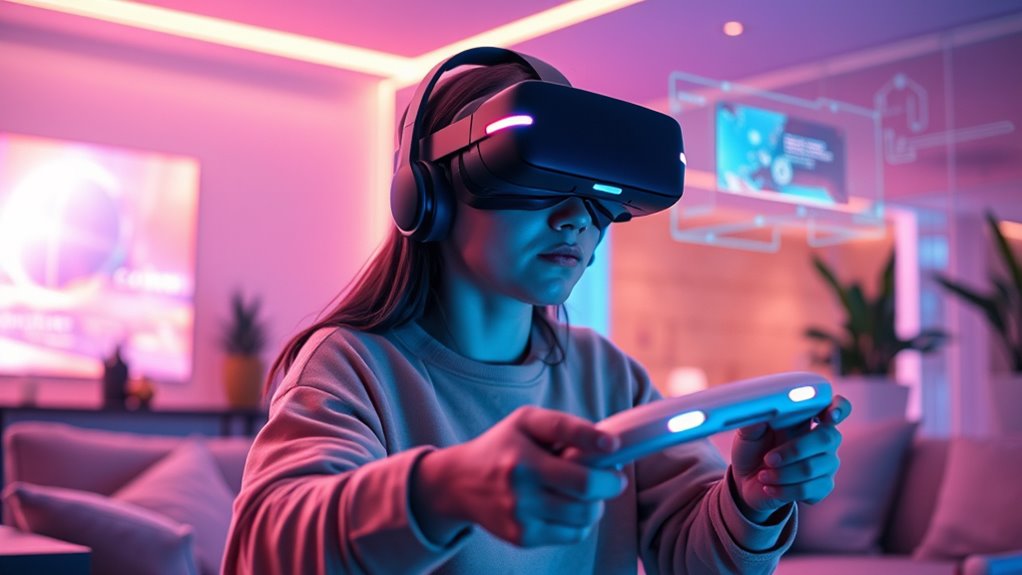

By 2025, VR gaming has made impressive strides with lighter hardware, better visuals, and richer social experiences. You can expect more immersive worlds, realistic graphics, and easier access thanks to affordable devices and diverse content. While some challenges like comfort and hardware limitations remain, the overall experience keeps improving. If you want to discover how close VR gaming is to living up to the hype, there’s plenty more to explore.
Key Takeaways
- Advances in hardware and visual technology will significantly enhance immersion and realism in VR gaming by 2025.
- Lower costs and improved accessibility will broaden user base and foster vibrant social and multiplayer experiences.
- Ongoing challenges like hardware discomfort and performance limitations may still temper fully immersive experiences.
- Content diversity, AI personalization, and innovative gameplay will drive engagement and innovation in VR titles.
- Overall, VR gaming in 2025 is poised to be more immersive and accessible, making it worth the hype despite ongoing technical hurdles.
The Evolution of VR Hardware in 2025
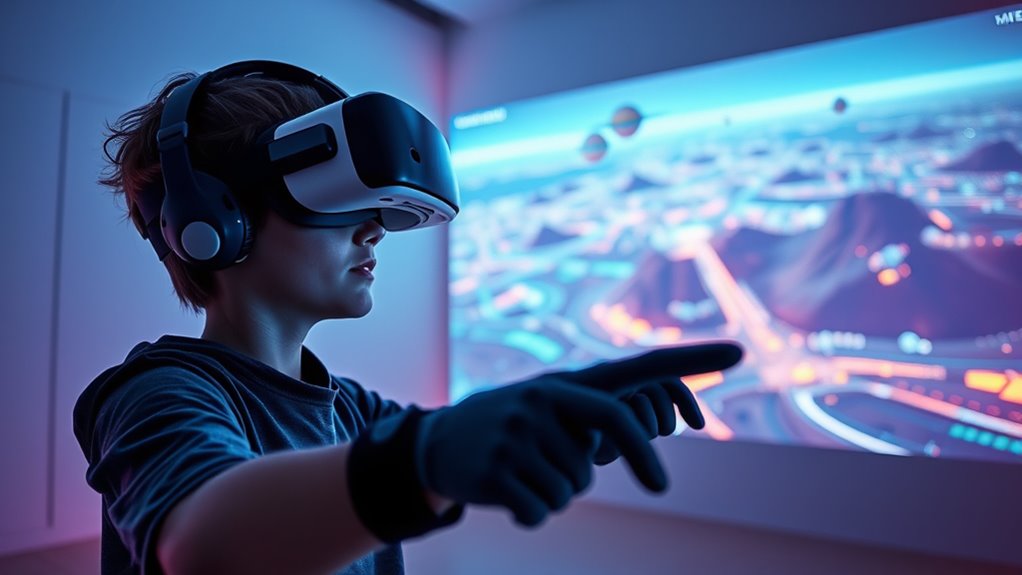
By 2025, VR hardware has made significant leaps, transforming the way you experience virtual worlds. Devices are now lighter, more comfortable, and boast higher resolution displays, making visuals sharper than ever. Advanced tracking systems provide precise movement detection, so your actions feel more natural and immersive. Standalone headsets eliminate the need for bulky PCs or consoles, offering greater portability and ease of use. Battery life has improved, allowing longer gaming sessions without interruption. Haptic feedback technology has evolved too, giving you realistic sensations that heighten immersion. Eye-tracking and facial expression sensors enable more expressive avatars, enhancing social interactions within virtual spaces. Additionally, the integration of high refresh rate displays ensures smoother visuals, significantly reducing motion blur and latency, which are crucial for immersive gameplay. Moreover, ongoing innovations in wireless connectivity are making untethered VR experiences more seamless and reliable. Advances in display technology also contribute to better color accuracy and contrast, enriching visual fidelity. These improvements support natural user interfaces, making interactions more intuitive and lifelike. As a result, advanced hardware continues to push the boundaries of what’s possible in virtual reality, making experiences more engaging and accessible for users worldwide. Overall, these innovations make VR hardware more accessible, intuitive, and engaging, fundamentally changing how you step into digital worlds.
Game Library Expansion and Innovation

In 2025, your VR game library will offer a wide range of genres and styles to explore, keeping experiences fresh and exciting. Developers are introducing creative gameplay innovations that push the boundaries of immersion and interaction. This combination guarantees you’ll always find something new and engaging to play in the evolving VR landscape. Additionally, the integration of connected fitness technology into VR gaming experiences will enable more interactive and health-conscious gameplay options. As VR hardware continues to improve, high-quality display technologies will further enhance visual fidelity and realism, making gameplay even more immersive. Moreover, advancements in visual display components will support these improvements, providing sharper images and more vibrant colors to heighten the sense of presence.
Diverse Game Selections
As virtual reality gaming continues to evolve in 2025, the variety of games available expands dramatically, offering you more choices than ever before. You can now explore genres like immersive simulations, story-driven adventures, and fast-paced shooters, all designed specifically for VR. Developers are pushing boundaries, creating titles that cater to different interests and skill levels. This content diversity means you’re not limited to a single style; instead, you can switch from relaxing exploration to intense action seamlessly. Additionally, the integration of advanced hardware enhances the overall experience, making these diverse game options more immersive and engaging than ever.
Creative Gameplay Innovations
The expanding variety of VR games is fueling a wave of creative gameplay innovations that transform how you interact with virtual worlds. Developers are pushing boundaries with new mechanics and immersive features. Here are three key innovations to watch for:
- Gesture-based controls – You can now perform natural hand movements, making interactions more intuitive and realistic.
- Procedural content generation – Games dynamically create unique environments and quests, ensuring no two adventures are alike.
- Multi-sensory feedback – Haptic suits and advanced audio heighten immersion, letting you feel environmental effects and respond more authentically. Additionally, quality assurance by trusted businesses and services ensures that VR hardware and accessories meet rigorous standards, enhancing your overall experience. The incorporation of standardized testing and certification further guarantees the safety and performance of VR devices.
- The integration of trusted businesses and services ensures that VR hardware and accessories meet quality standards, enhancing your overall experience.
- Ongoing advances in user experience design are also crucial, making interfaces more accessible and engaging for a diverse range of players. For example, innovative hardware compatibility features allow seamless integration with different VR headsets and peripherals, broadening accessibility. These innovations make VR gaming more engaging, allowing you to explore worlds with unprecedented creativity and depth. As developers continue to innovate, your gameplay experience becomes more dynamic and personalized.
Realism and Immersion: The Technology at Play
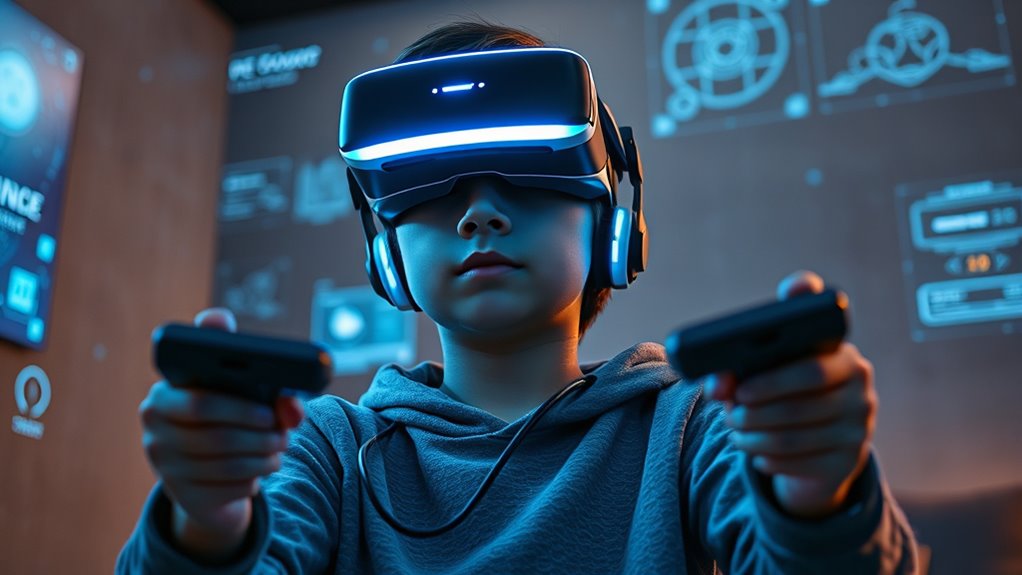
The latest advancements in visual fidelity make virtual worlds look stunningly realistic, pulling you deeper into the experience. Sensory enhancements, like haptic feedback and spatial audio, make interactions feel more authentic than ever. Together, these technologies boost immersion and blur the line between virtual and real. Additionally, essential oils for respiratory health may be used to enhance comfort during extended gaming sessions by promoting easier breathing and reducing congestion.
Visual Fidelity Advances
Advancements in visual fidelity are dramatically transforming VR gaming by making virtual worlds more realistic and immersive than ever before. You’ll notice sharper graphics, richer textures, and more lifelike environments that blur the line between virtual and reality. Developers are leveraging cutting-edge techniques to enhance visual quality, including:
- Higher resolution displays that deliver crystal-clear images
- Advanced rendering algorithms creating more detailed and dynamic scenes
- Real-time lighting and shading improvements for authentic atmosphere and depth
These innovations mean you’ll experience games with stunning visual accuracy, making exploration and interaction feel more genuine. As technology progresses, your immersion deepens, bringing virtual worlds to life with unprecedented clarity and realism.
Sensory Experience Enhancements
As VR technology continues to evolve, developers are focusing on enhancing sensory experiences to make virtual environments more believable and enthralling. You’ll notice improvements in haptic feedback, allowing you to feel textures, impacts, and subtle sensations with greater realism. Advanced audio systems now deliver 3D spatial sound that reacts dynamically to your movements, immersing you deeper into the game world. Researchers are also experimenting with olfactory and gustatory interfaces, adding smells and tastes that match in-game scenarios. These innovations work together to heighten your sense of presence, making virtual experiences feel more authentic. As a result, you won’t just see and hear the game—you’ll feel like you’re truly part of it, elevating the overall sense of realism and immersion to new heights.
Accessibility and Cost Barriers

Will VR gaming become more accessible and affordable by 2025, or will high costs continue to limit widespread adoption? Right now, the expense of headsets, sensors, and powerful PCs can be a barrier. However, several trends could change this:
- Mass production and technological advancements may lower hardware prices.
- Subscription services or rental programs could reduce upfront costs.
- Entry-level headsets might become more capable and affordable for casual gamers.
- Manufacturers’ focus on affordability could accelerate the availability of budget-friendly options. Additionally, improvements in DIY tools and home renovation technology could inspire innovations in VR hardware design, potentially making devices more customizable and cost-effective. For example, cost-reduction strategies driven by market competition may further lower prices over time. Still, affordability depends on how quickly manufacturers and developers prioritize reducing costs. If they do, VR gaming could become more inclusive, but if not, it might stay out of reach for a significant portion of potential users.
Furthermore, the integration of mass production efficiencies could play a significant role in making VR headsets more affordable for the mass market.
Social Interaction and Multiplayer Experiences
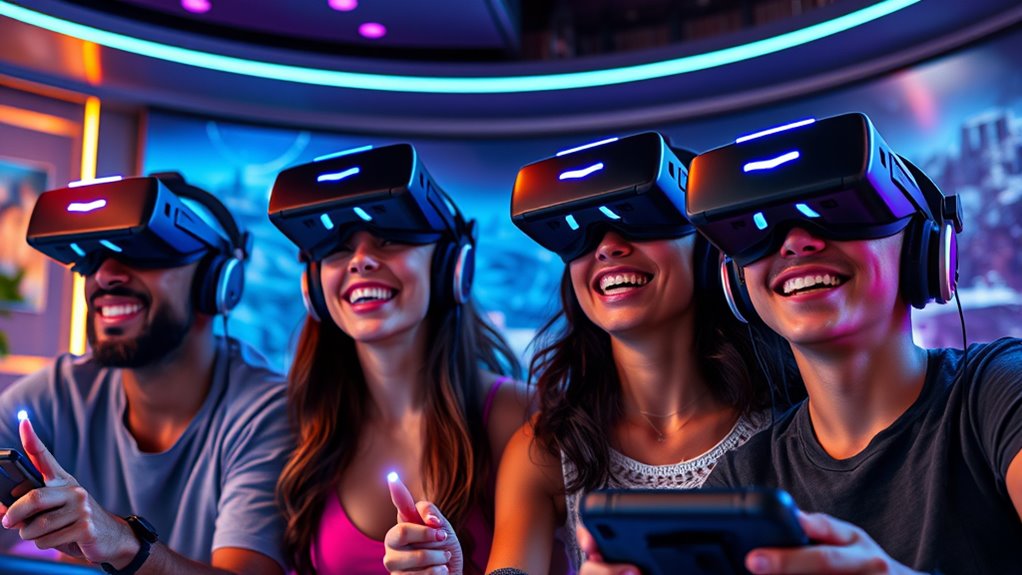
With the costs of VR hardware gradually decreasing, more people are able to join multiplayer experiences and connect socially through virtual worlds. You can now team up with friends or meet new ones in immersive environments that feel almost real. Social features like voice chat, avatars, and shared activities make interactions more natural and engaging. Virtual events, from concerts to collaborative projects, foster a sense of community that wasn’t possible before. Additionally, local automation integration allows users to synchronize their VR experiences with their smart home environments for a more seamless and personalized experience. You’ll find multiplayer games that emphasize cooperation, competition, or casual hangouts, all within a 3D space. This evolution enhances social bonds and creates new ways to connect regardless of physical distance. As technology advances, these experiences become richer, more intuitive, and more integrated into everyday social life. Enhanced social interaction is a key benefit that continues to drive the adoption of VR multiplayer platforms.
Comparing VR to Traditional Gaming Platforms
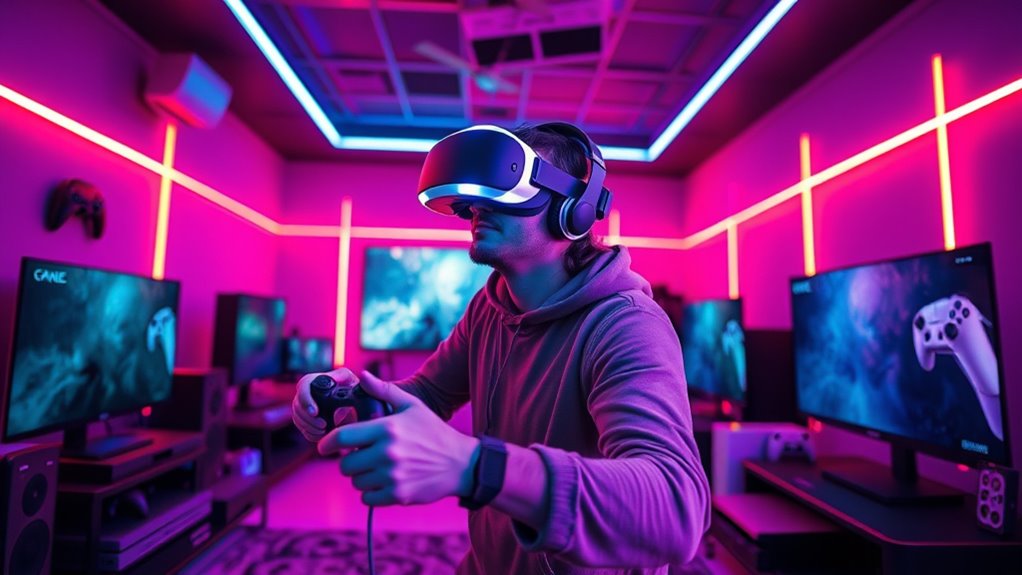
VR gaming offers an immersive experience that traditional platforms can’t match, putting you directly inside the game world. With VR, you feel like you’re truly part of the action, engaging your senses more fully. Compared to consoles and PCs, VR provides:
- Physical involvement – you move naturally, making gameplay more active.
- Spatial awareness – you see and interact with 3D environments in real space.
- Sensory immersion – headsets deliver visuals and audio that heighten realism.
Additionally, VR can enhance home comfort and air quality by reducing the need for physical controllers and accessories cluttering your gaming space. Proper network infrastructure is essential for smooth VR experiences, especially for online multiplayer gaming, to minimize lag and ensure seamless gameplay. While traditional gaming offers ease of access, extensive libraries, and social features, VR excels in creating a sense of presence and physical engagement. Both have their strengths, but VR’s ability to fully immerse you in the virtual world makes it a unique experience worth considering.
User Feedback and Community Insights

Your feedback shapes the evolution of VR gaming, as community engagement trends grow stronger. User-generated content is increasingly influencing game development and player interactions. Shared virtual experiences create a sense of belonging and drive community-driven innovation.
Community Engagement Trends
As the VR gaming community continues to grow, player feedback and community insights shape how developers refine experiences. Your input drives improvements and new features. To stay engaged, developers focus on:
- Listening to community forums and social media for direct feedback.
- Hosting beta tests to gather real-world insights before official releases.
- Creating polls and surveys to prioritize features players want most.
These methods help developers understand what works and what doesn’t, leading to more tailored experiences. Community engagement fosters a sense of ownership, encouraging players to share honest opinions and ideas. As a result, VR games evolve faster, better aligning with player expectations. Your active participation directly influences the future of VR gaming, making it more immersive, responsive, and fun. This ongoing dialogue ensures the community’s voice remains central to development.
User-Generated Content Impact
User-generated content has become a powerful force in shaping the future of VR gaming, with player feedback and community insights directly influencing game development. Your voice matters more than ever, guiding developers to refine experiences and create more immersive worlds. This active participation fuels innovation, making games feel more personalized and responsive. When you share ideas or report issues, you’re shaping the next big update or feature. Your passion and insights foster a sense of ownership, strengthening the community bond.
| Impact Area | How You Influence |
|---|---|
| Game Design | Sharing ideas inspires new mechanics and storylines. |
| Bug Reporting | Your feedback helps fix issues faster, improving quality. |
| Community Ideas | Collective suggestions lead to exciting features. |
| Emotional Connection | Feeling heard boosts your attachment to the game. |
Shared Virtual Experiences
Community insights and feedback are transforming shared virtual experiences into more dynamic and meaningful parts of VR gaming. You’re now part of a growing community shaping how these interactions evolve. Players love how real-time feedback improves social immersion and teamwork. Here are three key trends shaping this space:
- Enhanced Social Presence: Better avatars and voice chat make interactions more authentic.
- Collaborative Challenges: Group quests and multiplayer modes foster teamwork and communication.
- Community-Driven Content: User feedback directly influences new shared experiences and updates.
These insights lead to more engaging, personalized, and inclusive environments. Your input helps developers refine features, making shared experiences richer and more enjoyable. As a result, VR gaming becomes less isolated and more connected, creating a vibrant community of players.
Challenges and Limit Facing VR Developers
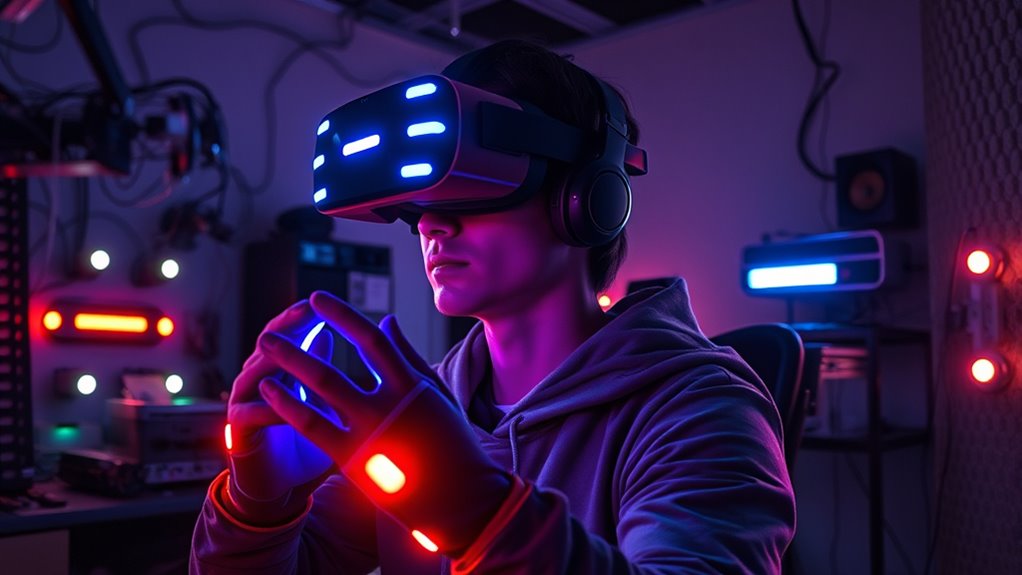
Despite rapid advancements in VR technology, developers still face significant challenges, especially when it comes to creating immersive, comfortable experiences. One major hurdle is hardware limitations; many headsets are still bulky or heavy, leading to discomfort during extended play sessions. Achieving realistic graphics without sacrificing performance remains difficult, often forcing compromises that affect immersion. Additionally, optimizing software to run smoothly across a variety of devices demands substantial resources and expertise. Motion sickness is another concern, caused by latency or poor tracking, which can deter players from fully engaging. Content creation also poses difficulties—developing high-quality, interactive environments requires extensive time and skill. These challenges hinder widespread adoption and limit the overall potential of VR gaming, despite its promising future.
The Future of VR Gaming: Trends to Watch
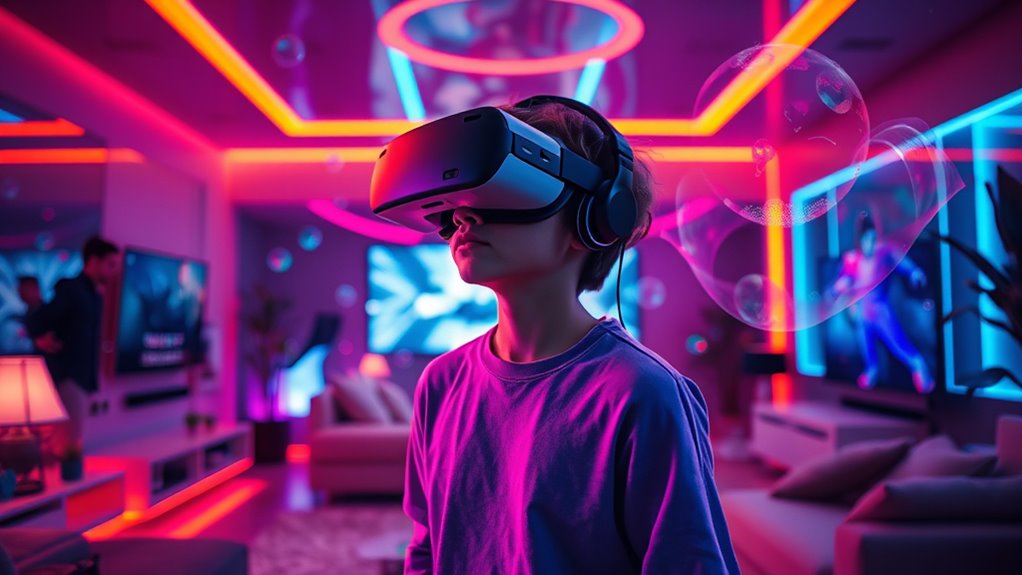
Looking ahead, several key trends are poised to shape the future of VR gaming and enhance your immersive experience. First, expect more realistic graphics and haptic feedback that make virtual worlds feel tangible. Second, advances in AI will personalize your gameplay, adapting challenges to suit your skill level. Third, standalone headsets will become more powerful and affordable, reducing the need for external hardware. These developments will boost immersion and accessibility, making VR gaming more engaging and user-friendly. As technology continues to evolve rapidly, you’ll see more seamless integrations, richer environments, and smarter game design that keep you hooked. Staying ahead of these trends means you’ll enjoy VR experiences that are more immersive, interactive, and truly next-gen.
Is VR Gaming Delivering on Its Promises?
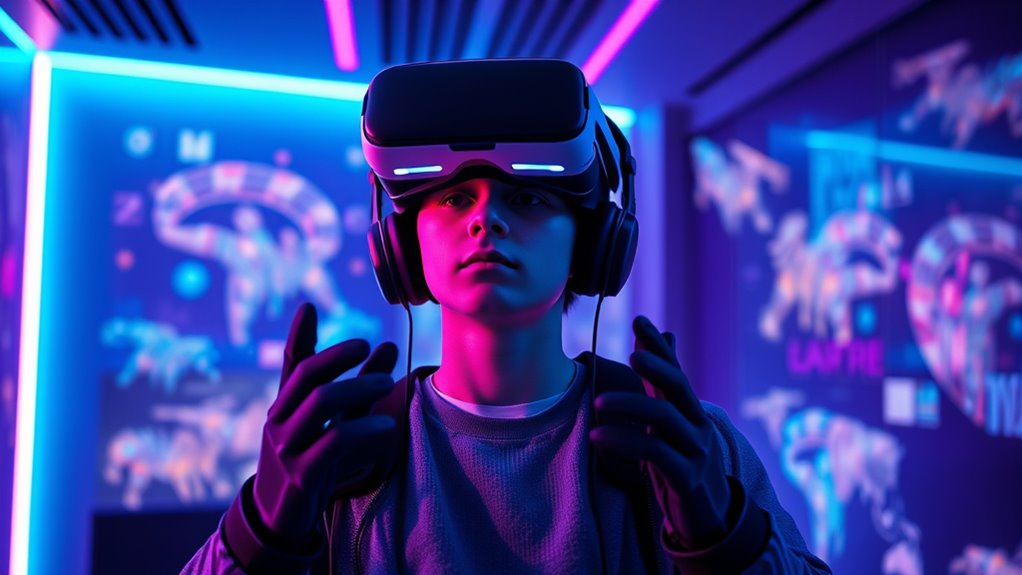
VR gaming has made significant strides in recent years, but whether it truly delivers on its promises remains up for debate. You might find immersive worlds and realistic interactions impressive, yet some experiences still fall short of expectations. Latency issues, limited content, and hardware discomfort can break the immersion and hinder your gameplay. While developers are creating more engaging titles and improving hardware, the technology hasn’t fully eliminated barriers like high costs and bulky equipment. If you’re seeking a seamless, everyday VR experience, it’s still a work in progress. However, for enthusiasts willing to invest and adapt, VR gaming offers genuinely transformative adventures. So, while it’s not perfect, it’s increasingly capable of fulfilling its promises—just not quite there yet for everyone.
Frequently Asked Questions
How Do VR Headsets Impact Long-Term Eye Health?
VR headsets can impact your eye health over time, especially if you use them excessively. You might experience eye strain, dryness, or discomfort due to prolonged focus and screen exposure. To protect your eyes, take regular breaks, follow the 20-20-20 rule, and guarantee proper headset fit. If you notice persistent issues, consult an eye specialist. Being mindful of usage helps keep your eyes healthy long-term.
What Are the Environmental Effects of Widespread VR Hardware Production?
Have you considered how widespread VR hardware production impacts the environment? It leads to increased electronic waste, as devices become obsolete quickly. Manufacturing requires lots of raw materials, often mined unsustainably, contributing to habitat destruction and pollution. Plus, energy consumption for production and data centers adds to carbon emissions. Are we ready to balance immersive gaming with responsible environmental practices? Being mindful can help reduce VR’s ecological footprint.
How Does VR Gaming Influence Physical Fitness and Health?
VR gaming can boost your physical fitness by encouraging movement and activity during play, helping you burn calories and improve coordination. It motivates you to stay active, especially if you choose games that involve dancing, boxing, or sports simulations. However, you should be mindful of prolonged use, as it may cause eye strain or fatigue. Balancing VR sessions with real-world exercise guarantees you enjoy health benefits without negative effects.
Are There Ethical Concerns Surrounding VR Content and User Data?
You should be aware that ethical concerns surround VR content and user data. Picture your virtual world as a vault, holding personal details and immersive experiences. Developers and platforms might collect your data, raising privacy worries, or create content that blurs moral lines. Always stay vigilant, read privacy policies, and choose trustworthy providers. Protecting your digital identity guarantees your VR adventures remain fun without crossing ethical boundaries.
What Are the Psychological Effects of Immersive VR Gaming Experiences?
You might find that immersive VR gaming affects your psychology by enhancing your focus and emotional engagement, but it can also cause disorientation or fatigue if overused. You may experience heightened excitement or stress, and prolonged sessions could impact your sense of reality. To avoid negative effects, take regular breaks, set time limits, and stay mindful of how your body and mind respond during extended play.
Conclusion
VR gaming in 2025 is transforming how you play, offering stunning realism and endless innovation. While some barriers remain, the immersive worlds and social experiences are truly groundbreaking—like stepping into another universe. Whether it’s worth the hype depends on your appetite for adventure, but one thing’s certain: VR is revolutionizing gaming in ways you never imagined, turning the impossible into your new reality. Get ready—this is only the beginning.