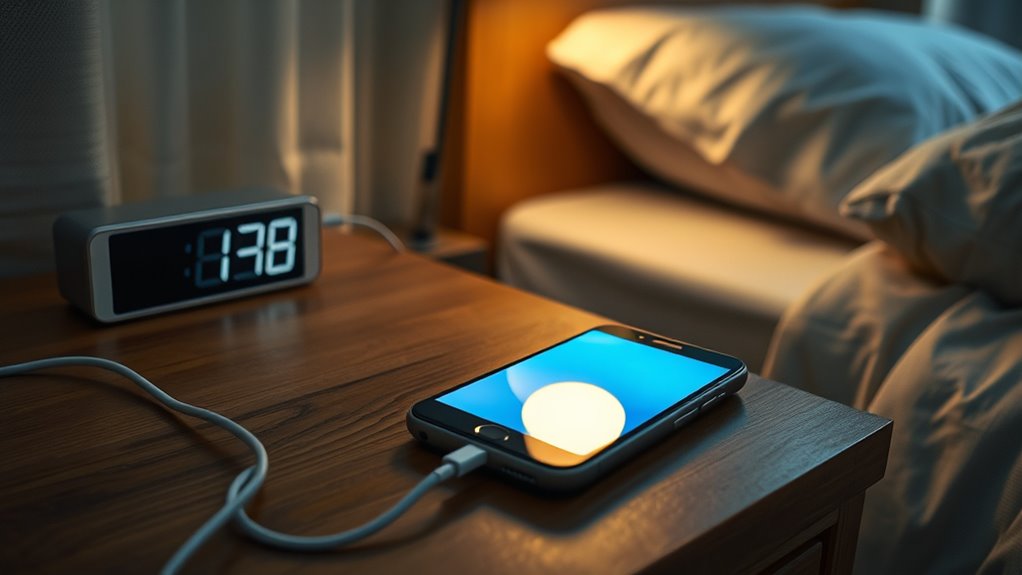

Charging your phone overnight isn’t as bad as some myths say because modern devices have built-in technology to prevent overcharging and overheating. Your phone’s Battery Management System automatically stops charging when full, and safety features protect against heat damage. Properly managed, overnight charging is safe and convenient. To learn more about how your phone’s battery works and best charging practices, keep exploring the facts behind safe and effective charging habits.
Key Takeaways
- Modern smartphones are designed to stop charging once full, reducing overcharge risks during overnight charging.
- Overcharging can accelerate battery wear and damage internal components over time.
- Proper charging practices, like using certified chargers and avoiding heat buildup, extend battery lifespan.
- Keeping devices in cool, ventilated areas during charging minimizes heat-related damage.
- Overnight charging is generally safe with modern devices that incorporate advanced safety and battery management systems.
Understanding How Smartphone Batteries Work
Smartphone batteries are primarily made of lithium-ion cells that store and release energy through chemical reactions. When you charge your phone, lithium ions move from the positive electrode (cathode) to the negative electrode (anode), creating a flow of electrons that powers your device. During use, these ions move back, generating electrical energy. This process is efficient, allowing for repeated charging cycles. However, lithium-ion batteries have a limited lifespan, typically around 300-500 full charge cycles before capacity declines. They operate best within specific voltage and temperature ranges. Overcharging or exposing them to extreme heat can accelerate degradation. Proper charging practices, including avoiding constant overcharging, can significantly help in extending battery life. Additionally, understanding the importance of battery management systems can aid in maintaining optimal performance. Recognizing charge cycle limits and managing usage accordingly can further prolong your battery’s health. Understanding this chemistry helps you grasp how your phone’s battery works and why proper care extends its lifespan.
The Myth: Charging Overnight Damages Your Phone
Many believe that leaving your phone charging overnight will damage its battery, but modern technology has changed that. Today’s smartphones are designed to stop charging once they reach full capacity, reducing overcharge concerns. Additionally, battery health is maintained better with these advancements, so you can rest assured that overnight charging isn’t as risky as it once seemed. In fact, smart charging technology helps optimize the charging process to preserve your battery’s longevity. These innovations make overnight charging a safe practice for most users, especially when using quality chargers. Furthermore, the development of energy-efficient battery management systems ensures that your device minimizes unnecessary power consumption during extended charging periods. Moreover, advanced battery algorithms contribute to extending overall battery lifespan by managing charge cycles more effectively.
Battery Overcharge Concerns
Although it’s a common belief that leaving your phone plugged in overnight will damage its battery, modern devices are designed to prevent overcharging. When your battery reaches 100%, the phone stops charging, reducing the risk of damage. Instead of continuous charging, your device might:
- Slow down charging speed as it nears full capacity
- Enter a trickle charge mode to maintain the battery level
- Distribute power to prevent overheating
- Use temperature sensors to avoid excess heat buildup
- Limit current flow once fully charged
These features help protect your battery from overcharge-related stress. Additionally, battery management systems are optimized to monitor and regulate charging cycles effectively. They also incorporate smart charging technology to adapt to different usage patterns, further safeguarding the battery’s lifespan. Modern smartphones also use thermal management to prevent overheating during charging, which is critical for battery health. Furthermore, advances in charge cycle technology help extend overall battery longevity. Some devices even include overvoltage protection to shut down charging if irregularities are detected. So, while it’s natural to worry, your phone’s internal safeguards keep your battery safe during overnight charging. Rest easy—your device is built to handle it.
Modern Charging Technology
Modern charging technology has markedly reduced the risks once associated with overnight charging. Today’s smartphones use intelligent systems that monitor and regulate power flow. These systems prevent overcharging, overheating, and battery damage by stopping charging once the battery reaches 100%. Some devices even implement fast-charging protocols that optimize energy transfer without harming the battery’s lifespan. Advanced charging features further enhance safety and efficiency during overnight use. Additionally, battery management systems are designed to prolong battery health over time. Many modern phones also incorporate thermal regulation to prevent overheating during extended charging periods.
The Fact: Modern Phones Are Designed for Overnight Charging
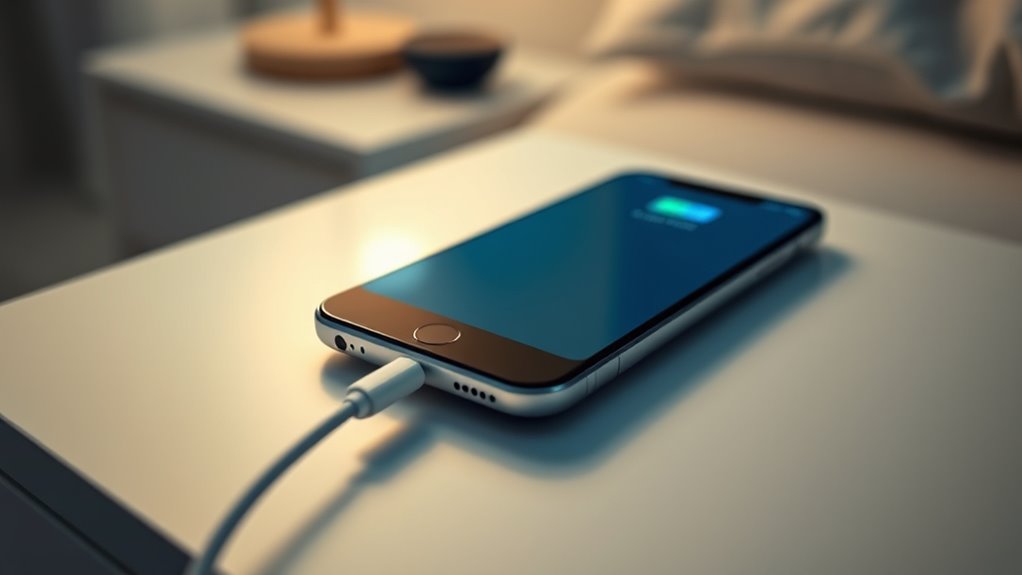
You might worry about leaving your phone charging overnight, but these devices are actually built to handle that scenario safely. Modern phones are equipped with advanced design features to prevent overcharging and heat buildup. When your battery reaches 100%, the phone reduces or stops charging, protecting the battery’s health. You can imagine:
- Small internal circuits acting like gatekeepers
- Temperature sensors keeping heat in check
- Software that pauses charging once full
- Built-in safeguards against power surges
- Lithium-ion batteries designed for repeated charging cycles
- Battery management systems that monitor and optimize charging processes
Additionally, these smart charging technologies continuously adapt to ensure safety and efficiency during prolonged charging periods. These elements work together to ensure your phone’s safety during overnight charging, and the integration of modern safety features demonstrates how manufacturers prioritize user protection. Manufacturers optimize these systems so you can leave your device plugged in without worry, making overnight charging a convenient and secure option.
Battery Management Systems and Their Role
Battery management systems (BMS) play a crucial role in maintaining your phone’s battery health by continuously monitoring and controlling charging processes. They track voltage, current, and temperature to prevent overcharging and overheating. When your phone reaches full charge, the BMS signals the charger to reduce or stop power flow, minimizing stress on the battery. This system also balances individual cells within the battery, ensuring even wear and prolonging overall lifespan. By managing charging rates and protecting against voltage fluctuations, the BMS helps prevent damage that could degrade your battery’s capacity over time. Additionally, understanding aviation regulations can help users better grasp how systems like the BMS operate within complex safety protocols. Fundamentally, it acts as your phone’s guardian, optimizing charging efficiency while safeguarding your battery’s longevity, even during overnight charging. Proper battery care practices, supported by the BMS, further extend your device’s usable life. Moreover, advancements in connected device technology contribute to more sophisticated battery management, ensuring safer and more efficient charging experiences. Incorporating advanced safety features into the BMS design enhances overall device protection during various charging scenarios.
Risks Associated With Overcharging and Heat
Leaving your phone charging overnight can increase the risk of battery degradation and reduce its lifespan. Excess heat generated during overcharging can also cause internal damage to your device. Being aware of these risks helps you protect your phone’s health and performance.
Battery Degradation Risks
Overcharging a phone can accelerate battery degradation, especially when heat is involved. When your device stays plugged in after reaching 100%, it keeps the battery in a high-stress state, which wears down its capacity over time. Heat amplifies this effect by causing chemical reactions inside the battery that break down its components. As a result, your battery’s ability to hold a charge diminishes faster. Imagine:
- The battery’s internal structure slowly weakening
- Reduced overall battery lifespan
- Longer charging times for full capacity
- Increased risk of sudden power drops
- The need for earlier battery replacements
These issues stem from continuous overvoltage and elevated temperatures, both of which contribute to irreversible damage. Managing charging habits helps preserve your battery’s health longer.
Heat-Induced Damage
Heat is one of the biggest factors that accelerates damage when you charge your phone for too long. Excessive heat causes the battery’s internal components to expand and contract, weakening their structure over time. This can lead to reduced battery life and even permanent damage. Overcharging can generate unnecessary heat, especially if your phone’s cooling system isn’t efficient. When your device gets too hot, it may shut down to protect itself, but repeated heat exposure accelerates wear and tear. Additionally, high temperatures can affect other internal parts, like the processor and display, causing long-term performance issues. To prevent heat-induced damage, avoid charging your phone in hot environments or covering it with thick cases while charging. Managing heat is essential to preserving your phone’s health and longevity.
Best Practices for Charging Your Phone Safely

To charge your phone safely, it’s important to follow some simple best practices. First, avoid letting your battery drain completely before charging. Keep your phone in a cool, dry place during charging to prevent overheating. Use the original charger or certified accessories to guarantee compatibility. Don’t sleep with your phone plugged in for prolonged periods—unplug once it’s full. Lastly, keep your software updated for peak battery management.
Charge your phone safely by avoiding full drains, using certified chargers, and keeping software updated.
Here are some key tips:
- Place your phone on a hard, flat surface while charging
- Remove bulky cases that trap heat
- Use a surge protector to prevent power fluctuations
- Charge in a well-ventilated area
- Avoid charging overnight regularly
Following these practices helps protect your battery’s health and prolongs its lifespan.
How to Extend Your Phone’s Battery Life

Keeping your battery healthy isn’t just about how you charge it; it’s also about how you use your phone throughout the day. To extend your battery’s lifespan, avoid letting it drain completely before recharging. Instead, keep your battery between 20% and 80% whenever possible. Reduce screen brightness and turn off unnecessary features like Bluetooth, Wi-Fi, or location services when you don’t need them. Limit background app activity, as it can drain power faster. Use dark mode if your device supports it, since it minimizes energy consumption. Regularly update your software, as updates often include battery optimization improvements. Also, avoid exposing your phone to extreme temperatures, which can degrade the battery over time. Small habits like these can considerably prolong your battery’s effectiveness.
When to Avoid Overnight Charging

Although overnight charging is convenient, there are times when it’s best to avoid it to protect your battery’s health. If you often leave your phone plugged in after reaching 100%, you risk unnecessary stress on the battery. Avoid overnight charging when:
- Your phone’s temperature rises notably during charging
- You notice your device heating up frequently
- You use inexpensive or incompatible chargers
- Your phone is exposed to direct sunlight or heat sources
- You keep the device plugged in for extended periods daily
These situations can accelerate battery degradation, reduce capacity, and shorten your phone’s lifespan. Being mindful of these moments helps maintain ideal battery health and ensures your device stays reliable longer.
Future Technologies in Battery Safety
Advances in battery technology are paving the way for smarter and safer energy storage solutions. Researchers are developing batteries with built-in safety features that automatically shut down or limit charging when risks are detected. You’ll see more solid-state batteries, which replace flammable liquids with stable, non-liquid electrolytes, reducing fire hazards. Fast-charging tech is also improving, allowing your devices to charge quickly without damaging the battery. Additionally, smart battery management systems will monitor temperature, voltage, and charge cycles in real-time, preventing overheating and overcharging. These innovations mean you’ll soon enjoy safer, more reliable batteries that not only last longer but also minimize safety concerns—making overnight charging less risky and more convenient. The future of battery safety looks promising and more aligned with your everyday needs.
Frequently Asked Questions
Can Leaving My Phone Plugged in Overnight Cause Long-Term Battery Damage?
Leaving your phone plugged in overnight generally won’t cause long-term battery damage, thanks to modern charging technology that stops charging once full. However, keeping it consistently at 100% or letting it drain completely can gradually reduce battery lifespan. For best results, unplug once it’s fully charged or use a smart charger. This helps maintain your battery’s health over time, ensuring better performance and longevity.
Do All Smartphones Have the Same Safety Features for Overnight Charging?
Not all smartphones have the same safety features for overnight charging. Some models include advanced protections like temperature regulation, smart charging algorithms, and automatic shutoff to prevent overcharging. Others might lack these features, increasing potential risks. You should check your phone’s specifications or user manual to understand its safety capabilities. Using quality chargers and avoiding extreme temperatures can also help protect your battery during overnight charging.
How Does Temperature Affect My Phone’s Battery During Overnight Charging?
Temperature tackles your phone’s battery during overnight charging. If it gets too hot, it can cause chemical reactions that degrade the battery’s capacity over time. Conversely, cold conditions slow down chemical processes, potentially reducing efficiency. Keep your device in a cool, well-ventilated space to prevent overheating. Proper temperature care keeps your phone functioning flawlessly and prolongs battery life, making your nightly charging routine safer and smarter.
Is It Better to Unplug My Phone Once Fully Charged?
Yes, it’s better to unplug your phone once it’s fully charged. Leaving it plugged in can cause the battery to stay at 100%, which may slightly degrade its health over time. Modern smartphones have protective mechanisms, but unplugging once charged helps preserve battery longevity. You can also enable optimized charging features if available, but unplugging remains a simple way to minimize unnecessary stress on your battery.
Are There Specific Brands That Are Safer for Overnight Charging?
Some brands are like fortresses for your phone’s safety, with top-tier safety features that handle overnight charging better than others. Think of Apple, Samsung, and Anker as the knights guarding your device, equipped with advanced temperature control and protective circuits. While no brand guarantees perfection, sticking to reputable names reduces risks notably. So, if you want peace of mind while sleeping, choose well-known brands that prioritize your phone’s safety during overnight charging.
Conclusion
Remember, knowledge is power. While modern phones are designed to handle overnight charging safely, it’s wise to stay mindful of heat and overuse. Following best practices helps keep your battery healthy and your device reliable. As the saying goes, “A stitch in time saves nine”—taking small steps now can prevent bigger issues later. By staying informed, you guarantee your phone serves you well for years to come.