Smartwatches can boost your health by tracking your activity and helping you set fitness goals, so you stay motivated. They monitor your heart rate and cardiovascular health, alerting you to irregularities early. Sleep tracking reveals your sleep quality, guiding better habits. Stress reduction tools like breathing exercises and mindfulness prompts support mental well-being. Medication alerts and hydration reminders keep your routines on track. Explore these features further to discover how they can transform your health journey.
Key Takeaways
- Continuous health monitoring with advanced sensors provides real-time insights into vital signs like heart rate and oxygen levels.
- Activity tracking and goal setting motivate physical fitness through progress updates, reminders, and personalized fitness plans.
- Sleep analysis identifies disruptions and offers strategies to improve sleep quality and overall restfulness.
- Medication and hydration alerts support consistent health routines and prevent missed doses or dehydration.
- Stress management tools, including guided breathing and stress level notifications, promote mental resilience and relaxation.
Tracking Physical Activity and Setting Fitness Goals

Tracking your physical activity with wearable tech makes it easier to stay motivated and monitor progress. When you wear a smartwatch or fitness tracker, you get real-time data on steps taken, calories burned, and distance covered. This instant feedback helps you set clear, achievable goals based on your current activity levels. As you progress, the device encourages you to push further or maintain consistency. You can also customize goals, like daily step counts or active minutes, to match your fitness aspirations. By visualizing your achievements, wearable tech keeps you accountable and focused. Over time, this consistent tracking fosters healthier habits and boosts your confidence as you see tangible improvements in your physical activity.
Monitoring Heart Rate and Cardiovascular Health
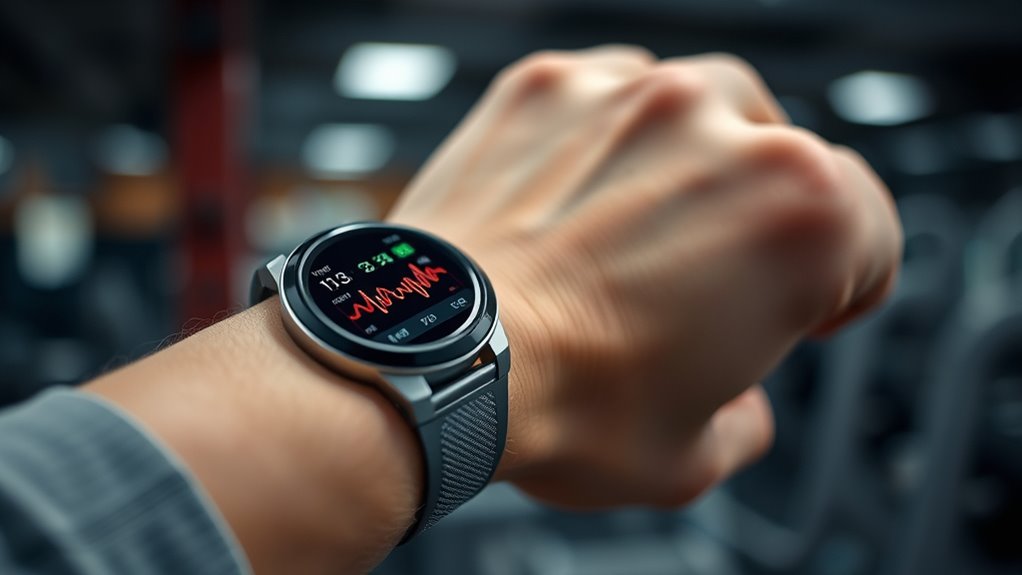
Wearable tech now makes it easy to monitor your heart rate continuously, giving you real-time insights into your cardiovascular health. These devices can detect irregular rhythms that might otherwise go unnoticed, helping you stay ahead of potential issues. By tracking these metrics daily, you can better understand your heart’s health and take action when needed. Additionally, integrating connected equipment with wearable data can optimize your overall fitness and wellness routines. Incorporating concepts like Free Floating can enhance the customization and adaptability of your health monitoring system. Understanding the fundamentals of data privacy is also essential to safeguard your sensitive health information. Implementing necessary cookies ensures the security and proper functioning of your health data without compromising privacy.
Continuous Heart Rate Tracking
Since your heart rate fluctuates throughout the day, continuous monitoring provides valuable insights into your cardiovascular health. By tracking your heart rate in real-time, you can identify patterns that reveal how exercise, stress, or sleep affect your heart. This real-time data helps you make informed lifestyle choices and stay proactive about your well-being. With constant updates, you’re better equipped to notice trends, such as consistently elevated rates or sudden drops, which may signal underlying issues. Recognizing these patterns encourages you to seek medical advice when necessary. Remember, consistent heart rate tracking can also motivate you to maintain healthier habits, monitor your progress, and stay engaged in your health journey. Staying aware of wearable technology can also help you understand your overall cardiovascular fitness and the importance of advanced materials in creating durable, lightweight wearable devices. Additionally, understanding the psychological benefits of tracking your health can motivate sustained engagement with your wellness routines.
Detecting Irregular Rhythms
Detecting irregular heart rhythms is a crucial aspect of monitoring your cardiovascular health, as these anomalies can indicate underlying conditions like arrhythmias or atrial fibrillation. Many smartwatches now include sensors that analyze your heart’s rhythm continuously or on demand. When your device detects an irregular pattern, it can alert you immediately, prompting you to seek medical advice. This early warning system helps catch issues before they escalate, potentially preventing serious complications. By tracking your heart’s electrical signals, your smartwatch provides real-time insights into your heart health. Regular monitoring allows you to identify patterns or triggers associated with irregular rhythms, empowering you to make informed lifestyle changes. Incorporating energy-efficient cloud solutions can enhance the data processing capabilities of wearable devices, ensuring faster and more accurate health monitoring. Understanding the sensor technology behind these devices can help you appreciate their ability to detect subtle changes in your heart rate. Additionally, ongoing research into neurobiological factors may improve future detection methods for heart rhythm irregularities. Ultimately, detecting irregular rhythms with wearable tech gives you peace of mind and a proactive approach to your cardiovascular well-being.
Managing Sleep Patterns and Quality
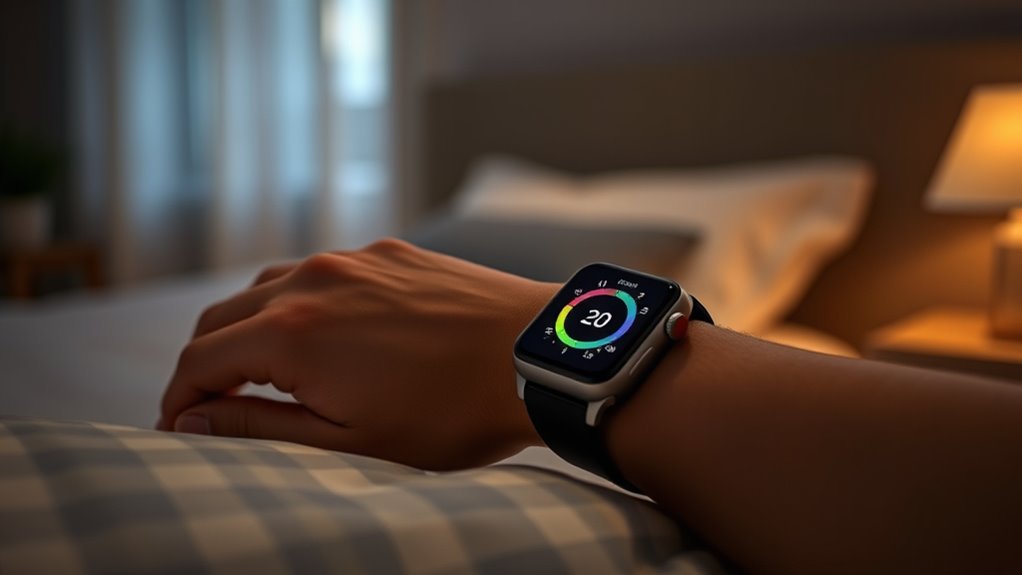
Have you ever wondered how wearable tech can help you improve your sleep? Smartwatches monitor your sleep patterns, giving you insights into duration, cycles, and quality. This data helps you identify habits that disrupt restful sleep and make necessary adjustments. With real-time feedback, you can set goals to improve consistency and duration. These devices also track factors like heart rate and movement, highlighting potential issues like restless nights or interruptions. To maximize your sleep quality, consider these aspects:
Wearable tech tracks sleep patterns to help improve your rest and overall health.
- Establish a consistent sleep schedule
- Create a relaxing bedtime routine
- Minimize screen time before bed
Additionally, many smartwatches utilize connected sleeping techniques to optimize your rest through automation and data analysis. Incorporating sleep tracking into your routine enables you to make informed decisions and develop healthier sleep habits for improved overall well-being. Understanding sleep science can further enhance your ability to interpret the data and refine your sleep strategies. Embracing personalized insights from your device can help tailor your sleep improvements to your unique needs.
By applying these strategies, you can develop a more restorative sleep routine that supports your daily health goals.
Offering Stress Reduction and Mindfulness Tools
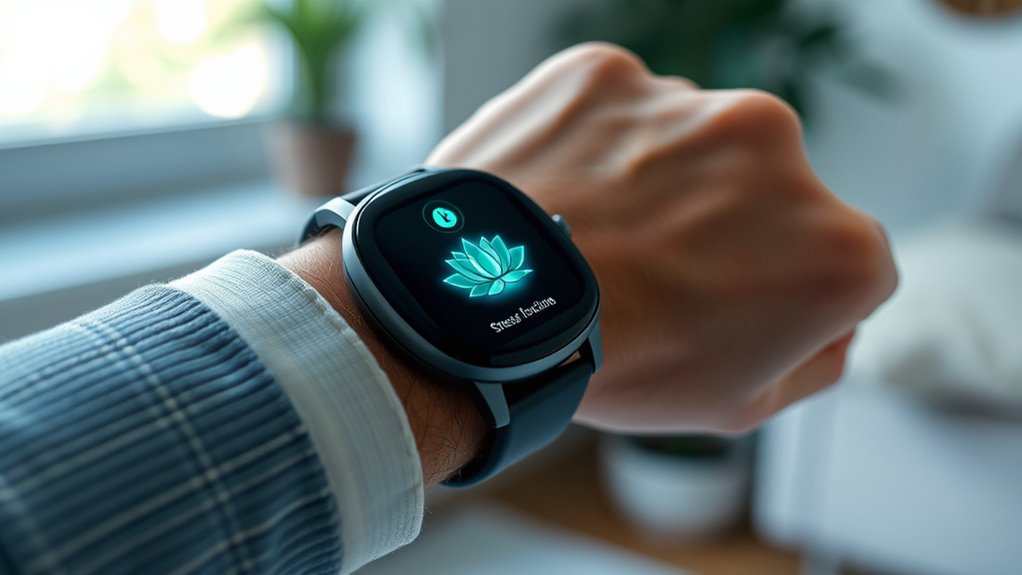
Wearable tech doesn’t just track your sleep; it also offers tools to help manage stress and practice mindfulness throughout the day. These features include guided breathing exercises, meditation prompts, and real-time stress level monitoring. When your smartwatch detects increased heart rate or stress signals, it can suggest calming activities to help you relax. This proactive approach fosters a sense of mental resilience and encourages you to stay present and reduce anxiety on the go. Understanding the importance of mental well-being, these tools support healthier habits. Here’s a deeper look:
| Stress Level | Mindfulness Practice | Impact on Well-being |
|---|---|---|
| Elevated | Breathing exercise | Calms nervous system |
| Moderate | Short meditation | Improves focus |
| Low | Gratitude journaling | Boosts positivity |
Providing Medication Reminders and Health Alerts
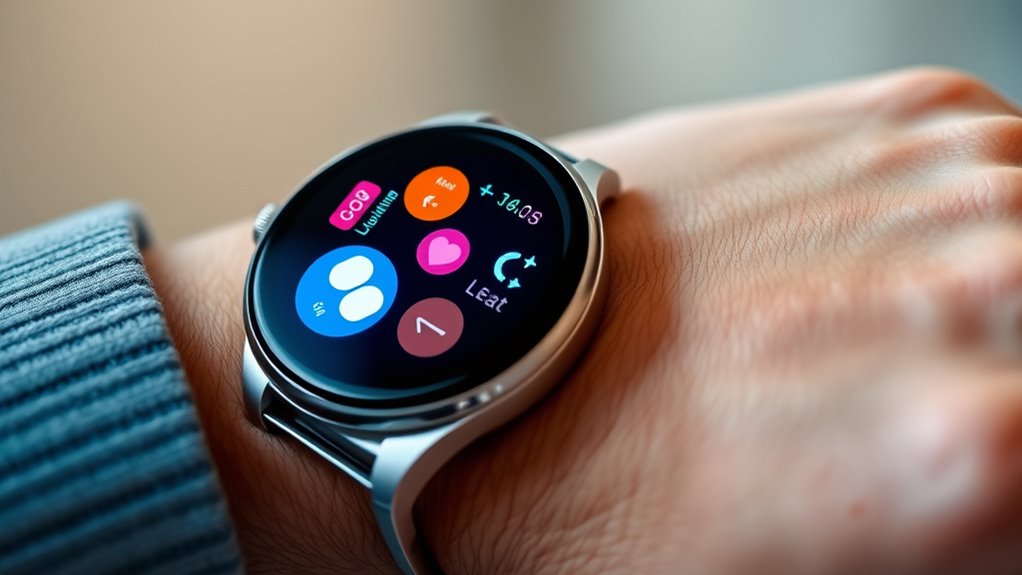
Wearable tech can help you stay on top of your health by sending medication schedule alerts so you never forget a dose. These devices also provide immediate health notifications, alerting you to issues like abnormal heart rates or low oxygen levels. With these features, you gain real-time support to manage your well-being proactively. Additionally, many of these devices are designed to be safe and reliable, ensuring consistent performance during your daily activities. Regular air purifier maintenance and filter replacements can further support your overall health environment, especially if you use air purifiers at home to improve indoor air quality. As nanotechnology advances, the development of nanomaterial-based sensors promises even more precise health monitoring capabilities in wearable devices. These innovative sensors are small and highly sensitive, allowing for more accurate detection of various health metrics.
Medication Schedule Alerts
Medication schedule alerts are a essential feature of wearable tech that help you stay on top of your health by delivering timely reminders. These alerts guarantee you take your medications as prescribed, reducing missed doses and maintaining your treatment plan. With customizable notifications, you can set alerts for specific times or doses, making it easier to manage complex schedules.
These alerts also promote consistency, which is critical for effective health management. They can alert you to refill prescriptions, track ongoing treatments, or remind you of other health-related tasks.
- Stay organized with scheduled reminders tailored to your routine
- Minimize missed doses and medication errors
- Support long-term health goals through consistent adherence
Immediate Health Notifications
Immediate health notifications provide real-time alerts that keep you informed about your well-being throughout the day. Your smartwatch can notify you instantly of urgent health issues, like irregular heartbeats or high blood pressure, allowing you to act quickly. These alerts help you stay proactive, especially during busy schedules. You can also receive medication reminders, ensuring you never miss a dose. This constant connection creates a safety net, giving you peace of mind.
| Feature | Benefit |
|---|---|
| Real-time alerts | Prompt action during emergencies |
| Medication reminders | Consistent medication adherence |
| Health trend updates | Track changes over time for better health management |
| Custom notifications | Personalize alerts based on your health needs |
Supporting Nutritional and Hydration Tracking

Have you ever wondered how wearable tech can help you stay on top of your nutrition and hydration? Many smartwatches now include features to track your food intake and water consumption effortlessly. By logging meals and fluids, you gain insight into your daily habits and nutritional balance. This data can motivate you to make healthier choices and prevent dehydration.
Remember, with these tools, you can:
- Monitor calorie and nutrient intake to support your fitness goals
- Receive reminders to drink water throughout the day
- Identify patterns that influence your energy and well-being
These capabilities empower you to take control of your health, making it easier to stay consistent and informed about your nutritional needs.
Encouraging Consistent Wellness Habits
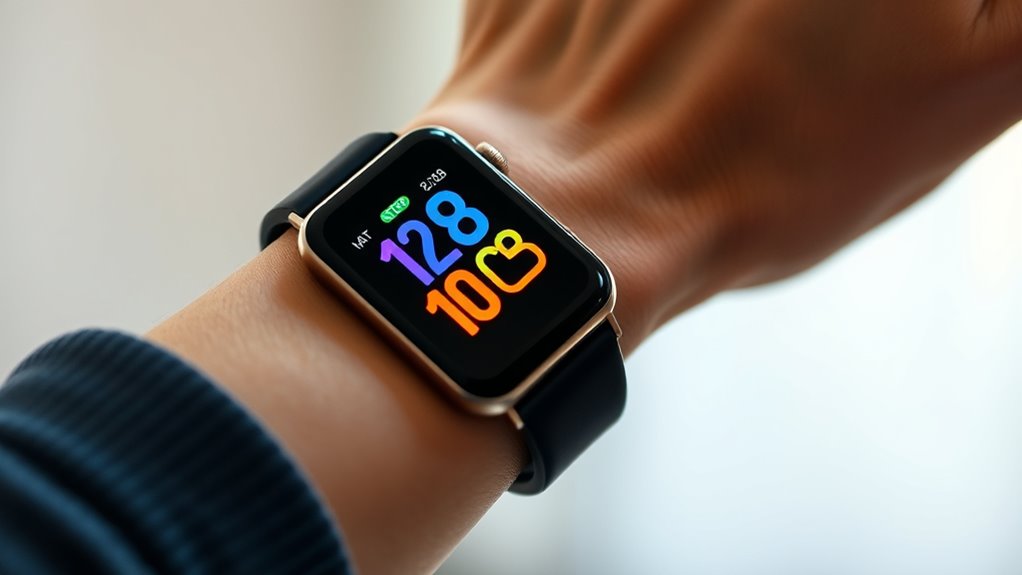
To build lasting wellness habits, consistency is key, and wearable tech makes it easier to stay on track. Your smartwatch can remind you to move if you’ve been sedentary too long, encouraging regular activity throughout the day. It tracks your progress, so you see how small daily efforts add up over time. Setting personalized goals becomes simple, motivating you to stick with routines like exercising, stretching, or practicing mindfulness. Notifications and gentle prompts keep you accountable, preventing skipped workouts or neglected self-care. Over time, these consistent cues reinforce healthy behaviors, making wellness a natural part of your daily life. With real-time feedback and goal tracking, wearable tech turns sporadic efforts into sustainable habits that improve your overall health.
Frequently Asked Questions
How Accurate Are Smartwatch Health Measurements Compared to Medical Devices?
Smartwatch health measurements are generally quite accurate for everyday use, but they aren’t as precise as medical devices. You can rely on them for tracking your heart rate, activity, and sleep patterns, but for critical health issues or diagnoses, it’s best to consult healthcare professionals and use medical-grade equipment. Keep in mind that factors like skin tone, placement, and movement can influence accuracy, so use smartwatch data as a helpful guide, not a definitive diagnosis.
Can Smartwatches Detect Early Signs of Serious Health Conditions?
Yes, smartwatches can detect early signs of serious health conditions. They monitor essential signs like heart rate, rhythm, and oxygen levels, alerting you to irregularities. While they’re not diagnostic tools, they can flag potential issues and prompt you to seek medical advice. By tracking your health trends over time, smartwatches empower you to take proactive steps and catch warning signs before problems worsen.
Are There Privacy Concerns With Health Data Collected by Wearables?
They say “forewarned is forearmed,” and yes, privacy concerns with health data from wearables are valid. You might worry about who accesses your sensitive info and how it gets shared. To safeguard yourself, review privacy settings, choose trusted brands, and stay informed about data policies. Being cautious ensures your health insights remain yours alone, so you can enjoy the benefits without compromising your privacy.
How Do Smartwatches Adapt to Individual Health Goals and Needs?
Smartwatches adapt to your health goals by using personalized data and algorithms that analyze your activity, sleep, and essential signs. They learn your habits over time and suggest tailored workouts or reminders to stay active. You can set specific targets, like steps or heart rate zones, and the device adjusts notifications and tracking to help you meet those goals effectively. This customization keeps your health journey focused and motivating.
What Are the Limitations of Using Smartwatches for Health Monitoring?
Sure, your smartwatch might seem like your personal health guru, but it’s not perfect. It can’t replace professional medical advice and sometimes gives false readings or misses critical issues. Battery life is limited, so it’s not always reliable during long activities. Plus, privacy concerns lurk in the background, making you wonder if your health data is truly secure. So, don’t rely solely on your watch—consult real experts when needed.
Conclusion
Wearable tech is like a personal health coach on your wrist, guiding you to better habits every day. With features that track your activity, monitor your heart, and help manage stress, it makes staying healthy feel effortless. By offering timely reminders and insights, smartwatches turn wellness into a daily routine you’ll actually enjoy. Embrace these tools, and watch your health improve steadily, like a garden blooming with consistent care.