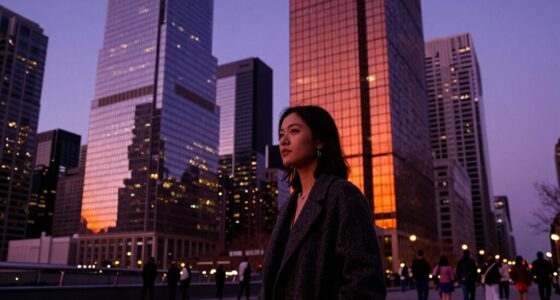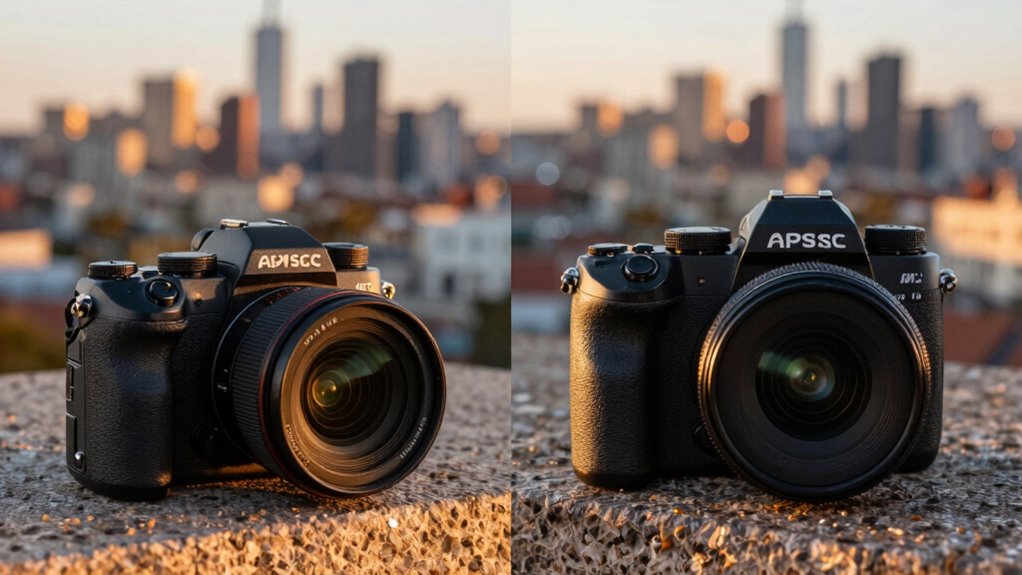

In real use, you’ll notice that full-frame cameras deliver better detail, less noise, and wider dynamic range, especially in low light. They also give you a shallower depth of field, helping your subjects stand out with pleasing background blur. APS-C cameras are more compact, affordable, and offer more depth of field, which is great for landscapes or macro shots. The choice affects your composition and creative options—continue exploring to see how these differences can shape your photography.

Get the latest gadgets delivered free with Prime
- Fast, free delivery on millions of items
- Prime Video, Amazon Music and more included
- Member-only deals all year
Key Takeaways
- Full-frame sensors deliver better image quality, especially in low light, with less noise and higher dynamic range.
- Depth of field differs: full-frame produces more background blur, while APS-C offers more focus across the scene.
- Full-frame cameras are usually larger, more expensive, and preferred for artistic, professional photography.
- APS-C cameras are more compact, affordable, and suitable for general or beginner photography.
- The sensor size influences creative control, lens choices, and the overall shooting experience.

When choosing a camera, understanding the differences between APS-C and full-frame sensors can considerably impact your photography. Sensor size is the fundamental distinction: full-frame sensors are larger, measuring roughly 36mm x 24mm, while APS-C sensors are smaller, typically around 22mm x 15mm. This difference affects how your camera captures light, influencing image quality, low-light performance, and depth of field. With a larger sensor, your images tend to have better detail, less noise at higher ISO settings, and a broader dynamic range. These advantages are noticeable in real-world shooting, especially in challenging lighting conditions.
Sensor size impacts image quality, low-light performance, and depth of field, with full-frame offering better detail and dynamic range.
One key aspect affected by sensor size is depth of field. Because full-frame sensors are larger, they produce a shallower depth of field at the same aperture and framing compared to APS-C sensors. This means you can achieve more pronounced background blur—great for portraits or artistic shots—and better isolate your subject from the background. On APS-C cameras, to get similar background separation, you often need to use a wider aperture or get closer to your subject. This difference influences your creative choices and how you approach composition.
In practical use, this difference in depth of field translates into a more cinematic look with full-frame cameras, giving you more control over focus and background rendering. You’ll notice that with a full-frame sensor, you can achieve a pleasing bokeh effect more easily, making your subject stand out sharply against a soft, blurred background. Conversely, APS-C cameras tend to have more depth of field at the same settings, which can be advantageous for landscape or macro photography where greater focus across the scene is desirable. Additionally, understanding sensor size differences can help you better appreciate how your camera’s specifications influence your overall shooting experience. Recognizing how sensor size affects image quality can guide you in selecting the best camera for your needs.
Ultimately, the choice between APS-C and full-frame depends on your style, budget, and what you prioritize in your images. Full-frame cameras excel in low-light and creative control over depth of field, but they tend to be more expensive and bulkier. APS-C cameras offer a more affordable, compact option with a good balance of image quality and versatility. Knowing how sensor size influences real-world shooting helps you pick the right camera to match your needs and creative goals. Moreover, considering lens compatibility and your specific photography interests can further guide your decision-making process.
As an affiliate, we earn on qualifying purchases.
Frequently Asked Questions
How Do Sensor Sizes Affect Low-Light Performance?
Sensor size directly affects your low-light performance by influencing sensor noise and ISO performance. Larger sensors, like full frame, gather more light, reducing sensor noise and allowing you to shoot at higher ISO settings without sacrificing image quality. APS-C sensors, being smaller, tend to produce more noise in low-light conditions and require lower ISO settings for cleaner shots. So, bigger sensors give you better low-light results with less noise.
Which Camera Is Better for Astrophotography?
You’ll love a full-frame camera for astrophotography, since it handles sensor noise better and captures more detail with higher image resolution. With its larger sensor, you get cleaner images even in low-light conditions, making stars look brighter and crisper. APS-C cameras might be good for amateurs, but if you’re serious about capturing the cosmos, a full-frame is your best bet—your night sky deserves nothing less.
How Does Autofocus Accuracy Vary Between Sensor Types?
You’ll notice autofocus accuracy varies between sensor types because of autofocus speed and focus point density. Full-frame sensors generally offer faster autofocus and more focus points, leading to better precision, especially in low light or dynamic scenes. APS-C sensors may have fewer focus points and slightly slower autofocus, but they’re still effective for most everyday photography. Your choice depends on your needs, but sensor size directly influences autofocus performance.
Are There Differences in Lens Compatibility?
Yes, there are differences in lens compatibility. Your camera’s lens mount compatibility determines which lenses you can use, and APS-C and full-frame sensors often have different mounts. However, many lenses are designed to be versatile, offering lens selection flexibility across both types with adapters. Keep in mind that using an adapter might affect autofocus speed and image quality, so check compatibility carefully before buying new lenses for your camera system.
What Is the Impact on Battery Life?
Your camera’s battery life takes a hit, often feeling like it drains faster than a desert oasis dries up. Full-frame cameras tend to use more power because of larger sensors and more advanced features, impacting battery drain. However, newer models focus on power efficiency, helping extend shooting time. Still, you should carry extra batteries for extended shoots, especially with full-frame gear, to avoid missing those once-in-a-lifetime shots.
As an affiliate, we earn on qualifying purchases.
Conclusion
Ultimately, choosing between APS-C and full frame depends on your needs—whether you prioritize size, cost, or image quality. APS-C offers affordability, portability, and versatility, making it perfect for everyday shooting. Full frame delivers superior detail, better low-light performance, and a more cinematic look, ideal for serious enthusiasts. Both have their strengths; it’s about understanding what suits your style, your budget, and your goals. Pick what fits best, shoot confidently, and enjoy every moment behind the lens.
As an affiliate, we earn on qualifying purchases.
As an affiliate, we earn on qualifying purchases.
Halloween Picks
halloween
As an affiliate, we earn on qualifying purchases.