
TL;DR
A supplied buying guide compares 10 home theater projectors, from the laser Epson LS11000 to portable 1080p models. Its recommendations focus on room lighting, native resolution, smart features and placement, but the source does not provide a publication date, current prices or independent test results.
A supplied buying guide compares 10 home theater projectors and recommends different models for dedicated media rooms, bedrooms and outdoor screenings. The guide names the Epson Home Cinema LS11000 as its overall premium choice, while emphasizing that brightness, native resolution and room conditions shape which projector will suit a buyer.

Get the latest gadgets delivered free with Prime
- Fast, free delivery on millions of items
- Prime Video, Amazon Music and more included
- Member-only deals all year
According to the guide, the Epson LS11000 is a laser projector with 4K PRO-UHD, a stated 2,500-lumen rating, HDR support and 120Hz inputs. The guide says the model suits a dedicated theater and offers motorized placement adjustments. It also notes that its size may make it less practical for tight shelves or frequent moves. The guide does not provide a test method for these performance claims.
For a compact, dark-room setup, the guide points to the HAPPRUN H1, which it lists at native 1920-by-1080 resolution and 300 ANSI lumens. It also highlights a HAPPRUN model listed with 1,500 ANSI lumens and official Google TV for viewers seeking built-in streaming and automatic image correction. The guide says that despite support for 4K decoding, the model’s stated native resolution is 1080p.
The guide’s other entries include the Optoma UHZ36, described as a native 4K UHD laser projector; the Epson Home Cinema 980, listed at 4,000 lumens and native 1080p; an X9 Pro with VIDAA OS; and the Aurzen Roku TV D1R portable model, whose stated maximum image size is 150 inches. The guide also names NexAurea and other smart projectors, but the supplied material cuts off before it gives a full specification list for all 10 picks.
Choose a projector for your room and how you watch
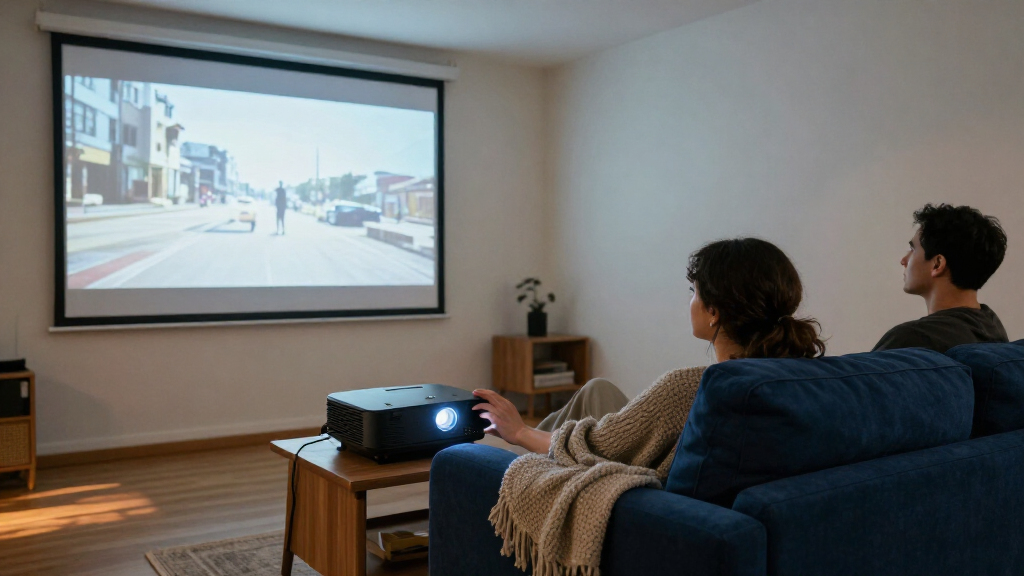
A buying guide compares 10 home theater projectors, from premium laser models to portable 1080p options. Room lighting, native resolution, streaming features and placement shape which pick may fit.
Match brightness to the room
The guide points buyers toward lower-output models for dark rooms and brighter options where daylight is harder to control.
- HAPPRUN H1 is aimed at dark bedrooms and flexible setups.
- Its listed 300 ANSI lumens may limit use with ambient light.
- Epson Home Cinema LS11000 is the premium pick.
- Its laser design and motorized placement adjustments suit a theater setup.
Read resolution claims carefully
Decoding 4K content does not mean the projector displays native 4K.
Some listed models are native 1080p, even when they support 4K decoding.
Check placement range, chassis size and brightness for your space.
The guide lists Google TV, VIDAA and Roku on selected models.
Convenience varies by model
Features can reduce setup friction, but the guide does not provide full specifications for every pick.
Epson LS11000
Laser projector with 4K PRO-UHD, HDR support and 120Hz inputs; its size may not suit tight shelves or frequent moves.
Aurzen Roku TV D1R
Portable model with a stated maximum image size of 150 inches.
Streaming options
Selected picks list Google TV, VIDAA OS or Roku, which may reduce the need for an external streaming device.
Matching Projectors to Room Conditions
The buying guide highlights a practical choice for buyers: room light changes what brightness is useful. It says lower-output models such as the HAPPRUN H1 are intended for darkened rooms, while brighter options may work better where daylight is harder to control. The guide does not provide standardized side-by-side results, so the figures should be treated as specifications reported by the source rather than proof of comparative image quality.
The guide’s resolution claims also need close reading. A projector that decodes 4K video does not necessarily display it at native 4K resolution. Several models in the guide are listed as native 1080p, a distinction that affects how buyers should interpret “4K support” in product descriptions. The guide also notes that built-in streaming systems may reduce the need for an external device, while installation features and chassis size affect whether a projector fits a particular room.
Products Worth Considering

Bose SoundLink Max Portable Bluetooth Speaker, IP67 Waterproof, Black

LG UltraGear 32-inch QHD Curved Gaming Monitor, 180Hz, 1ms, AMD FreeSync

LG UltraGear 34G600A-B 34-Inch Curved WQHD Gaming Monitor, 160Hz, FreeSync Premium, HDR10
As an affiliate, we earn on qualifying purchases.
What the Listed Specs Show
The source frames projector selection around brightness, resolution and convenience. It contrasts laser models, which it says avoid lamp replacement and can maintain brightness over long use, with budget LED units. No lifespan figures or independent measurements are supplied, so those comparisons are not verified here.
The source also lists connectivity such as Wi-Fi 6, Bluetooth 5.4 and HDMI eARC for the NexAurea model, and built-in platforms including Google TV, VIDAA and Roku on other picks. The material includes affiliate-shopping language and points readers to Amazon listings. It does not include prices, review dates, testing procedures or evidence that all listed models are currently available.
Availability and Testing Details
The supplied material does not establish whether these products were tested independently or when the comparison was published. It gives no current prices, warranty terms, full specifications for every model, or confirmation that the picks will remain available in 2027. Some product names and specification lines are truncated, and claims about brightness, contrast, longevity and streaming performance are not accompanied by measurement methods.
Check Models Before Buying
Readers considering a purchase should check the manufacturer’s current specifications and retailer listings for availability, price and native resolution. They should also compare brightness ratings using the same unit, confirm the projector’s placement range against their room, and verify which streaming apps and connection standards are supported. The source gives no announced follow-up or update schedule for the list.
Key Questions
Which projector does the guide recommend for a dedicated theater?
The guide names the Epson Home Cinema LS11000 as its premium pick for dedicated media rooms, citing laser illumination, 4K PRO-UHD and a 2,500-lumen rating.
Does 4K decoding mean a projector displays native 4K?
No. The guide lists some models as native 1080p even though they decode 4K content. Buyers should check the native resolution rather than relying on decoding support alone.
Which listed model is aimed at a dark bedroom or travel?
The guide positions the HAPPRUN H1 for dark bedrooms, occasional travel and flexible setups. It lists the model at 300 ANSI lumens and says this limits use in rooms with ambient light.
Are the 2027 prices and availability confirmed?
No. The source provides no prices, publication date or confirmation of 2027 availability. Check current manufacturer and retailer listings before buying.
Source: Thorsten Meyer AI