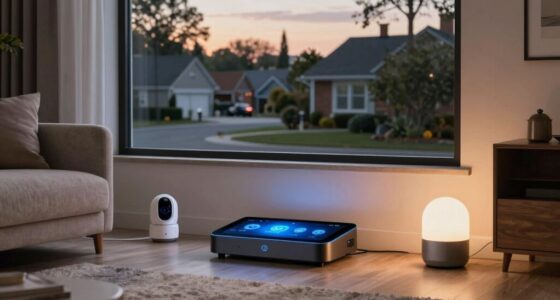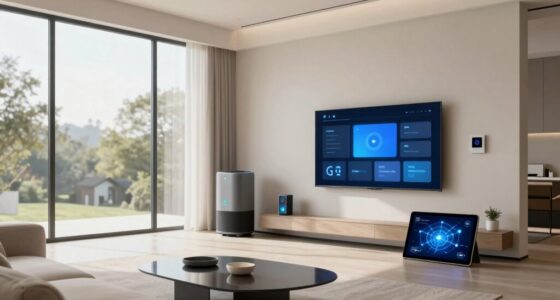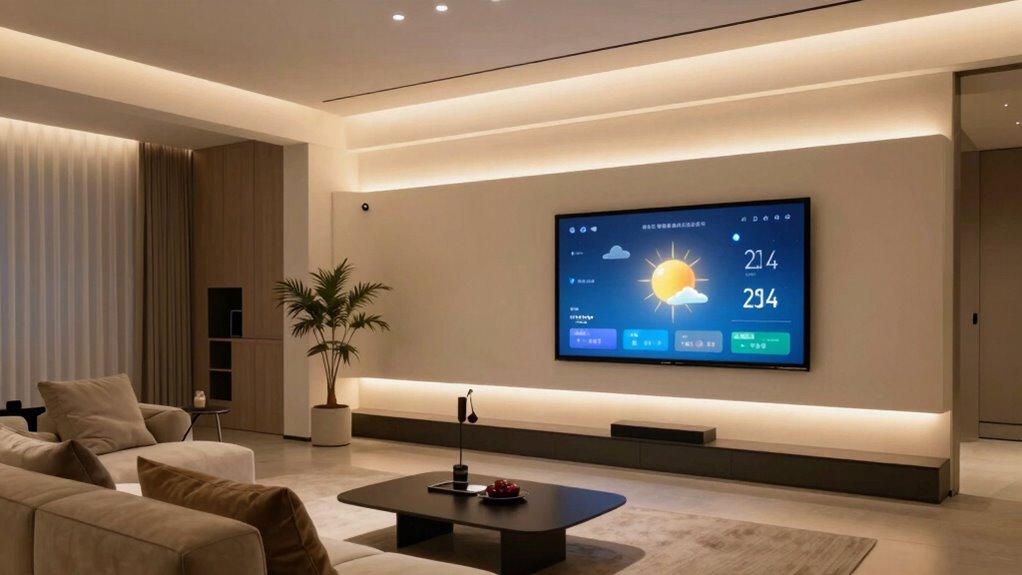

A smart home feels useful instead of annoying when it seamlessly adapts to your habits, providing convenience without constant tinkering. Automatic adjustments to lighting, heating, and cooling save you energy and lower bills, while personalized settings make the system feel tailored to you. When devices work together smoothly and offer clear controls and feedback, it becomes an intuitive extension of your lifestyle. Keep exploring to discover how smart technology can truly enhance your everyday experience.

Get the latest gadgets delivered free — and shop member deals
- Fast, free delivery on millions of items
- Access to Prime Big Deal Days deals on October 6–7
- Prime Video, Amazon Music and more included
Key Takeaways
- Seamless system integration ensures devices work together smoothly, reducing frustration and enhancing convenience.
- Customizable settings allow users to tailor automation to their preferences, preventing unwanted surprises.
- Automated adjustments based on learned habits minimize manual inputs and make the system feel intuitive.
- Clear control options and feedback enable quick adjustments and foster trust in automation.
- Energy-efficient features that adapt to usage patterns save costs without sacrificing ease of use.
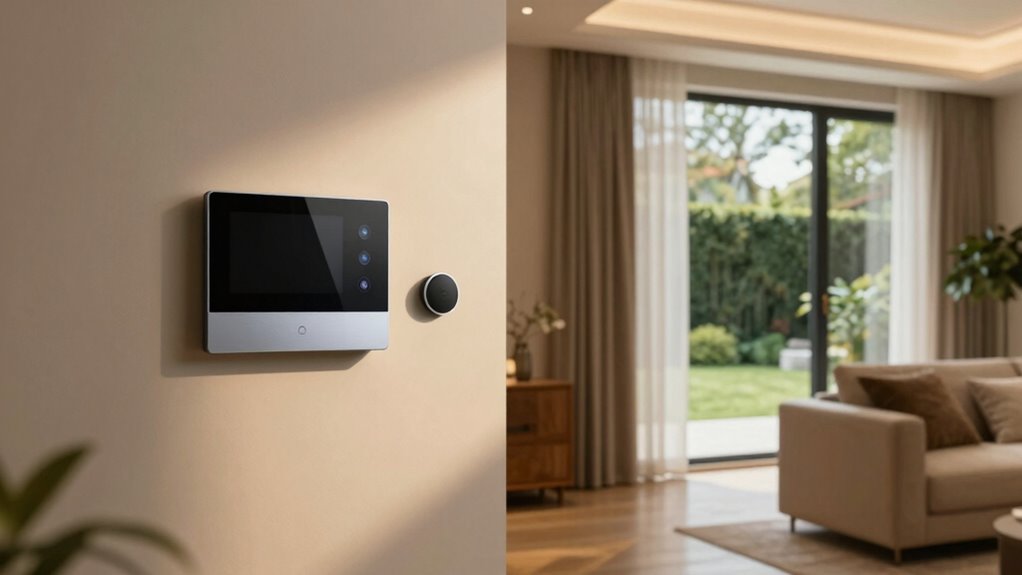
Have you ever wondered how much simpler life can be with a smart home? It’s not just about fancy gadgets; it’s about making everyday routines smoother and more efficient. When your smart home is designed with your needs in mind, it becomes a genuine help instead of an annoying distraction. One key factor that elevates a smart home from frustrating to functional is energy efficiency. Smart devices can automatically adjust lighting, heating, and cooling based on your habits, reducing waste and lowering your utility bills. For example, when you leave a room, motion sensors can turn off lights or lower the thermostat, saving energy without you having to think about it. Over time, these small adjustments add up, making your home more eco-friendly and cost-effective.
Smart devices automatically adjust lighting and climate, saving energy and reducing bills effortlessly.
Another essential aspect is user customization. When your smart home system allows you to tailor settings to your preferences, you feel more in control and less overwhelmed. You can set routines that suit your daily schedule or mood—like dimming lights and playing music at a specific time, or adjusting the temperature before you arrive home. The more you can customize, the less the technology feels intrusive or “in your face,” which helps prevent the feeling of annoyance that often comes with overly complicated systems. You can also benefit from interoperability, ensuring different smart devices work together seamlessly, reducing frustration and enhancing overall usability. Instead, it becomes an extension of your lifestyle, working seamlessly in the background. This is why template compatibility plays a crucial role in ensuring your smart home functions smoothly and adapts to your individual needs. Additionally, integrating local automation can further enhance responsiveness and privacy, reducing reliance on external servers and increasing your control. Incorporating enterprise governance principles can also help in managing and securing your smart home devices effectively, ensuring privacy and safety.
A smart home feels most useful when it adapts to your routines and preferences. It shouldn’t require constant tinkering or cause frustration when things don’t work as they should. Instead, it should learn from your habits, automating tasks naturally and intuitively. When you’re able to set preferences easily and trust that devices will adjust accordingly, the technology fades into the background, making your day-to-day life easier rather than more complicated.
Furthermore, a useful smart home offers straightforward controls and clear feedback. When you can quickly check if the lights are off or if the door is locked, and easily change settings when needed, you don’t feel bogged down by constant management. This balance of automation and manual control ensures that the system remains helpful instead of becoming a source of inconvenience. When energy efficiency is paired with user customization, your smart home becomes a true partner, simplifying tasks and enhancing comfort while respecting your individual preferences. That’s what makes a smart home feel genuinely useful instead of just plain annoying.
As an affiliate, we earn on qualifying purchases.
Frequently Asked Questions
How Do Smart Homes Improve Daily Convenience?
Smart homes improve your daily convenience through smart home automation, making routines seamless. You can control lighting with voice commands, like voice-controlled lighting, which saves time and effort. Automated thermostats keep your home comfortable without adjusting manually. Smart locks and security systems offer peace of mind, while connected appliances streamline chores. Overall, these features allow you to focus on what matters, enhancing your daily life effortlessly.
What Are Common Smart Home Device Malfunctions?
Smart home device malfunctions can feel like a full-blown tech apocalypse. Voice commands might suddenly ignore you, like you’re speaking a foreign language, or devices may refuse to sync, causing chaos. Compatibility issues crop up, turning your smart home into a puzzle. These glitches disrupt your day, making you wish you’d never trusted smart tech at all. Staying updated and troubleshooting regularly can help prevent these aggravations from taking over your home.
How Secure Are Smart Home Systems From Hacking?
Smart home systems are generally secure, but cybersecurity vulnerabilities can still exist. You can protect yourself by choosing devices with strong encryption protocols, which secure your data during transmission. Regularly update your firmware and passwords, and use two-factor authentication when possible. Staying informed about potential threats helps you minimize risks and guarantee your smart home remains a safe, convenient space rather than an easy target for hackers.
Can Smart Homes Adapt to Different User Preferences?
Smart homes are like chameleons, seamlessly adapting to your preferences. You can customize the user interface and explore various personalization options, making your experience uniquely yours. By adjusting settings, routines, and device behaviors, you guarantee the system responds exactly how you want. This flexibility transforms your smart home from a source of annoyance into a helpful, intuitive space, perfectly tuned to your lifestyle and habits.
What Are the Costs Involved in Setting up a Smart Home?
You’ll find that the costs involved in setting up a smart home vary, but a clear cost breakdown helps. Installation expenses can include purchasing devices like smart thermostats, security cameras, and voice assistants, plus professional setup if needed. Expect to spend a few hundred to a few thousand dollars depending on your system’s complexity. Keep in mind ongoing costs like subscriptions or maintenance to fully understand your investment.
energy-efficient smart lighting system
As an affiliate, we earn on qualifying purchases.
As an affiliate, we earn on qualifying purchases.
Conclusion
To make your smart home truly useful rather than annoying, focus on simplicity and personalization. When devices seamlessly fit into your routines, they enhance convenience without adding frustration. Notably, a recent survey found that 70% of smart home users feel more satisfied when their devices are intuitive and customizable. By prioritizing user-friendly features and respecting your preferences, you can create a smart home that genuinely simplifies your life, making technology feel like an ally rather than an obstacle.
smart thermostat with customizable settings
As an affiliate, we earn on qualifying purchases.
As an affiliate, we earn on qualifying purchases.
interoperable smart home devices
As an affiliate, we earn on qualifying purchases.
As an affiliate, we earn on qualifying purchases.
Halloween Picks
halloween
As an affiliate, we earn on qualifying purchases.