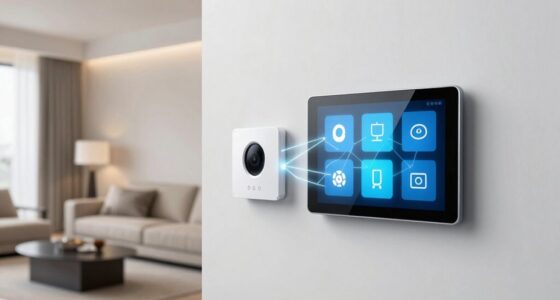
IoT gadgets are transforming workplaces by automating routine tasks, improving security, and boosting efficiency. You can rely on smart sensors and wearables to monitor safety hazards and health metrics, while connected devices streamline workflows like inventory management and communication. These advancements lead to smarter energy use and enhanced collaboration. As IoT continues evolving, you’ll discover how these innovations make your workspace safer, more productive, and more responsive—if you keep exploring further.

Get the latest gadgets delivered free — and shop member deals
- Fast, free delivery on millions of items
- Access to Prime Big Deal Days deals on October 6–7
- Prime Video, Amazon Music and more included
Key Takeaways
- IoT devices automate routine tasks, improving efficiency and freeing staff for higher-value activities.
- Smart sensors and cameras enhance safety, security, and environmental monitoring in workplaces.
- Connected gadgets facilitate real-time communication and collaboration, boosting productivity across teams.
- IoT-enabled automation optimizes energy use, resource management, and quality control in operations.
- Future integrations with AI, edge computing, and standardized protocols will further enhance workplace intelligence.
The Growth of IoT Devices in Modern Workspaces

The growth of IoT devices in modern workspaces is accelerating rapidly, transforming how businesses operate and manage their facilities. You’ll notice more connected sensors, smart lighting, and security systems seamlessly integrated into daily routines. By 2025, around 19 to 21 billion IoT devices will be in use worldwide, with projections reaching 39 to 40 billion by 2030. Enterprise-connected devices managed via private networks are expected to grow markedly, supporting efficient facility management. The expanding market, valued at over $1 trillion by 2025, reflects investments in automation and smart infrastructure. As IoT adoption increases, workplaces become more intelligent, enabling real-time monitoring and predictive maintenance, which can improve operational efficiency. Additionally, advancements in network security are crucial to safeguarding these interconnected systems against emerging cyber threats. Moreover, leveraging European cloud infrastructure can enhance data privacy and compliance with regional regulations, further strengthening the security of IoT ecosystems. The integration of edge computing is also expected to optimize data processing and reduce latency, making IoT systems more responsive. Increased interoperability standards will facilitate seamless integration across diverse devices and platforms, accelerating the deployment of smart workplace solutions. This rapid expansion is reshaping how you interact with and benefit from the modern, connected office environment.
Automation and Efficiency: Simplifying Daily Operations

You can automate routine tasks to free up time and boost productivity with smart office gadgets. These devices streamline workflows by handling repetitive processes automatically, reducing manual effort. As a result, your team stays focused on higher-value work while operations run more smoothly. Incorporating smart‑home integrations can further optimize how you implement these technologies effectively. Additionally, leveraging automation tools helps synchronize various systems for seamless operation across the workplace. Implementing local automation ensures that your smart devices operate efficiently even without constant internet connectivity, enhancing reliability and security. By understanding the integration capabilities of these devices, you can create more cohesive and responsive office environments.
Streamlining Routine Tasks
Automating routine tasks with IoT devices markedly boosts workplace efficiency by reducing manual effort and minimizing errors. You save time on repetitive activities like filing, scheduling, and inventory management, allowing you to focus on strategic work. IoT sensors and connected systems handle mundane tasks seamlessly, ensuring everything runs smoothly. The result? Less stress, fewer mistakes, and a more productive environment.
| Feelings You Experience | IoT’s Impact on Your Work |
|---|---|
| Relief from overwhelm | Automates daily chores |
| Confidence in accuracy | Reduces human error |
| Satisfaction | Streamlines operations |
| Empowerment | Frees you for creativity |
Enhancing Workflow Automation
Building on the efficiencies gained from automating routine tasks, workflow automation takes workplace productivity to the next level by streamlining complex processes and reducing manual interventions. IoT devices enable seamless integration of systems, automating tasks like inventory management, scheduling, and document routing. You can set up smart sensors to trigger alerts, adjust lighting, or manage climate control automatically, saving time and energy. Real-time data from connected devices allows you to monitor operations and make quick adjustments, minimizing delays. Automated workflows reduce human error and free up staff for strategic activities. By connecting various tools and systems, IoT enhances collaboration and ensures processes flow smoothly from start to finish, ultimately boosting efficiency and enabling your workplace to operate at peak performance. Implementing reliable network cables ensures consistent connectivity for all these IoT devices, maximizing their effectiveness and minimizing connectivity issues. Additionally, a robust network infrastructure is crucial for maintaining reliable data transmission, which supports the seamless functioning of all connected devices. Incorporating field‑of‑view considerations from deep-sky imaging can also guide the strategic placement and arrangement of IoT sensors for optimal coverage and performance. Proper network setup is essential to maximize the benefits of IoT integration in the workplace.
Enhancing Worker Safety With Smart Sensors and Wearables

How can smart sensors and wearables transform worker safety in modern workplaces? They continuously monitor environmental conditions, detecting hazards like toxic gases, extreme temperatures, or structural weaknesses before accidents happen. Wearables track essential signs such as heart rate, fatigue levels, and exposure to harmful substances, providing early alerts to prevent health issues or injuries. These devices enable real-time communication between workers and safety teams, ensuring quick responses to emergencies. Automated data collection streamlines compliance with safety regulations and improves incident reporting. By proactively identifying risks and alerting workers instantly, smart sensors and wearables reduce workplace accidents, injuries, and downtime. Real-time safety monitoring creates a safer environment, empowering workers with constant awareness and support, ultimately fostering a culture of safety and prevention. Additionally, leveraging fandom insights can help companies tailor safety initiatives to better understand worker behavior and engagement, promoting a more effective safety culture. Implementing predictive analytics can further enhance safety measures by forecasting potential risks based on collected data, allowing for preemptive actions.
Revolutionizing Quality Control and Product Development

IoT gadgets are transforming quality control and product development by automating defect detection and enabling immediate process adjustments. With real-time data from connected sensors, you can identify issues early and optimize manufacturing on the fly. Enhanced traceability systems also guarantee better product tracking and compliance throughout the supply chain. Additionally, implementing cybersecurity measures is essential to protect sensitive data transmitted by these connected devices. To fully leverage these innovations, understanding smart device integration is crucial for seamless operations. Moreover, leveraging power tools and heavy-duty equipment in related industries demonstrates how automation and connectivity can improve efficiency and safety across various applications. Incorporating knowledge of forage management techniques can also support sustainable practices within industrial settings, ensuring resource efficiency and environmental responsibility. Recognizing the importance of filtration and pump protection helps maintain consistent performance and prolong equipment lifespan.
Automated Defect Detection
Automated defect detection is transforming quality control in manufacturing by leveraging real-time data from connected sensors and cameras. You can now identify flaws instantly, reducing the need for manual inspections and minimizing errors. These systems scan products continuously during production, flagging defects as soon as they occur. This immediate feedback allows you to adjust processes quickly, preventing defective units from progressing further down the line. IoT-enabled cameras and sensors provide detailed insights into product quality, ensuring consistent standards. By automating defect detection, you save time, cut waste, and improve overall efficiency. Plus, data collected over time helps refine manufacturing protocols and enhances product design, leading to higher customer satisfaction and reduced costs. The integration of advanced technology like AI and machine learning further enhances defect detection accuracy and speed.
Real-Time Process Adjustment
Real-time process adjustment leverages live data from connected sensors and devices to optimize manufacturing and product development on the fly. This immediate feedback allows you to identify issues early, minimize waste, and refine processes continuously. By dynamically adjusting parameters—such as temperature, pressure, or speed—you guarantee consistent quality and efficiency. The following table highlights key benefits:
| Benefit | Description | Impact |
|---|---|---|
| Faster Corrections | Instant adjustments prevent defects | Reduces downtime |
| Improved Quality | Continuous feedback enhances product precision | Higher customer satisfaction |
| Waste Reduction | Minimized errors decrease material waste | Cost savings |
| Data-Driven Insights | Real-time data supports ongoing improvements | Competitive advantage |
| Enhanced Flexibility | Quickly adapt to changing production needs | Greater responsiveness |
This approach transforms quality control and product innovation, keeping your workflows agile and efficient.
Enhanced Traceability Systems
Enhanced traceability systems are transforming quality control and product development by providing unprecedented visibility into every stage of the supply chain. You can track raw materials, components, and finished products in real time, ensuring transparency and accountability. IoT sensors collect data at each step, allowing you to quickly identify issues, reduce waste, and improve overall quality. This continuous monitoring enables dynamic adjustments, minimizing delays and defects. You also gain detailed documentation for compliance and audits, building customer trust. With enhanced traceability, you streamline recall processes and quickly address any product safety concerns. Overall, these systems empower you to optimize production, boost efficiency, and deliver higher-quality products with greater confidence.
Strengthening Workplace Security Through Iot Technologies

As workplaces become increasingly connected, IoT technologies play a vital role in strengthening security measures. You can deploy smart cameras and sensors that monitor entry points, detect unauthorized access, and alert security personnel instantly. Wearable devices help track employee whereabouts and guarantee safety during emergencies or hazardous situations. Automated access control systems, using biometric or RFID technology, restrict entry to authorized individuals, reducing the risk of breaches. IoT-based intrusion detection systems analyze data in real-time, identifying suspicious activities early. Additionally, IoT security solutions enable you to monitor network traffic for threats, detect vulnerabilities, and respond swiftly to cyberattacks. By integrating these IoT tools, you enhance your workplace’s safety, protect sensitive data, and create a more secure environment for everyone.
Managing Data and Scaling IoT Infrastructure

Managing data and scaling IoT infrastructure are critical challenges as your smart office expands. You need robust storage solutions to handle the massive data generated by devices, which is projected to reach 175 zettabytes by 2025. Upgrading to high-speed networks like 5G and implementing edge computing reduces latency and improves responsiveness. Cloud platforms centralize management, enabling you to analyze data efficiently and make informed decisions. Ensuring interoperability among diverse IoT devices is essential; adopting standardized protocols helps prevent compatibility issues. As your network grows, security becomes even more crucial—protecting sensitive data and preventing cyber threats. Planning for scalability upfront ensures your infrastructure can adapt seamlessly, supporting new devices and applications without disruption, so your smart office remains efficient and secure.
Improving Energy Use and Resource Management

Implementing IoT in your smart office can substantially optimize energy consumption and resource utilization. Smart sensors detect occupancy, lighting, and temperature, automatically adjusting settings to save energy when spaces are unused. Connected HVAC systems analyze real-time data to optimize climate control, reducing waste and lowering costs. Automated lighting systems turn lights off in empty rooms and dim when natural light is sufficient. Resource management improves through connected devices that track water and electricity usage, highlighting inefficiencies. You can also set alerts for unusual consumption patterns, enabling quick interventions. All these measures work together to make your workplace more sustainable and cost-effective, minimizing environmental impact while ensuring employees stay comfortable and productive. IoT-driven resource management transforms energy use into a smart, efficient process.
Facilitating Collaboration With Connected Office Tools

Connected office tools make collaboration smoother by integrating devices seamlessly across platforms. You can communicate in real time, whether through smart meeting rooms or instant messaging systems. This integration helps your team stay connected and work more efficiently together.
Seamless Device Integration
Seamless device integration is essential for fostering efficient collaboration in smart offices, enabling different tools and systems to work together smoothly. When your office devices, from conference room displays to individual workstations, connect effortlessly, communication becomes more efficient. You can share files, schedule meetings, and control room environments without switching platforms or experiencing delays. Using unified management systems, you ensure all devices communicate securely and reliably, reducing technical disruptions. Standardized protocols and open APIs enable your tools to integrate regardless of manufacturer, simplifying setup and maintenance. This interconnectedness boosts productivity, minimizes errors, and creates a more responsive workspace. Ultimately, seamless device integration transforms your office into a cohesive ecosystem that supports dynamic, real-time collaboration.
Real-Time Communication Tools
When your office devices are integrated effectively, it sets the stage for real-time communication tools that boost collaboration. Connected gadgets like smart screens, sensor-based conference systems, and instant messaging platforms streamline interactions. You can instantly share updates, hold virtual meetings, and coordinate tasks without delays. These tools allow seamless communication across remote and in-office teams, fostering faster decision-making. Imagine:
- Smart whiteboards syncing notes during meetings
- Video conferencing systems with AI-powered noise reduction
- Real-time chat apps integrated with IoT sensors
- Automated alerts for project milestones
- Interactive dashboards displaying live data
Challenges and Solutions in IoT Security Management

As IoT devices become more prevalent in smart offices, security challenges intensify, exposing organizations to cyber threats and data breaches. You must implement robust security measures to protect connected systems. Strong network architecture, including segmentation and encryption, is essential. Regular firmware updates and vulnerability assessments help close security gaps. Training employees on safe IoT practices reduces human error risks. Additionally, deploying real-time threat detection tools can identify and mitigate attacks quickly. Here’s a quick overview:
| Challenge | Solution |
|---|---|
| Cyberattacks surge in frequency | Use advanced firewalls and intrusion detection systems |
| Data breaches risk | Encrypt data and enforce strict access controls |
| Device vulnerabilities | Regularly update firmware and monitor device health |
| Human error | Conduct ongoing security training |
| Lack of visibility | Implement centralized monitoring dashboards |
Future Trends Shaping IoT in Smart Offices

Emerging technologies and evolving security challenges are driving new trends that will shape the future of IoT in smart offices. You’ll see increased integration of AI and machine learning, enabling smarter automation and predictive insights. Edge computing will become essential, processing data locally for faster responses and reduced bandwidth use. You can expect more personalized workplace experiences through advanced user tracking and adaptive environments. Additionally, interoperability standards will improve, allowing seamless communication across diverse devices. Finally, security will remain a top priority, with enhanced encryption and threat detection becoming standard. These trends will make smart offices more efficient, secure, and responsive, transforming how you work and interact with your environment.
- AI-driven automation and insights
- Enhanced edge computing capabilities
- Personalized, adaptive workspaces
- Interoperability standards for devices
- Advanced security protocols
Frequently Asked Questions
How Do Iot Devices Ensure Data Privacy in Smart Offices?
IoT devices guarantee data privacy in smart offices by implementing strong encryption protocols, which safeguard data during transmission and storage. You should also set up secure network architectures, including firewalls and VPNs, to prevent unauthorized access. Regularly updating firmware and software patches helps close security gaps. Additionally, enforce strict access controls and employee training to minimize human error and ensure that only authorized personnel handle sensitive information.
What Are the Costs Associated With Implementing Iot Systems in Workplaces?
Implementing IoT systems in workplaces is like planting a garden—initial costs can be high, but the long-term benefits grow over time. You’ll face expenses for devices, infrastructure upgrades, and cybersecurity measures. Expect investments in sensors, network enhancements, and staff training. While upfront costs can seem steep, they’re offset by efficiency gains, reduced downtime, and improved safety, making your smart office a thriving, productive environment.
How Does Iot Integration Impact Employee Productivity and Morale?
IoT integration boosts your employee productivity by automating routine tasks, allowing you to focus on higher-value work. It also improves morale by creating a smarter, more comfortable workspace with personalized controls and real-time feedback. When IoT enhances collaboration and streamlines workflows, you feel more engaged and efficient. Plus, safer environments through IoT sensors help you work confidently, knowing hazards are monitored and managed proactively.
What Strategies Are Effective for Managing Iot Device Lifecycle and Maintenance?
Managing your IoT device lifecycle is like tending a garden—you need regular planting, pruning, and harvesting. Start with a clear plan for deployment, then schedule routine maintenance to prevent issues. Keep firmware updated, monitor device performance continuously, and replace outdated tech proactively. Implement automated alerts for troubleshooting, and document all updates. This approach keeps your IoT ecosystem healthy, ensuring seamless operation and extending the lifespan of your smart workplace investments.
How Can Small Businesses Leverage Iot Technology Without Extensive Infrastructure?
You can leverage IoT technology without extensive infrastructure by choosing plug-and-play devices that connect via Wi-Fi or Bluetooth, requiring minimal setup. Focus on scalable solutions that integrate easily with your existing systems, and utilize cloud platforms for data management. Partner with vendors offering managed IoT services, so you don’t need dedicated hardware or IT teams. Prioritize security features to protect your data, and start small, expanding as your needs grow.
Conclusion
Embracing IoT in your office is like opening a secret garden of innovation, where each device blooms into smarter, safer, and more efficient workspaces. As technology continues to weave itself into the fabric of your daily routines, staying ahead means steering through challenges and harnessing the endless potential of connected tools. With each smart device, you’re not just upgrading your office—you’re cultivating a future where productivity and safety grow hand in hand.
Fall Picks
fall essentials
As an affiliate, we earn on qualifying purchases.